
Start with a neutral base—warm whites, soft greys, muted beiges—and focus on texture, natural materials, and purposeful edits so your rooms feel calm and intentional. You’ll swap busy prints for tonal fabrics, add a single earthy accent, and use low-profile storage and lighting to keep sightlines open. These simple shifts change how a space breathes, and there are a few easy moves that make the biggest difference.
Embrace a Neutral Base With Layered Textures
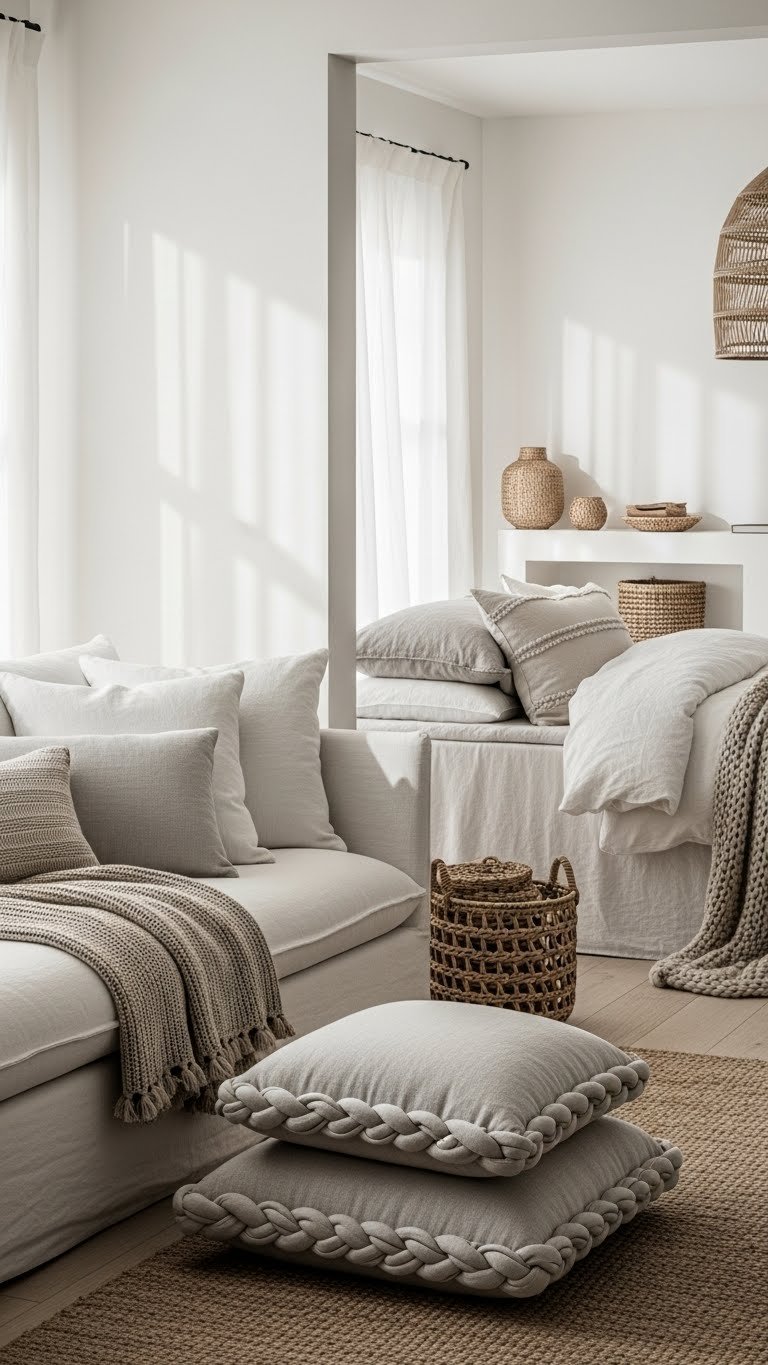
Start with a calm, neutral base—think warm whites, soft greys, or muted beiges—and build interest through layered textures. You’ll add linen layers on sofas and beds, mix woven throws, and place tactile cords on cushions or baskets for subtle contrast. Keep forms simple, surfaces uncluttered, and allow light to emphasize texture—this keeps spaces airy, intentional, and freeing.
Add a Single Earthy Accent Color
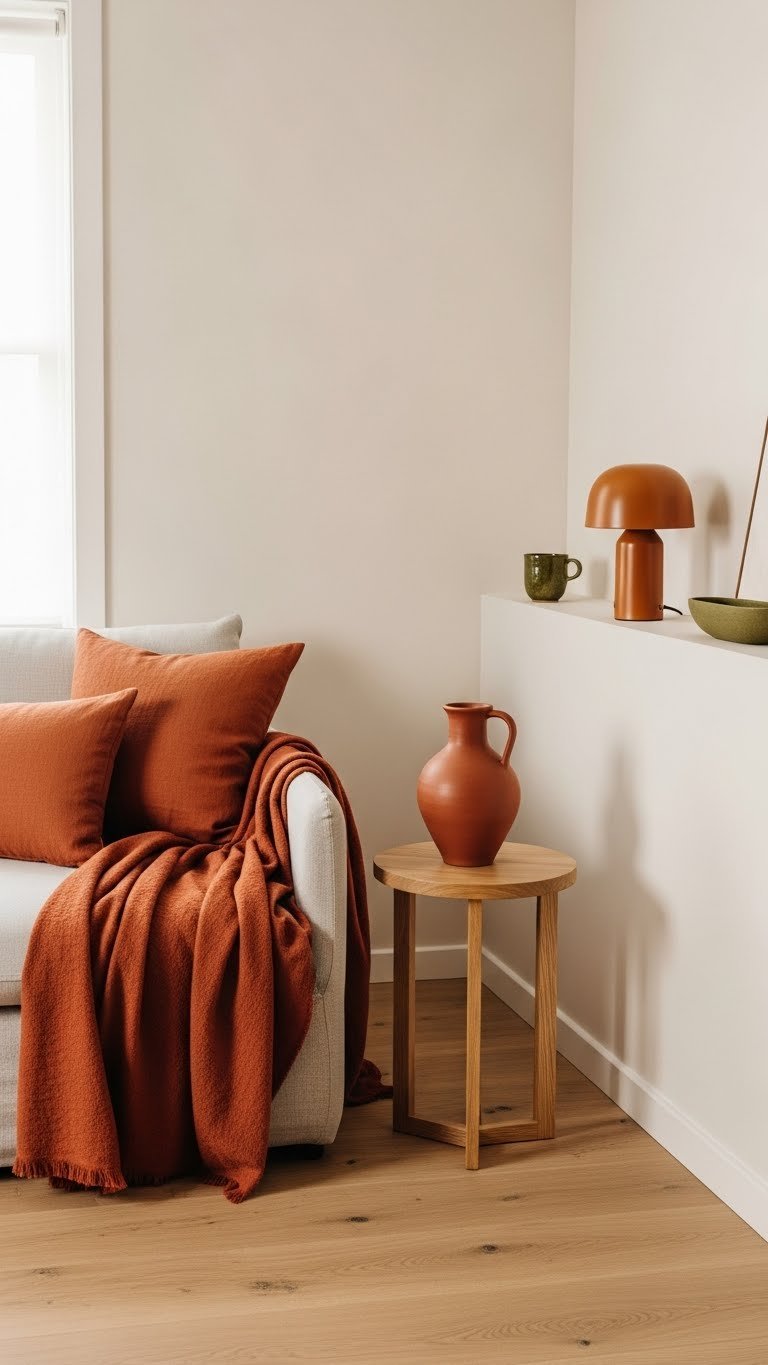
A single earthy accent—think terracotta, olive, or deep ochre—can warm a neutral scheme without overwhelming it. Choose one hue and repeat it sparingly: terracotta textiles for cushions or a throw, mossy ceramics on a shelf, a single lamp or vase. You’ll create cohesion and calm, letting the color breathe without clutter, so your space feels open and intentional.
Choose Natural Wood Furniture Pieces
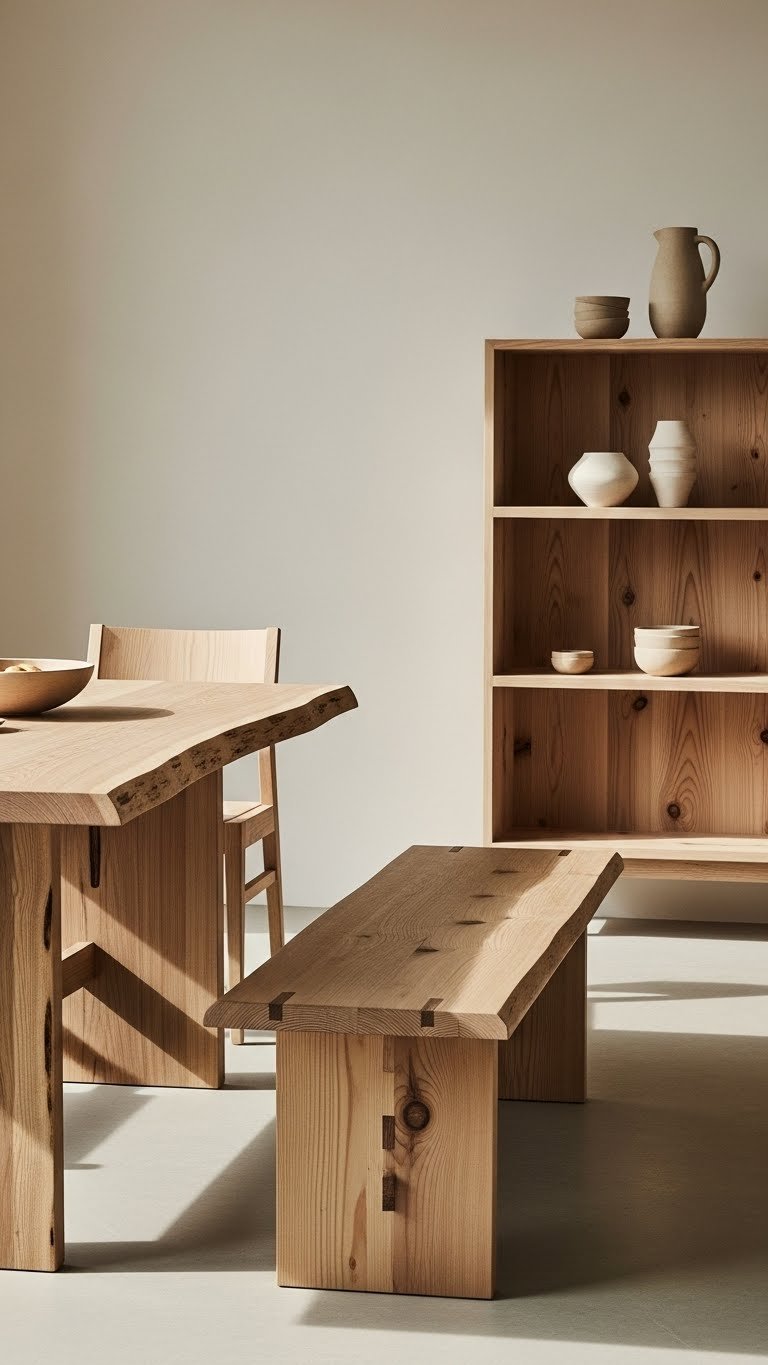
Natural-wood furniture brings warmth and tactile richness that grounds a neutral scheme, so pick pieces with visible grain, honest joinery, and a finish that feels lived-in rather than glossy.
You’ll choose items showcasing unfinished grainwork and live edge contrasts to celebrate imperfection.
Mix simple silhouettes, let wood tones breathe, and keep layouts open so each piece feels deliberate, unfussy, and free.
Swap Busy Patterns for Tonal Fabrics
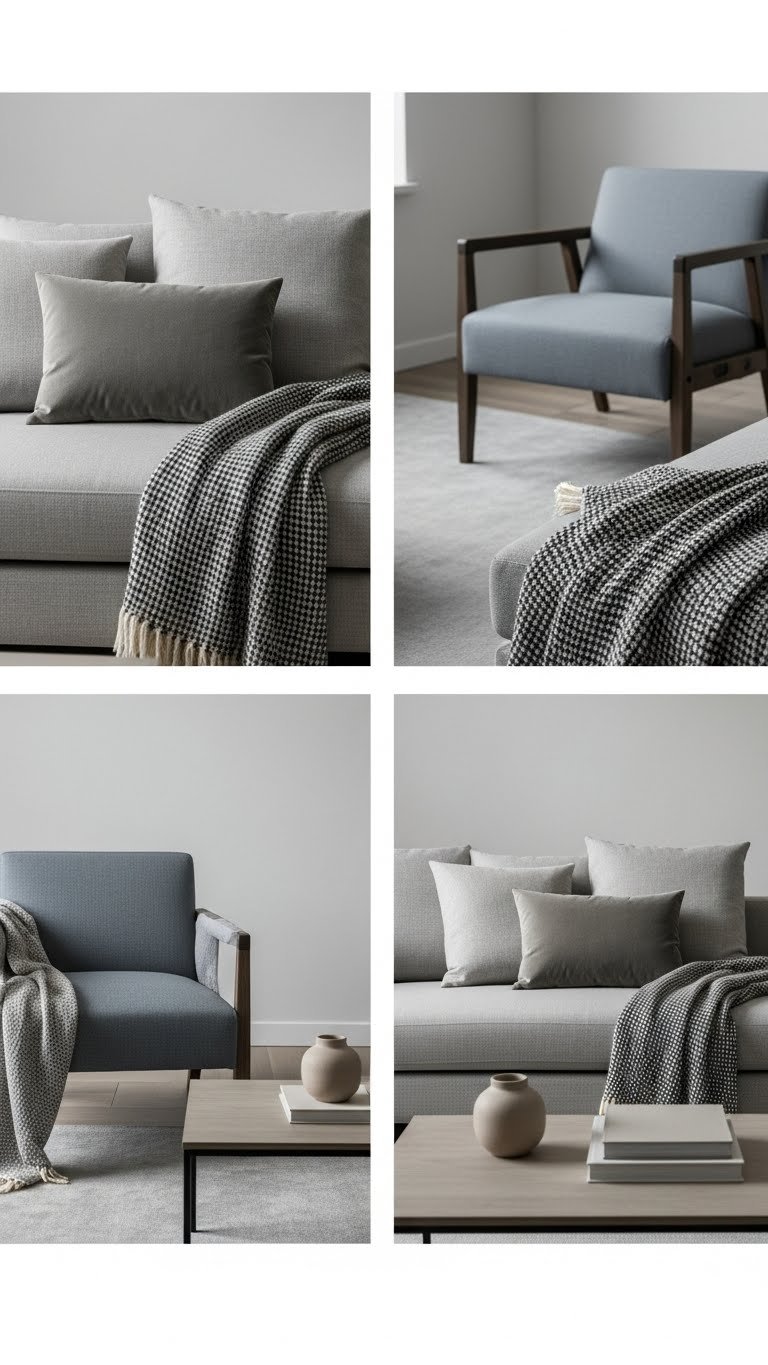
When you replace loud prints with tonal fabrics, the room breathes—textures and subtle color shifts take center stage instead of competing patterns. You’ll embrace pattern reduction through thoughtful fabric swaps: mix and match pieces in the same hue family, use tonal layering to add depth, and keep visual calm. This lets you personalize freely while maintaining a clean, stylish atmosphere.
Use Minimal Window Treatments for Soft Light
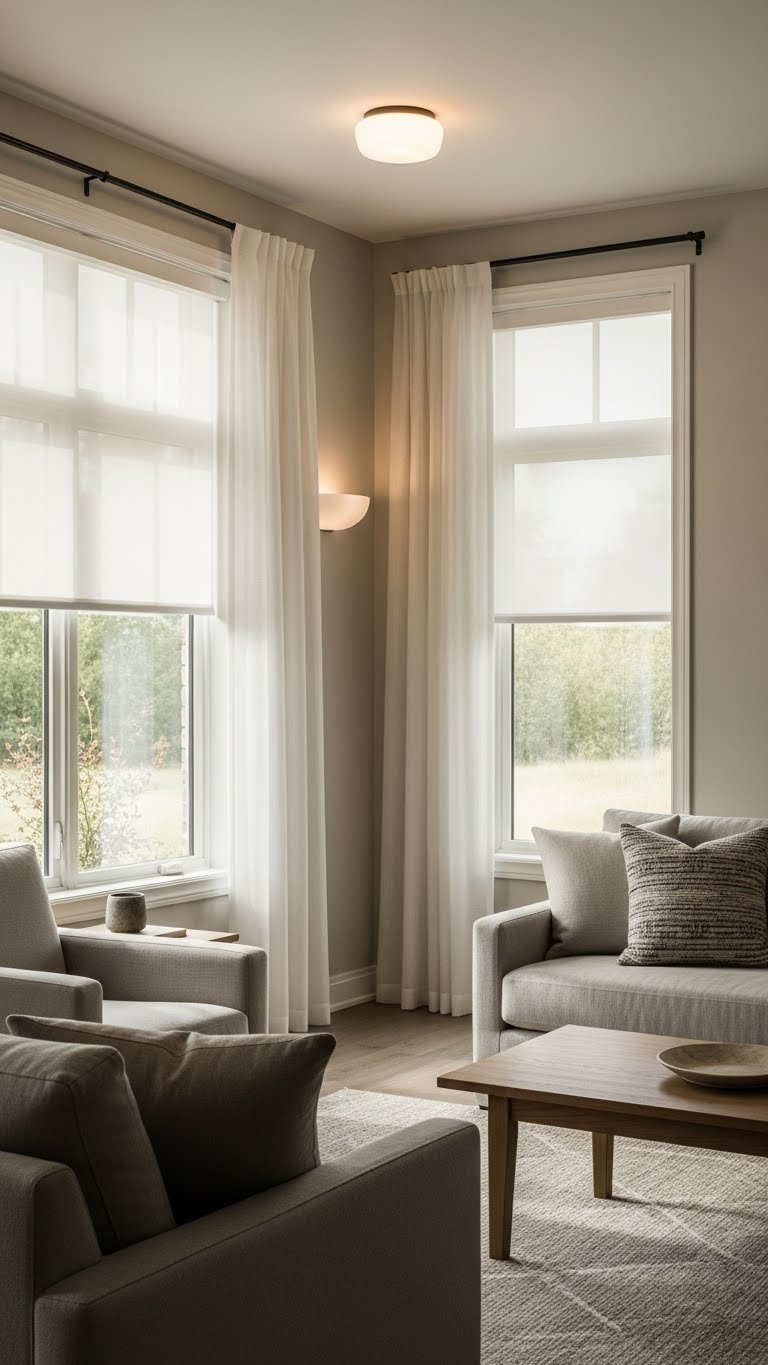
Pairing tonal fabrics with minimal window treatments lets light become another layer of texture.
You’ll choose sheer panels on minimal rods to frame views without clutter. Add top down shades for privacy that still feels open, and consider soft glow diffusers to tame harsh sun.
These choices keep spaces airy, intentional, and free — letting light sculpt your calm.
Incorporate Rattan and Woven Elements
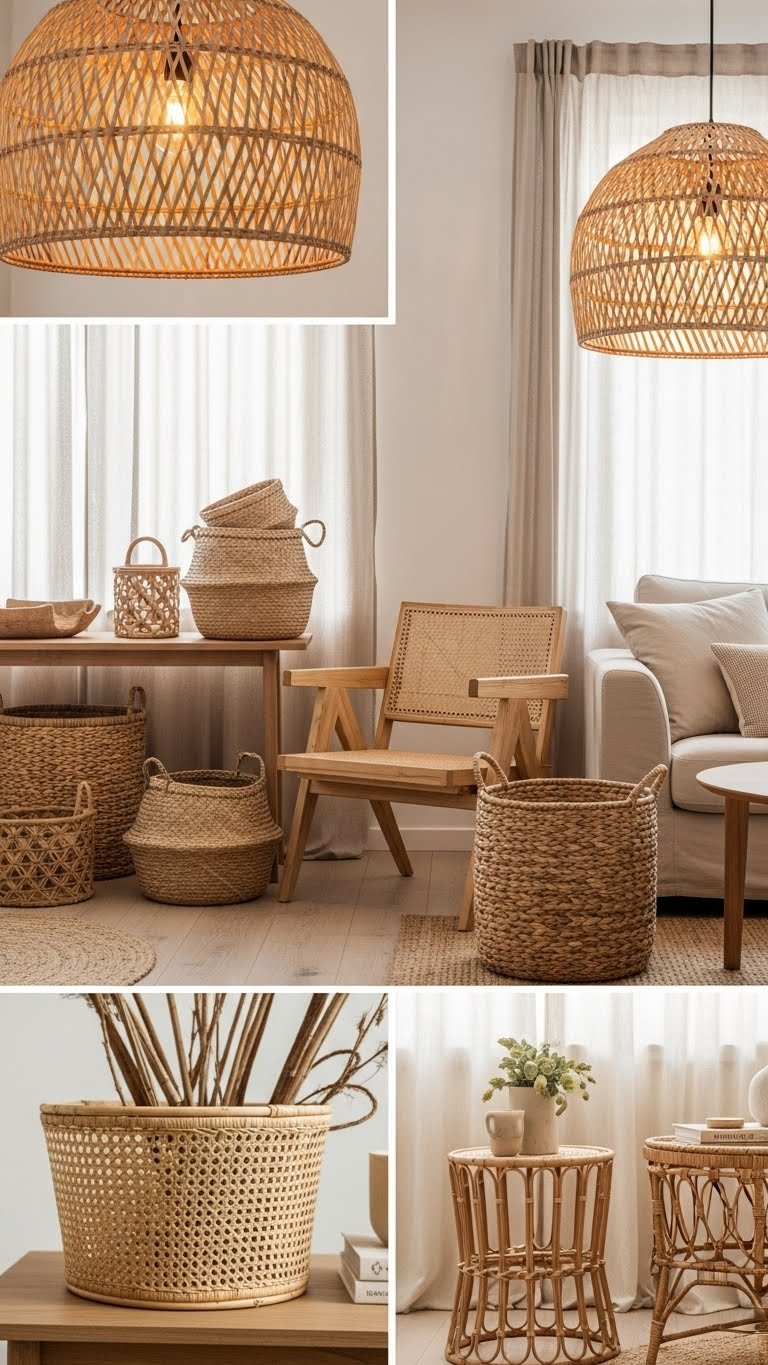
Woven textures like rattan and cane bring warm, tactile contrast to a calm, tonal room, grounding airy fabrics without overpowering them.
You’ll add life and freedom by mixing woven lighting for soft, organic glow and rattan baskets for tidy, flexible storage. Choose simple silhouettes, natural finishes, and varied scales so pieces feel effortless, edited, and easy to move as your space evolves.
Display a Few Thoughtful Ceramic Pieces
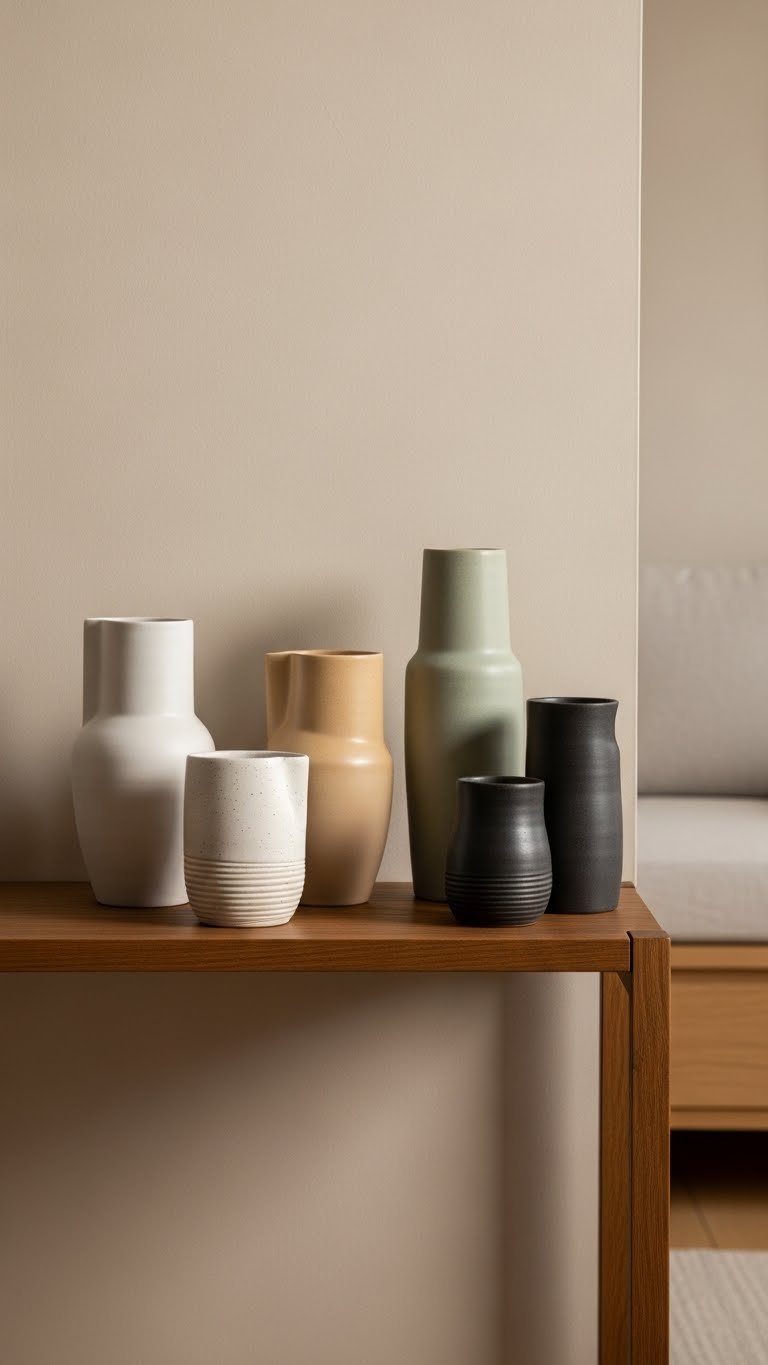
Often a few well-chosen ceramics can quietly define a shelf or table, so pick pieces that balance scale, color, and finish with the room’s existing tones.
You’ll choose items with matte glazes and subtle textures, mixing asymmetrical shapes with simple vessels. Arrange sparingly, leave breathing room, and rotate pieces occasionally so your space feels intentional, uncluttered, and free.
Create a Cozy Corner With Layered Throws
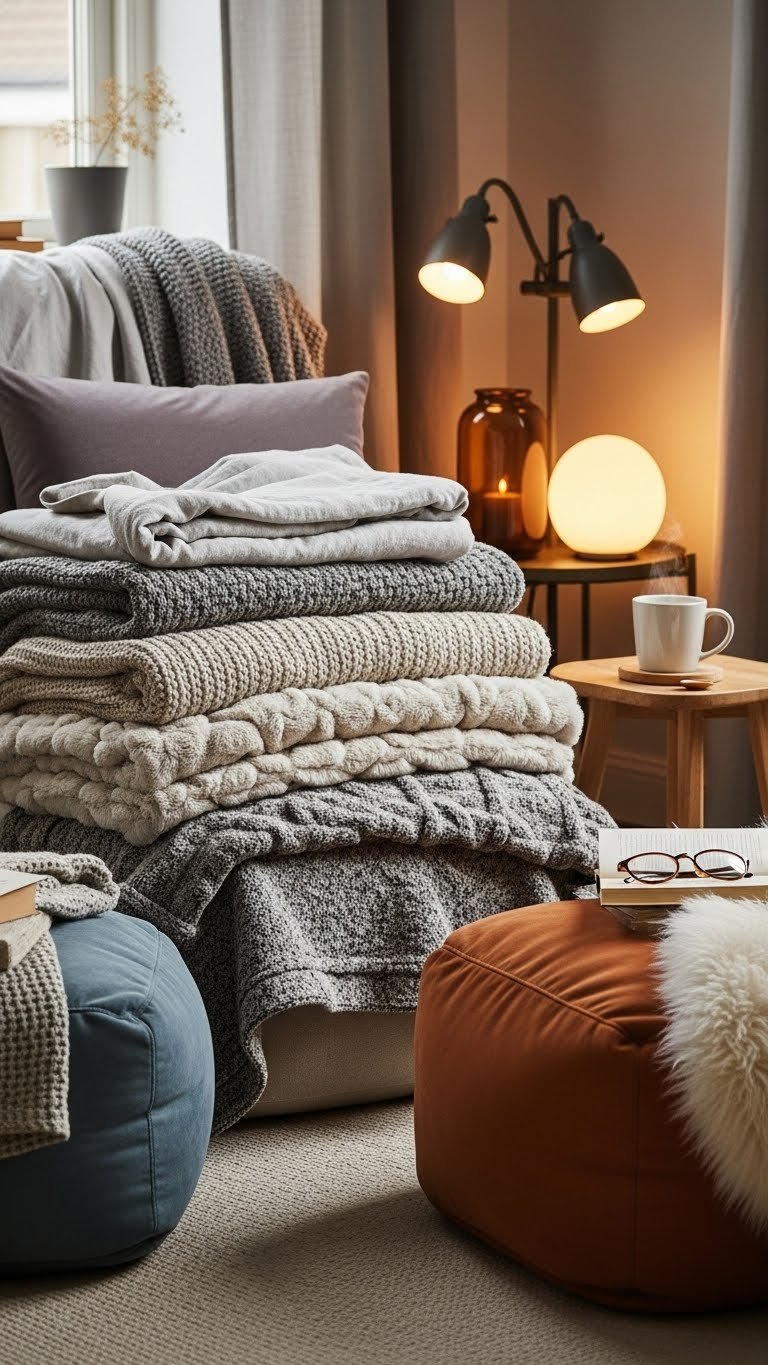
Curl up and build a small refuge by layering throws of different weights, textures, and patterns over a chair or daybed so you can adjust warmth and mood at a moment’s notice.
Add a couple of plush floor poufs for flexible seating, tuck a small table for drinks, and place ambient reading lamps nearby.
Rotate colors seasonally to keep the corner feeling fresh and free.
Install Statement Lighting With Clean Lines
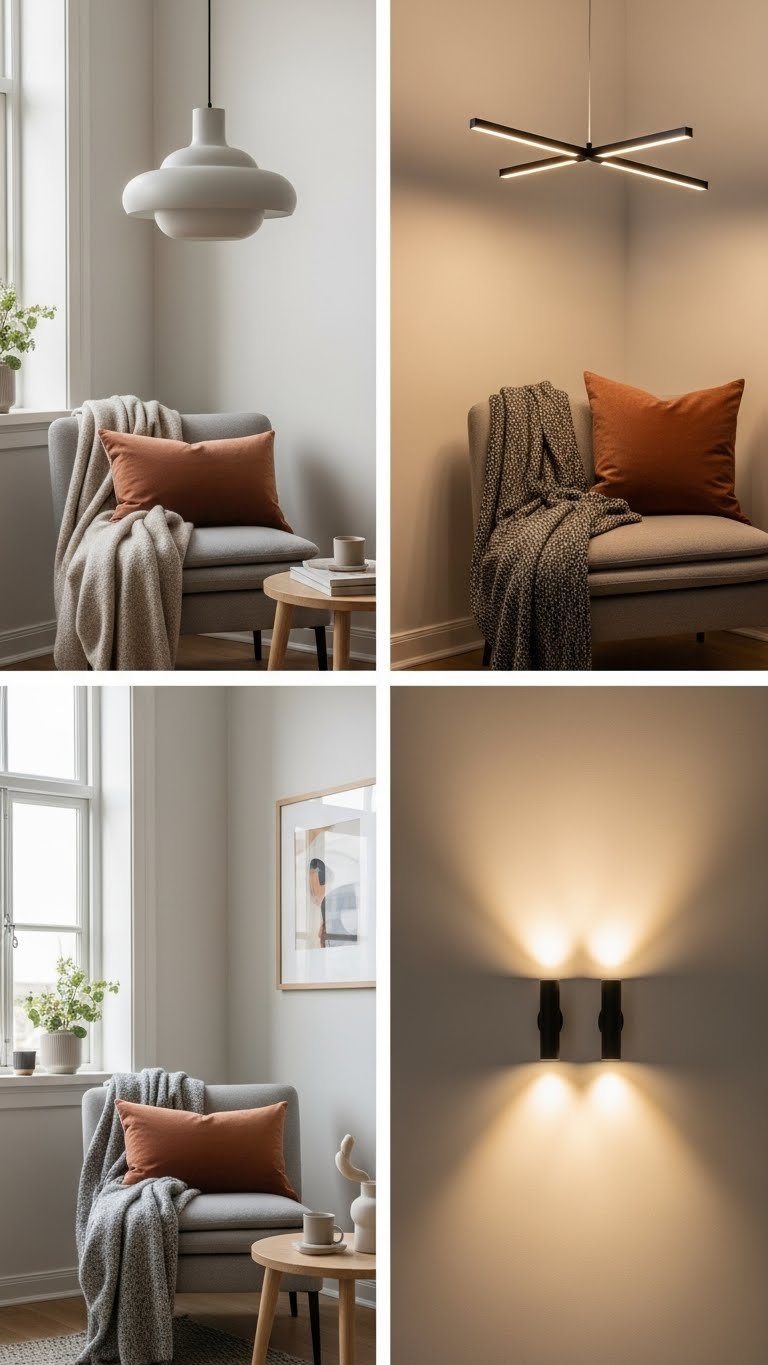
After you’ve layered throws and set up a snug seating nook, think about how lighting will define that space: choose a statement fixture with clean lines to anchor the corner and set the mood. Pick dimensional pendants for sculptural focus or slim linear sconces for quiet direction. You’ll create crisp ambiance, highlight textures, and keep the look open, modern, and liberating.
Keep Surfaces Edited and Clutter-Free
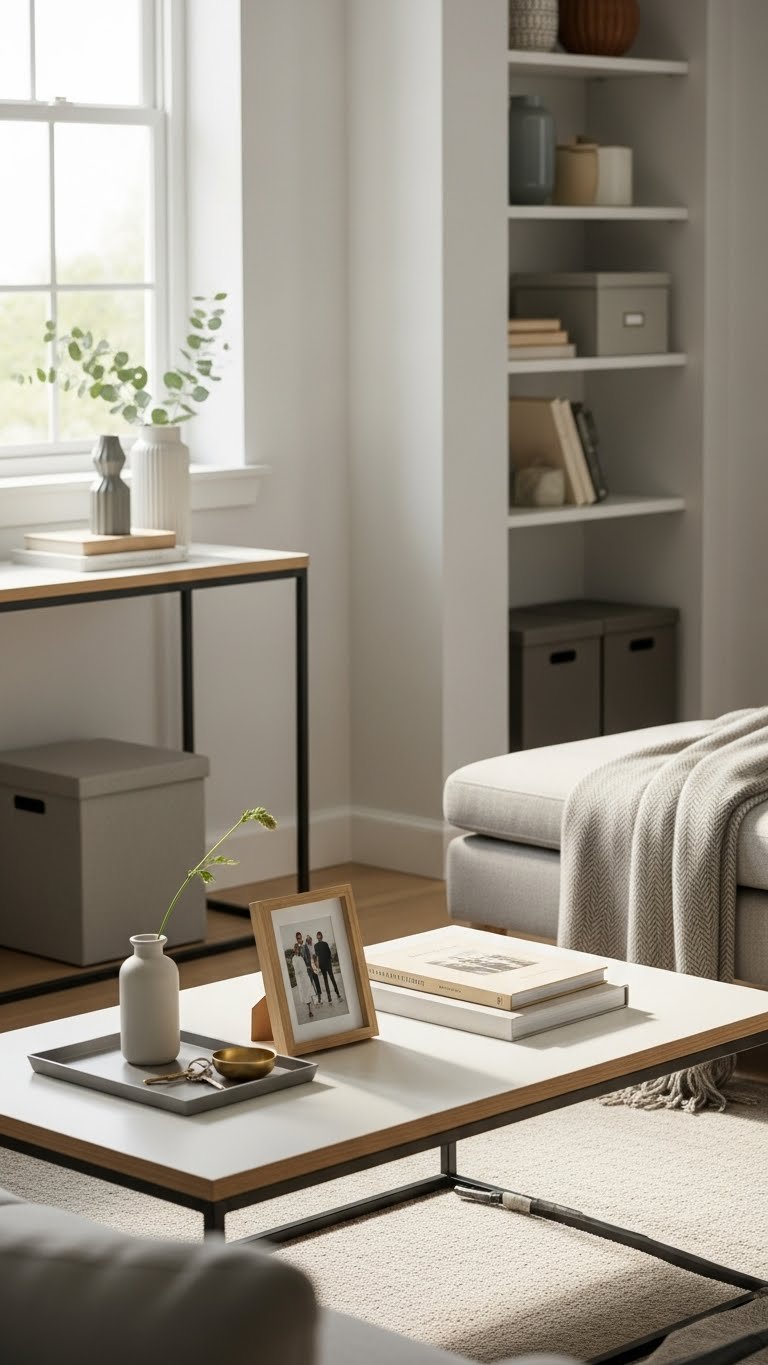
Multifunctional pieces give you storage and flexibility, but they work best when surfaces stay edited and clutter-free.
Lean into daily decluttering: set a two-minute sweep each evening to clear counters, tables, and shelves. Practice visual editing—keep only a few meaningful objects per surface, rotate displays, and store extras. That restraint creates calm, freedom, and a stylish, breathable home.
Introduce Live Plants for Biophilic Calm
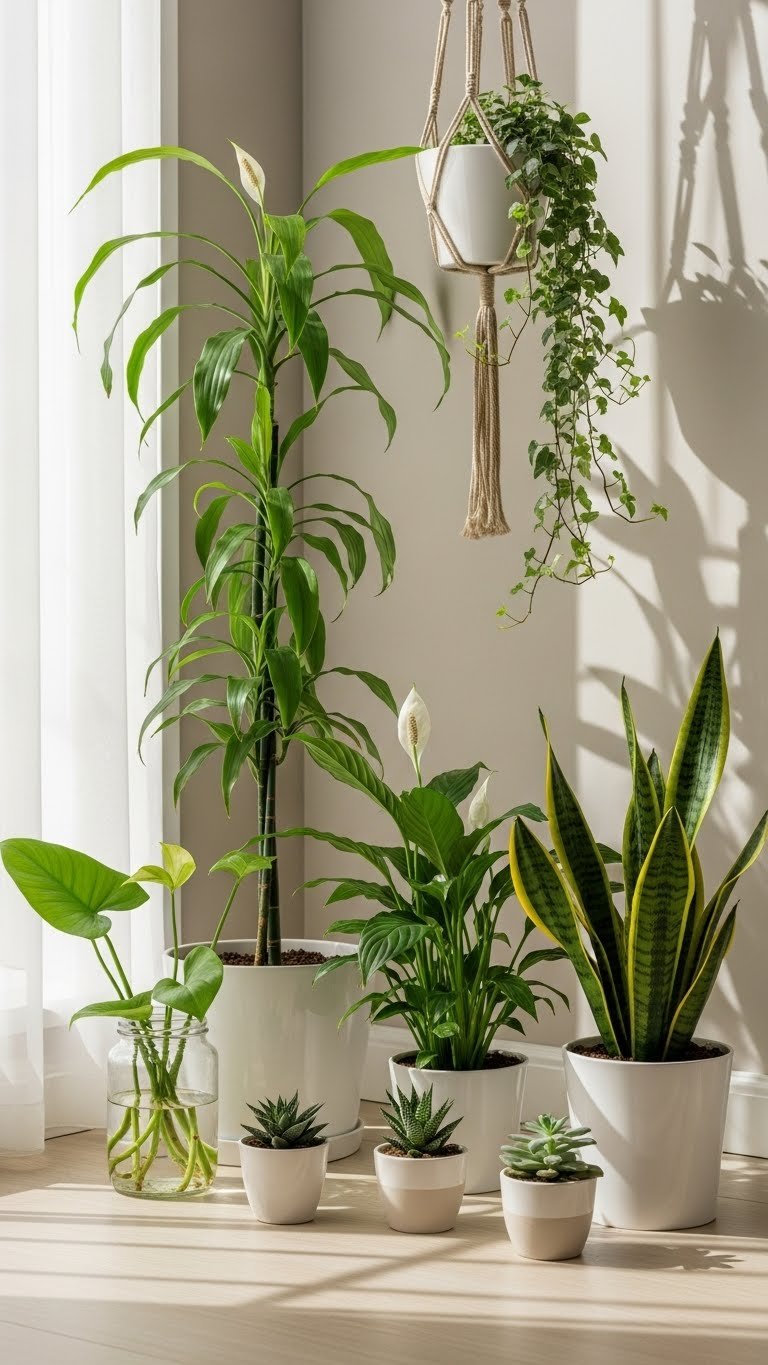
Though often subtle, adding live plants brings immediate biophilic calm to a room and connects your space to nature’s rhythms.
You’ll welcome air purifying foliage for cleaner breathability, place desktop succulents for minimal care, and use hanging macramé to free floor space.
Learn to propagate cuttings to expand greenery without cost, keeping your decor simple, intentional, and liberating.
Choose Sustainable, Non-Toxic Materials
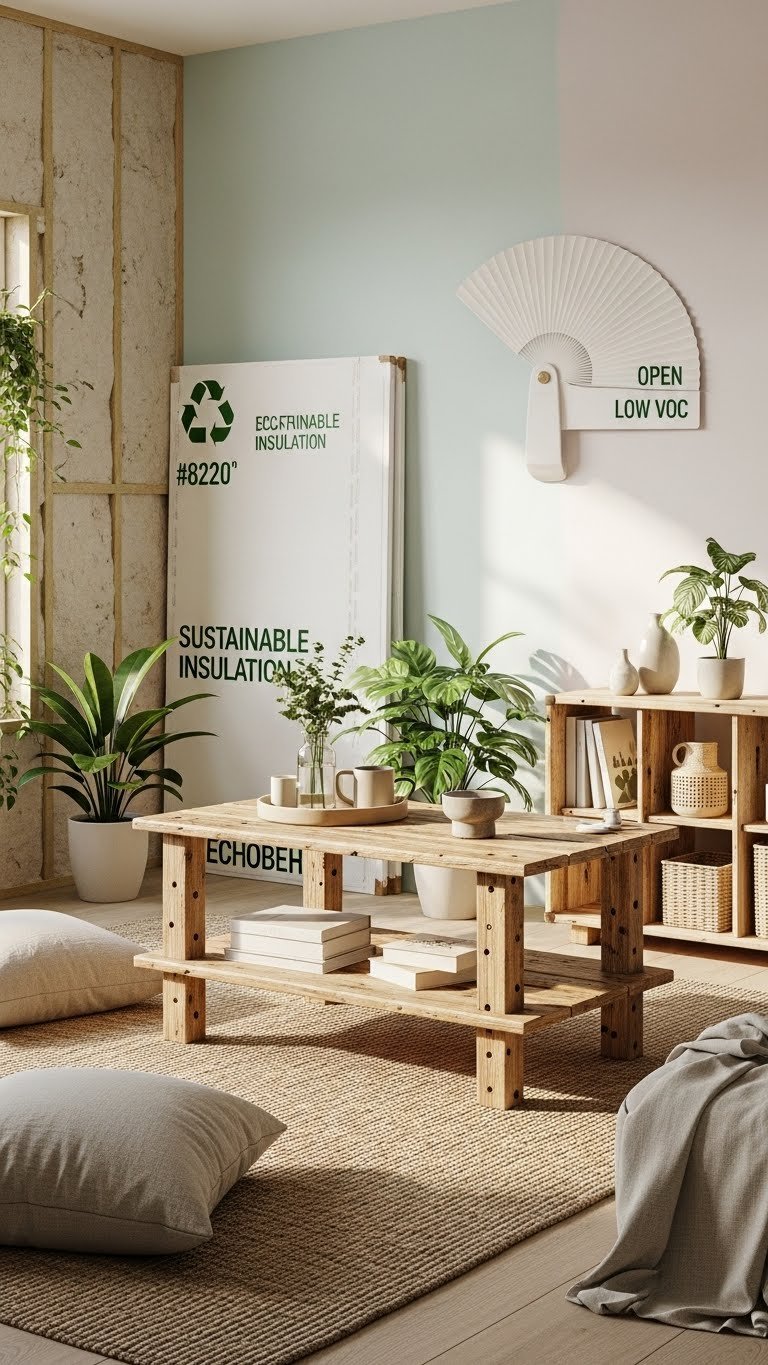
You’ve brought natural life into your space—now match it with materials that respect both your health and the planet. Choose reclaimed wood, natural fibers, and sustainable insulation to cut waste and energy use.
Pick low VOC paint for fresh color without toxins. Favor durable, repairable pieces that let you rearrange freely, creating a calm, breathable home that reflects your values.
Use Rounded Shapes to Soften Geometry
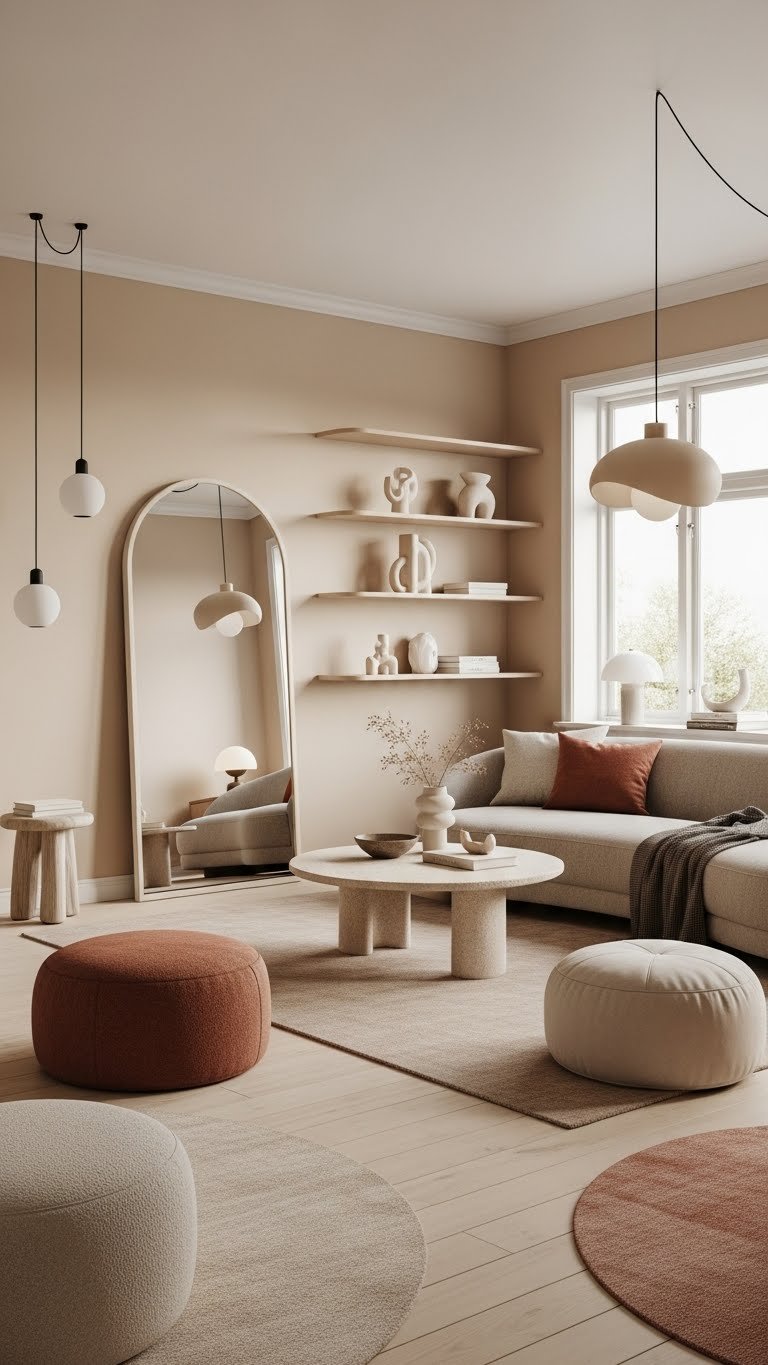
Softening sharp angles with rounded shapes makes a room feel more inviting and balanced, so look for curved sofas, rounded coffee tables, and arched mirrors to break up rigid geometry. You’ll add warmth with rounded mirrors and curved shelving, mix soft lines in lighting and decor, and keep layouts airy. Choose pieces that flow, freeing movement and visual tension for a relaxed, stylish space.
Add a Low-Profile Rug in Muted Tones
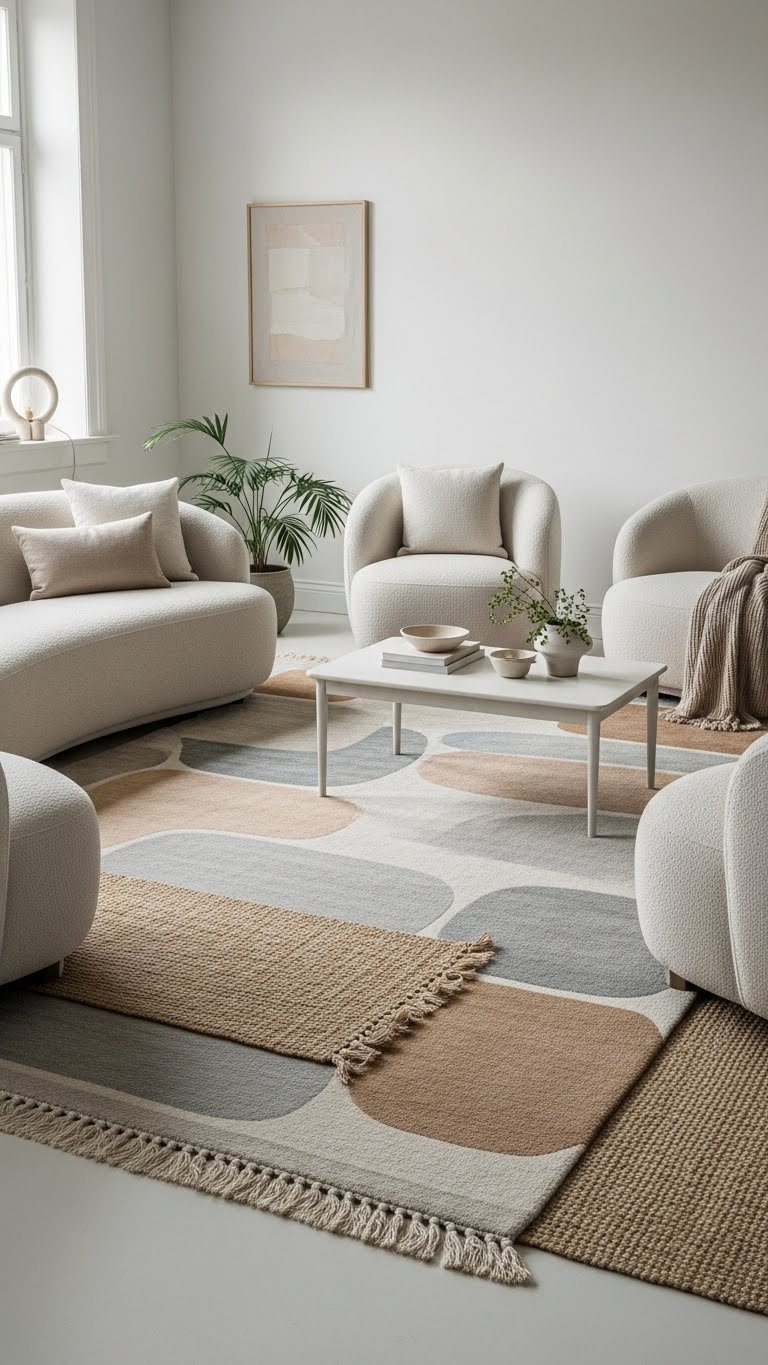
After balancing a room with rounded furniture, anchor the layout with a low-profile rug in muted tones to keep the space feeling airy and cohesive.
Choose a low sheen pile and a low contrast pattern so furnishings breathe.
Add neutral fringe for subtle detail and consider layered jute beneath for texture.
You’ll create calm, flexible grounding without overwhelming the room.
Feature One Large Art Piece Instead of Many
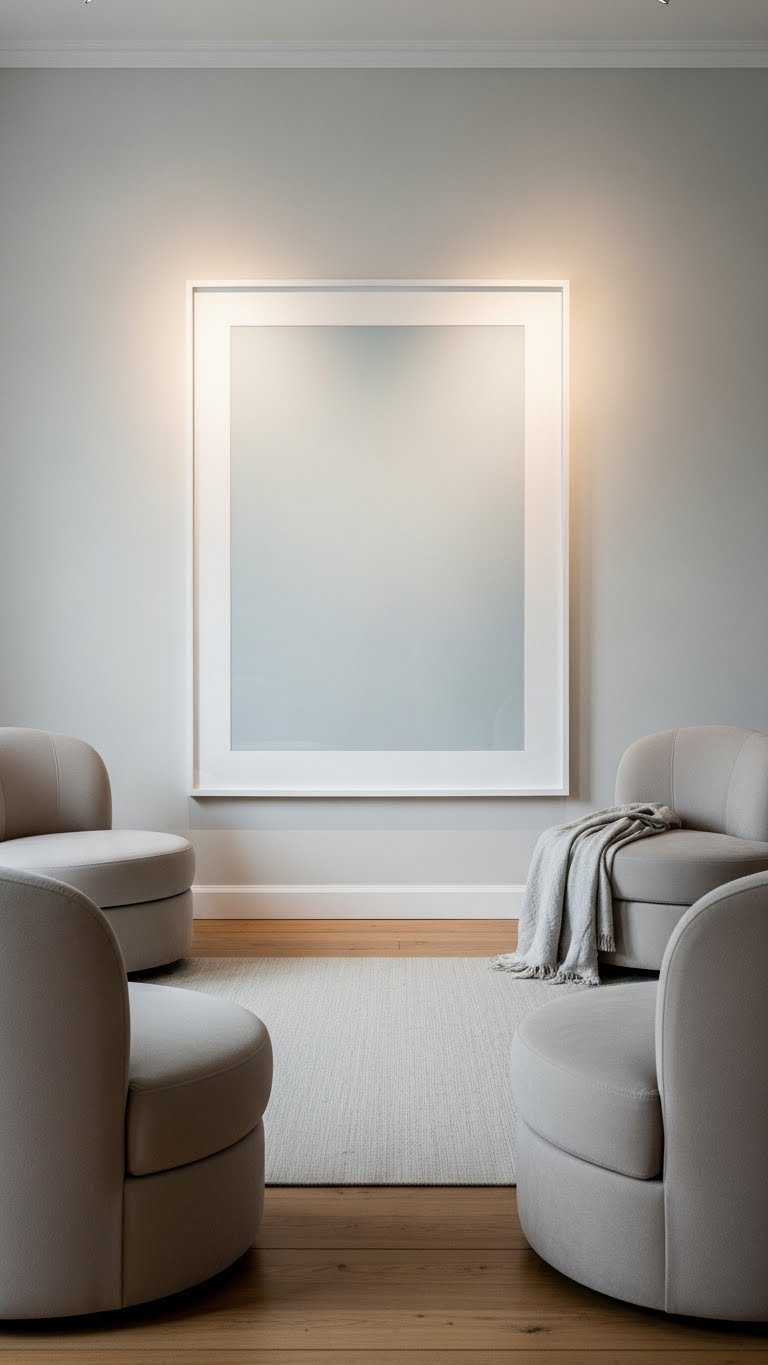
Choose a single large artwork to anchor the room instead of a cluster of small pieces; it simplifies the visual field, draws the eye, and gives your rounded furniture a clear focal point.
Pick an image that resonates, frame it with oversized matting for breathing room, and install subtle gallery lighting.
You’ll create a calm, liberated vibe without cluttered choices.
Integrate Reclaimed Wood Accents
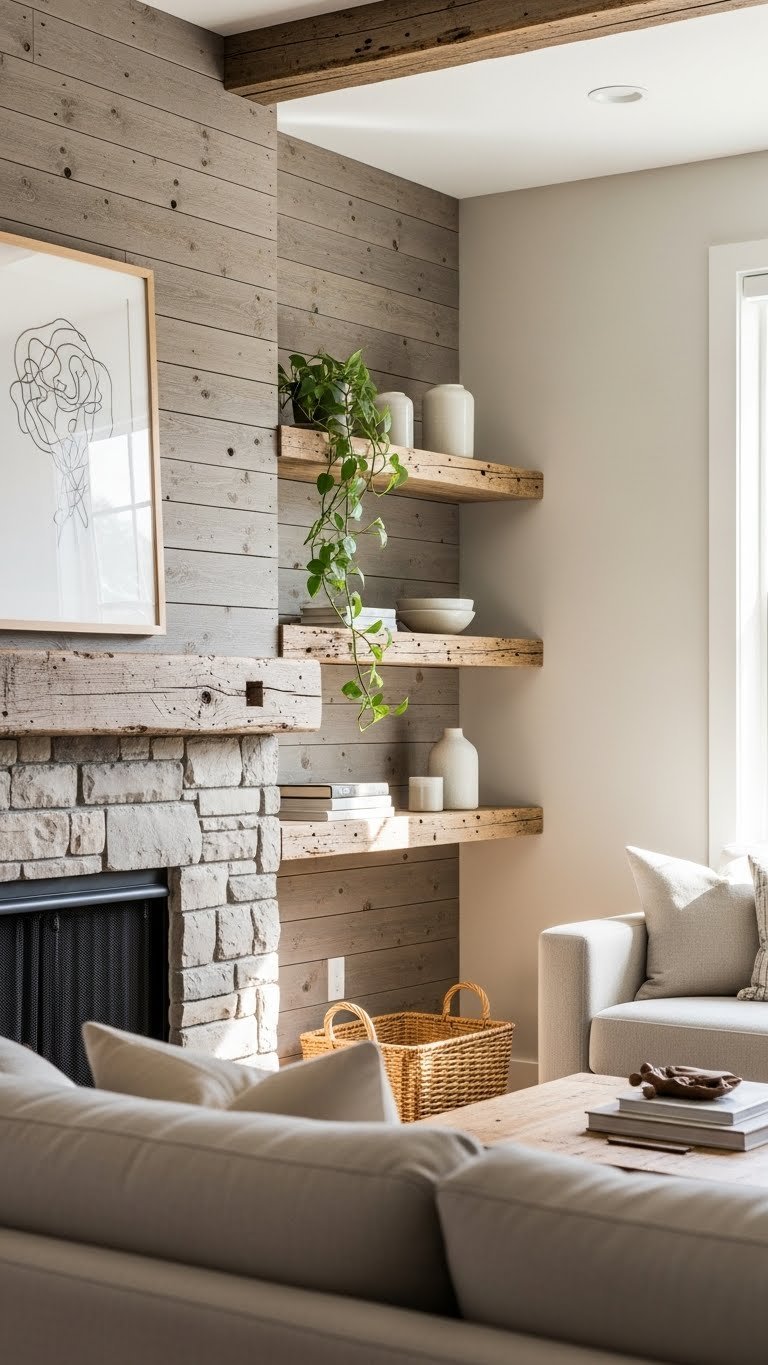
When you bring reclaimed wood into a room, it adds instant warmth, texture, and history without competing with your focal art piece.
Use weathered shiplap as an accent wall, mount a salvaged beam centerpiece above a mantel, or craft floating shelves from barn boards.
You’ll create calm, lived-in charm that’s flexible, sustainable, and lets your personality roam free without cluttering the space.
Select Subtle Metallic or Dark Accents
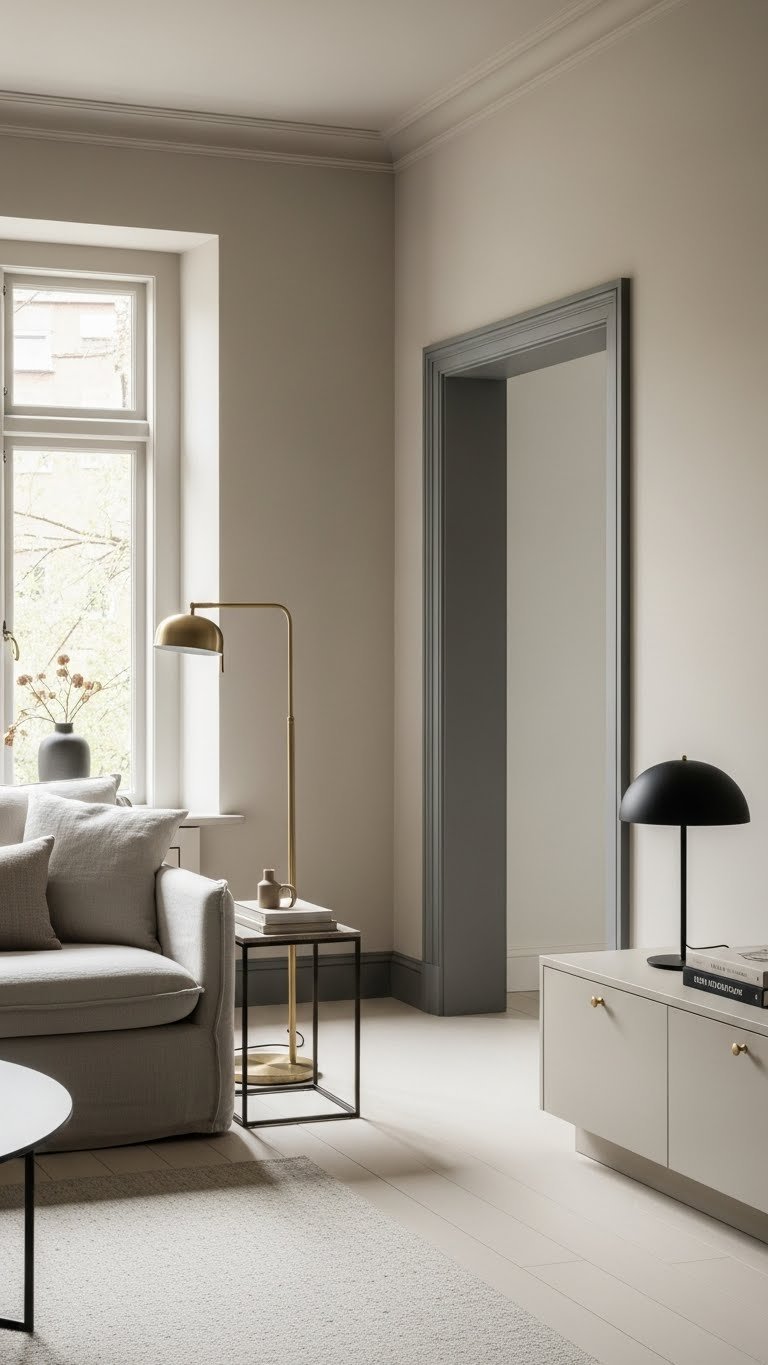
Although subtle, metallic or dark accents can anchor a room and sharpen its mood, so introduce them sparingly to keep the space calm and cohesive. You’ll balance freedom and restraint by adding brushed brass hardware, a single dark lamp, or charcoal fixtures on trim. Use accents as punctuation: a defined focal point that elevates neutrals without clutter, keeping lines clean and choices intentional.
Designate Hidden Storage for Everyday Items
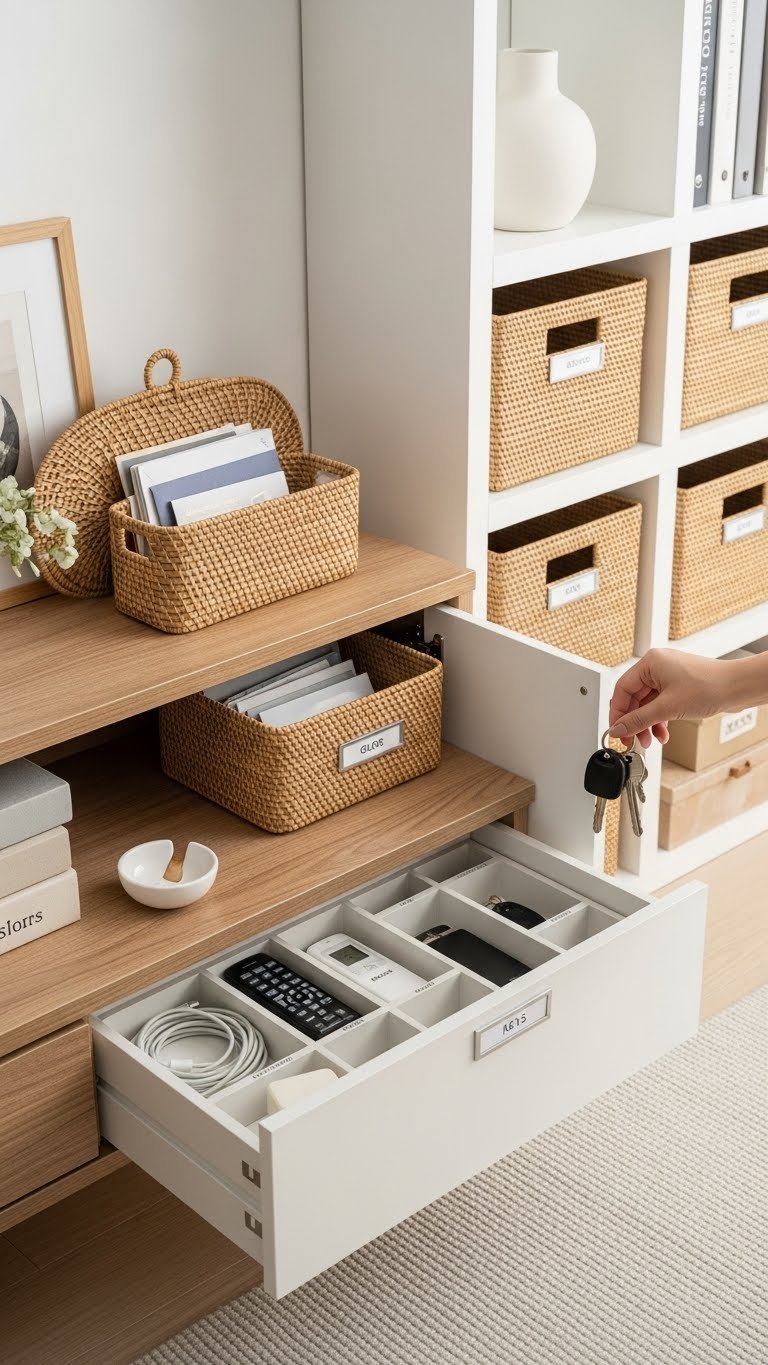
Tuck everyday items out of sight to keep your space feeling calm and uncluttered: designate drawers, lidded baskets, or built-in cubbies for things like chargers, remotes, mail, and keys so surfaces stay intentionally spare.
Use hidden baskets for quick drop zones, add clear drawer labels for easy retrieval, and keep a simple routine so you move freely without visual noise or distraction.
Maintain Consistent Color Flow Between Rooms
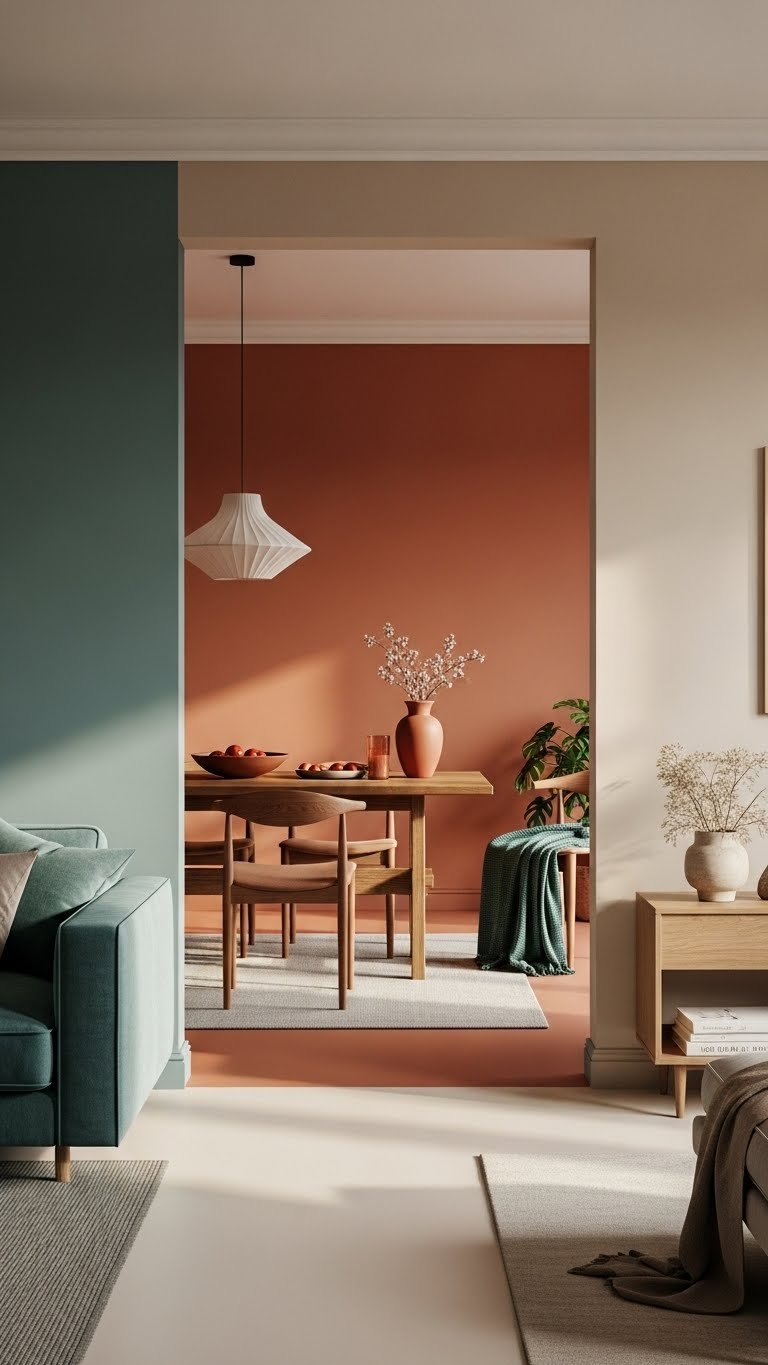
If you want your home to feel cohesive, carry a limited palette through adjoining spaces so colors gently lead the eye from room to room. You’ll create calm flow by using color zoning—assigning anchor hues per area—and layered accents that echo nearby rooms. Choose bridging palettes that bridge bold and neutral zones, keeping choices simple so each space feels free, intentional, and connected.