You want shelves that look effortless, not cluttered, and that sell a space’s story at a glance. Start with a restrained palette, vary heights and textures, and think in threes and fives for visual rhythm. Mix tall art, sculptural objects, books, and greenery, then edit until every piece earns its place. Below are 27 market-ready ideas to help you build layered, retail-worthy vignettes that feel lived-in—and intentional.
Layered Art and Object Vignettes
When you build a layered art and object vignette, think like a gallery curator: place tall pieces at the back, mid-scale objects in the middle, and small, tactile items up front to create depth and focal points.
You’ll balance negative space and tactile contrast to guide the eye, sell a lifestyle of freedom, and make shelves feel intentional, modern, and effortlessly curated.
Grouped Ceramic and Glassware Mix
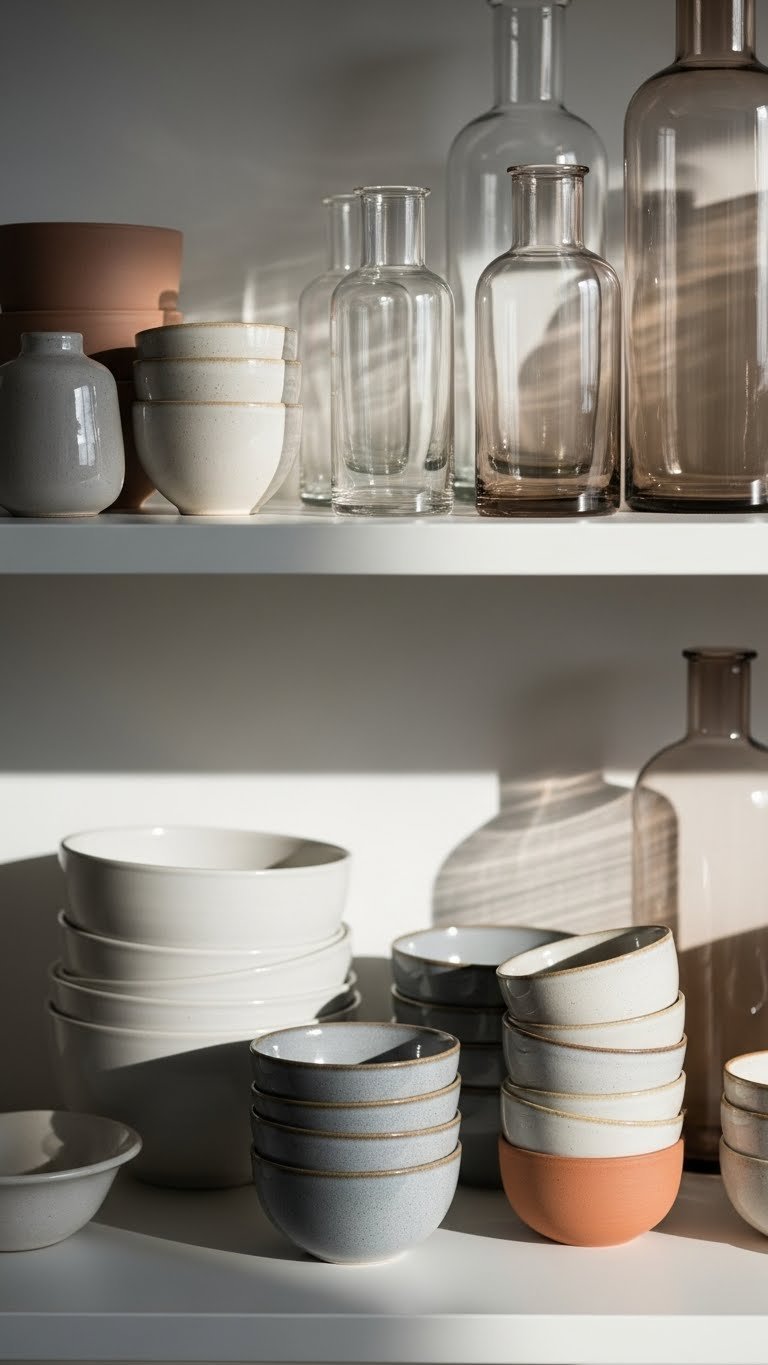
Pull together ceramics and glassware to create shelves that read like a small, intentional collection—layered by size, texture, and translucency to catch the eye. You’ll balance pieces with matte glazes against clear vessels, letting light define form. Group by scale and finish, highlight textured rims for tactile interest, and edit ruthlessly so each object feels purposeful and freely chosen.
Stacked Books With Sculptural Bookends
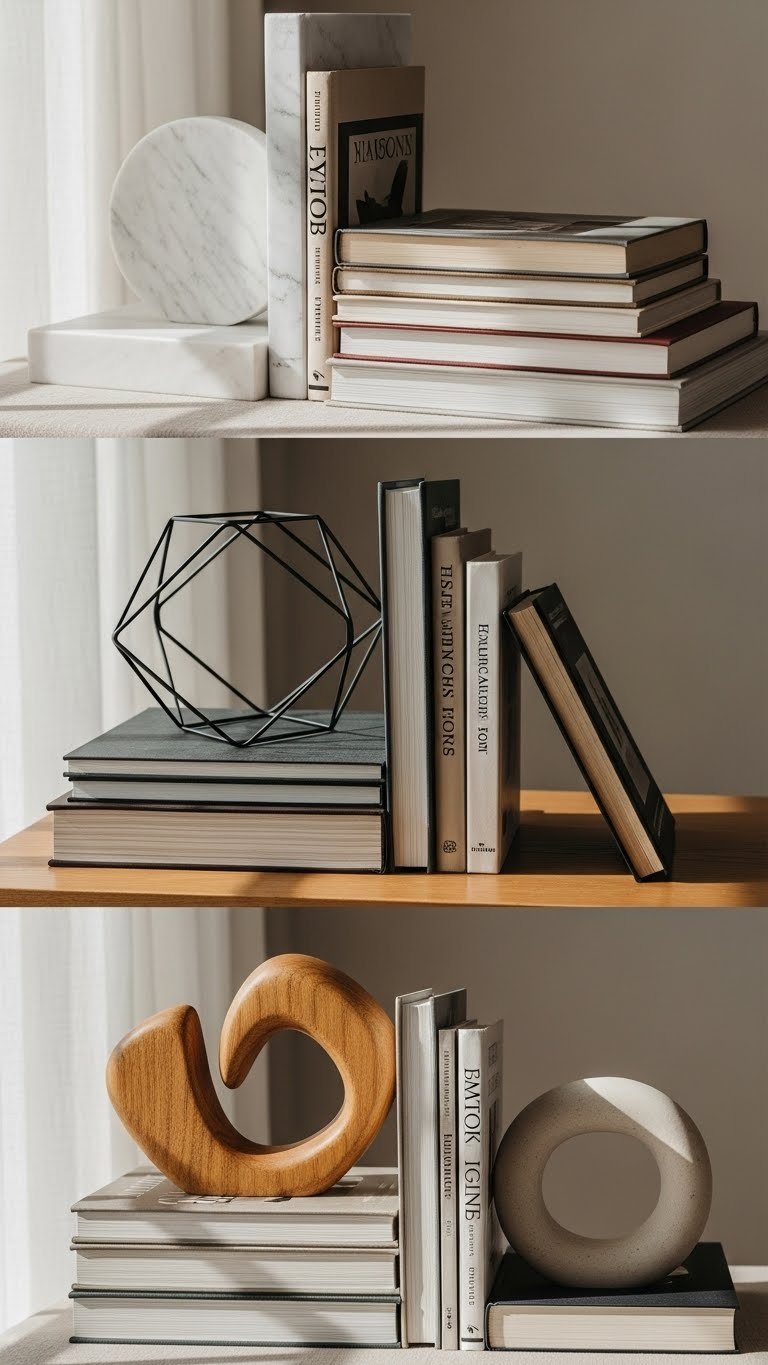
Stack stacked books with sculptural bookends to make reading material feel like deliberate décor, not clutter. You’ll balance volumes in horizontal piles, pairing marble ends with metal or wooden forms that anchor asymmetrical spines. Choose pieces that double as small sculptures; they sell rooms a calm, curated look. Arrange by scale and color so each stack reads like purposeful freedom, not accidental storage.
Trayed Greenery Arrangements
Paragraphs
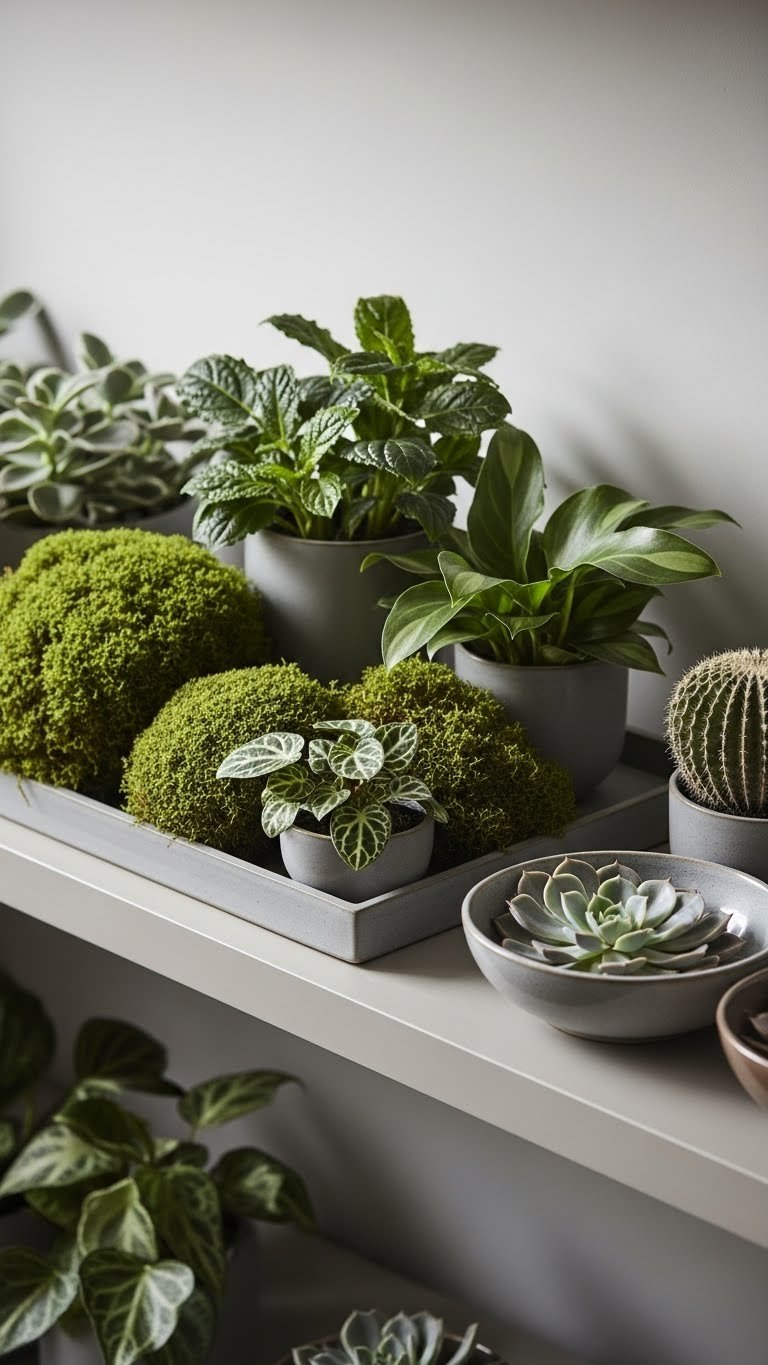
On a shallow tray, group varied greenery to create a deliberate, market-ready vignette that elevates any surface. You’ll mix moss trays, low pots, and sculptural foliage for texture and ease.
Place a couple of succulent bowls for contrast, keep lines clean, and vary heights subtly. This feels intentional, fresh, and effortless—shelf styling that signals curated freedom and commercial polish.
Odd-Numbered Accessory Clusters
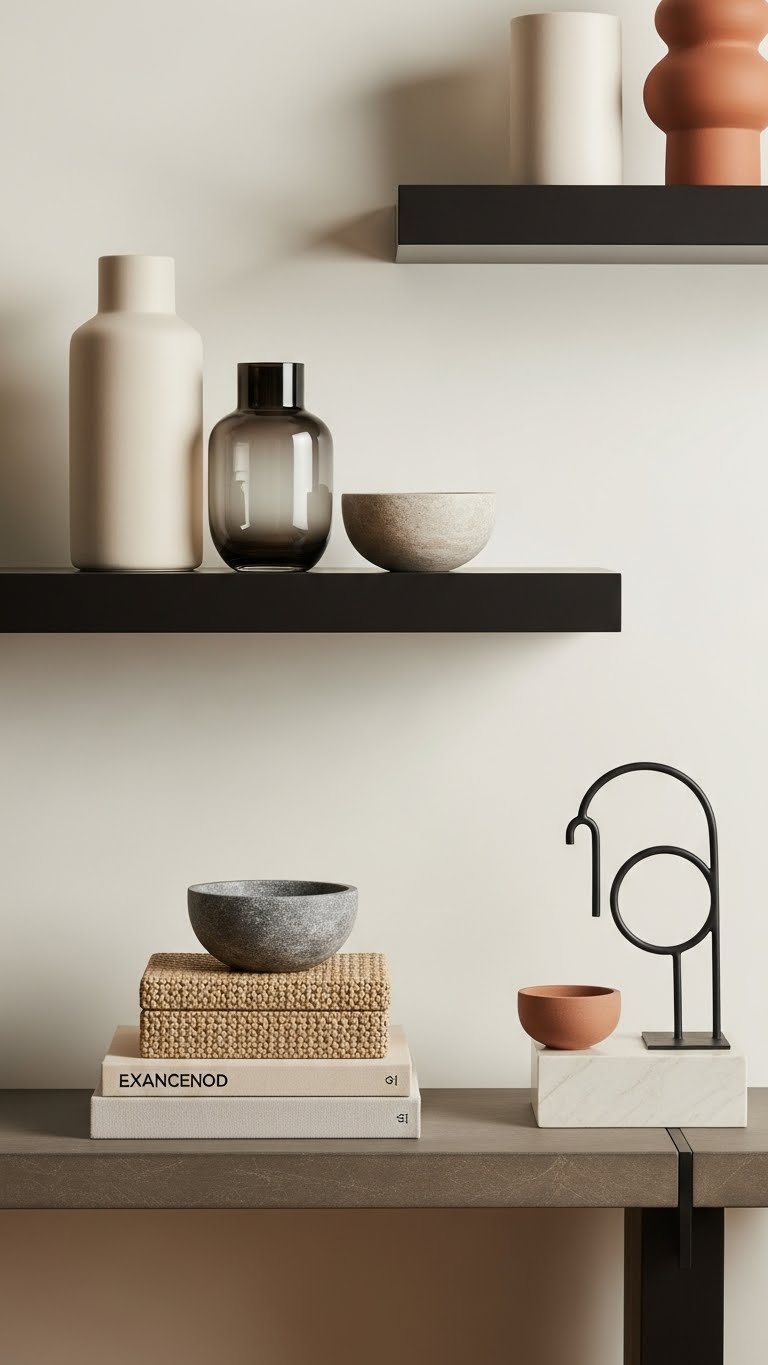
Group items in threes or fives to create a naturally pleasing, market-ready cluster that reads as intentional rather than cluttered. You’ll arrange odd clusters with varying heights, textures, and finishes to establish visual rhythm and freedom of choice.
Keep scale balanced, negative space deliberate, and color restrained so each accessory sells a confident, curated look that feels effortless and inviting.
Woven Baskets and Textured Bins
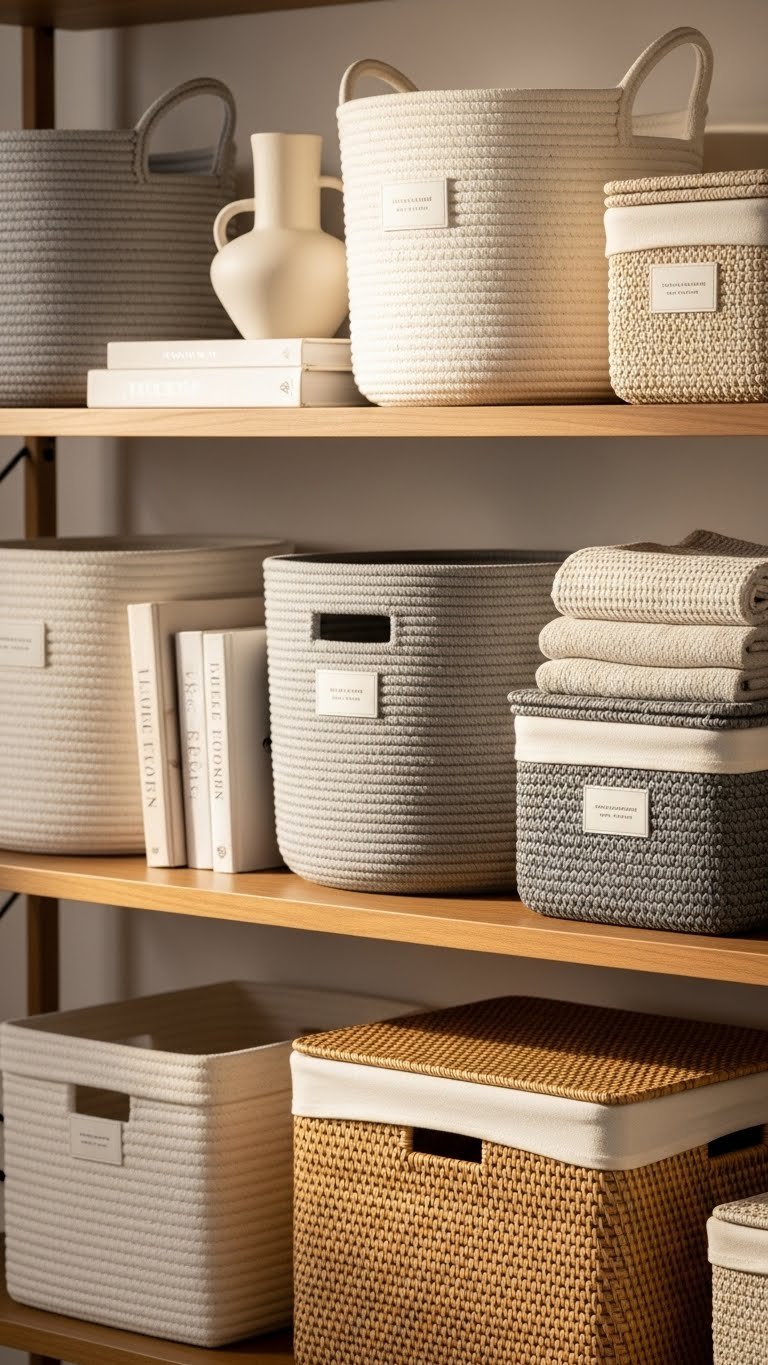
Woven baskets and textured bins bring practical polish to a shelf — they hide clutter, add warmth, and introduce tactile contrast that anchors lighter objects. You’ll choose neutral fibers and woven textures to create a calm, collected backdrop that sells a lifestyle of ease. Mix sizes for function and rhythm, keep labels minimal, and let these pieces deliver organized freedom with clear visual authority.
Vintage Finds With Modern Accents
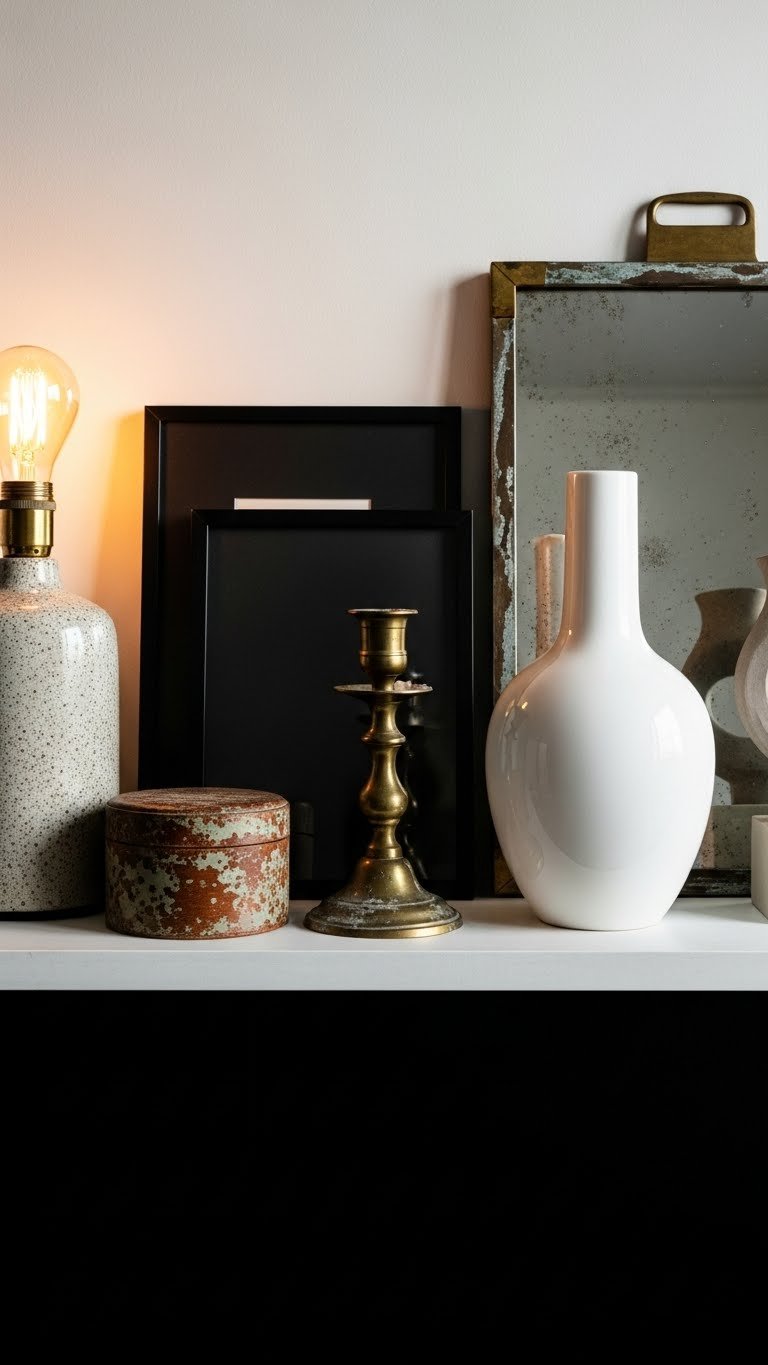
When you pair weathered finds with streamlined modern pieces, you create a shelf that feels curated rather than cluttered—vintage brass, patinated wood, or a mid-century ceramic lamp gain fresh life against matte black frames or glossy white pottery. You’ll mix weathered mirrors and brass hardware with crisp sculptural objects, balancing history and minimalism so each piece reads as intentional, collectible, and market-ready.
Monochrome Palette Styling
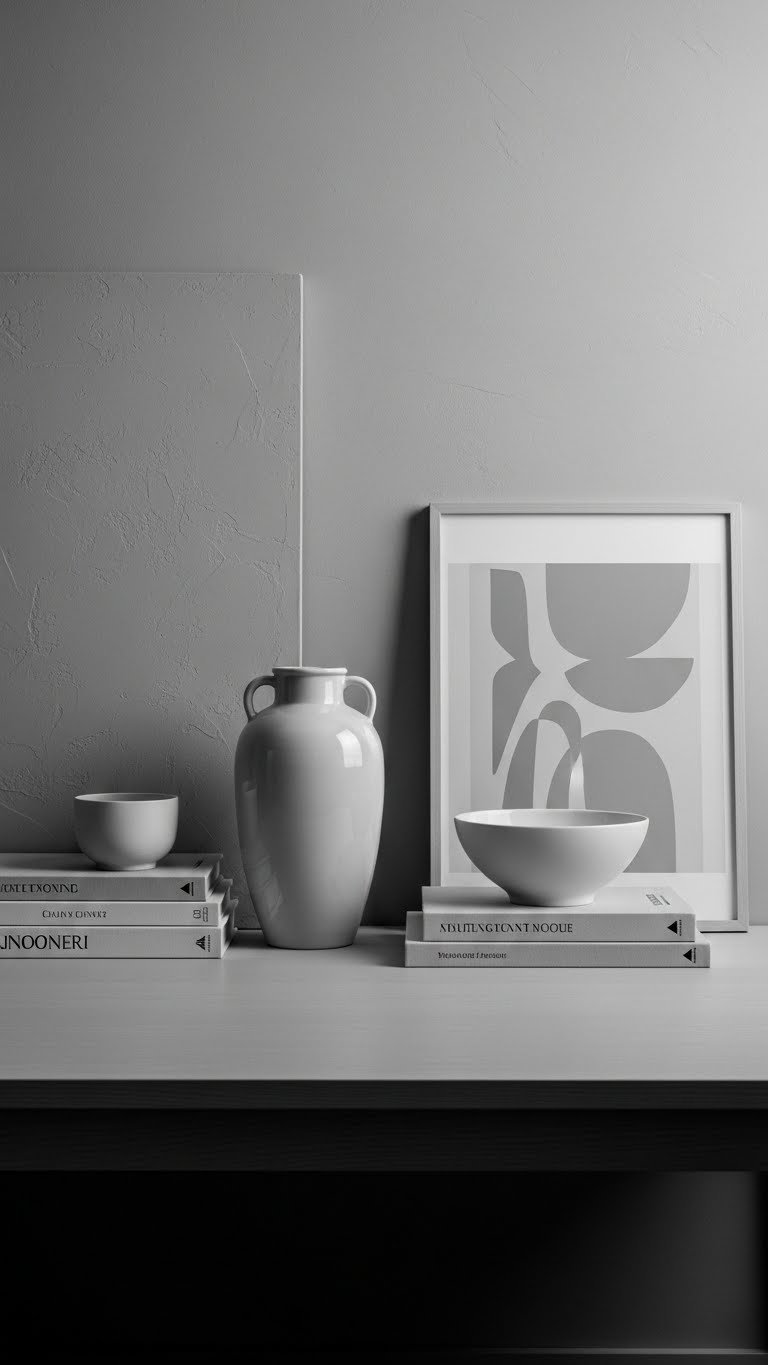
Curious how a single color can feel richly layered instead of flat? You’ll choose one hue, mix matte textures and glossy accents, and rely on tonal contrasts to create depth.
Arrange purposeful objects—sculptural books, streamlined ceramics, curated art—to sell a lifestyle of uncluttered freedom. You’ll edit ruthlessly, prioritize scale and negative space, and make the monochrome scheme feel intentional, modern, and effortless.
Botanical Prints and Potted Plants
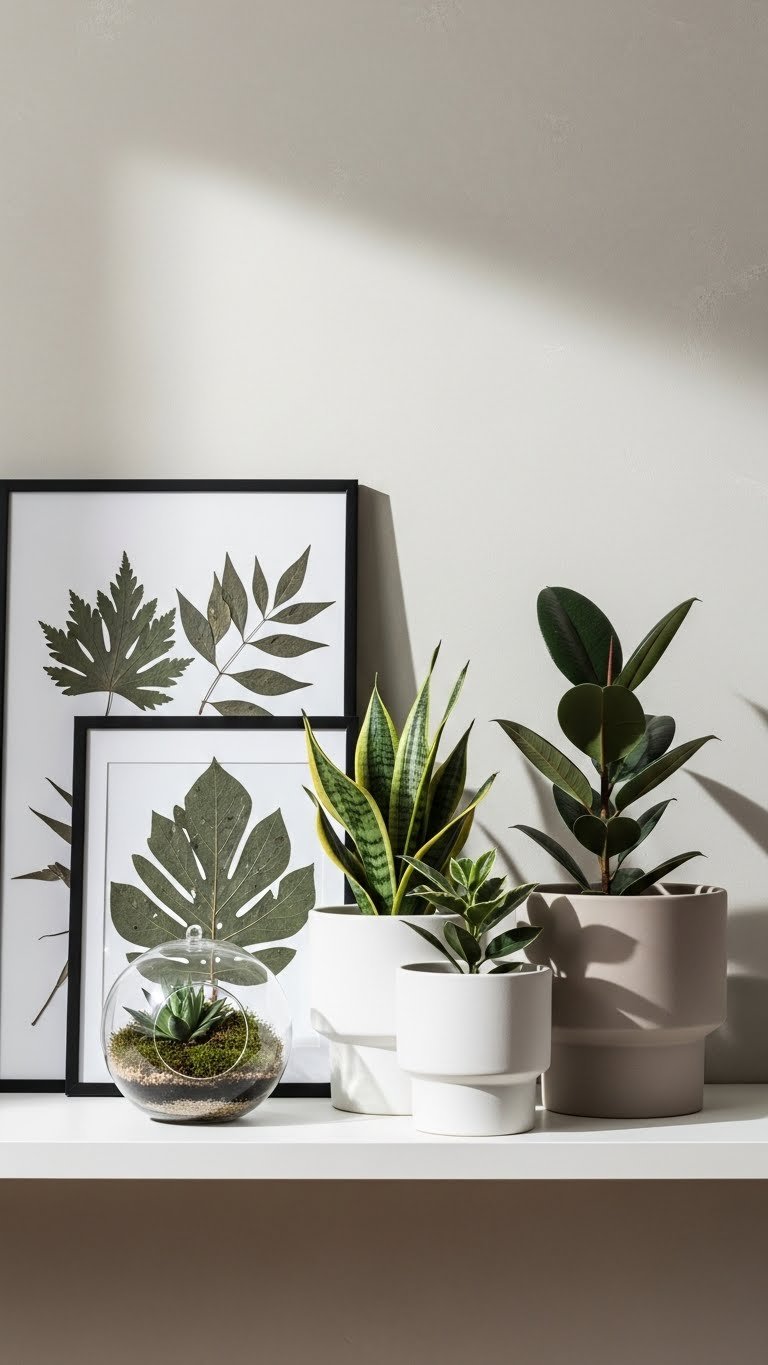
Although you’ve just pared back a monochrome vignette, adding botanical prints and a few potted plants will introduce organic texture and visual warmth without disrupting your restrained aesthetic.
You’ll layer framed pressed leaves, sculptural pots, and a compact terrarium styling piece to add depth. Curate scale, favor foliage with clean lines, and keep maintenance minimal to sell a carefree, elevated shelf look.
Coastal Collectibles and Shell Displays
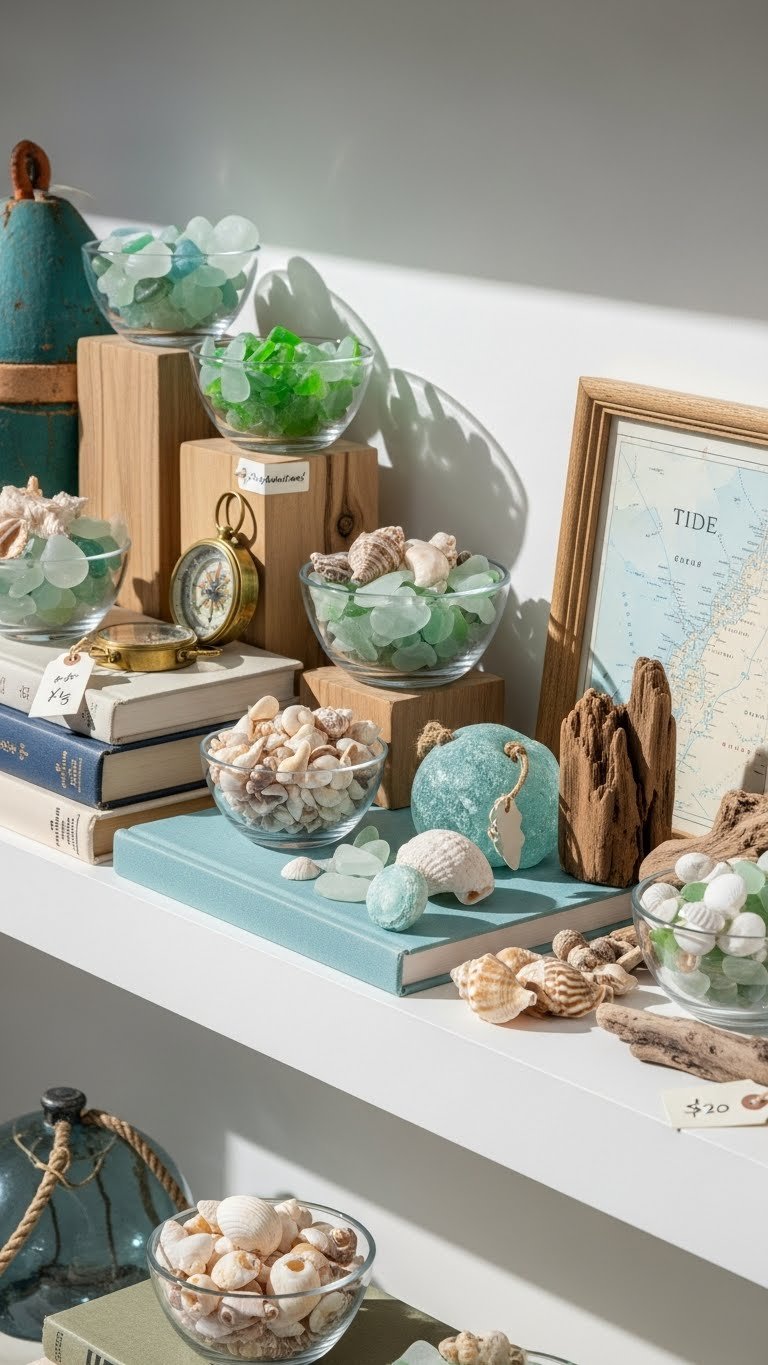
If you want to bring a breezy, collected feel to your shelves, curate a small group of shells, driftwood fragments, and vintage nautical pieces that read like souvenirs rather than clutter. You’ll pair beach glass in clustered bowls with framed tide maps, varying heights for rhythm. Choose pieces with provenance, edit ruthlessly, and price for resale appeal if you plan to rotate or market the collection.
Miniature Gallery of Small Canvases
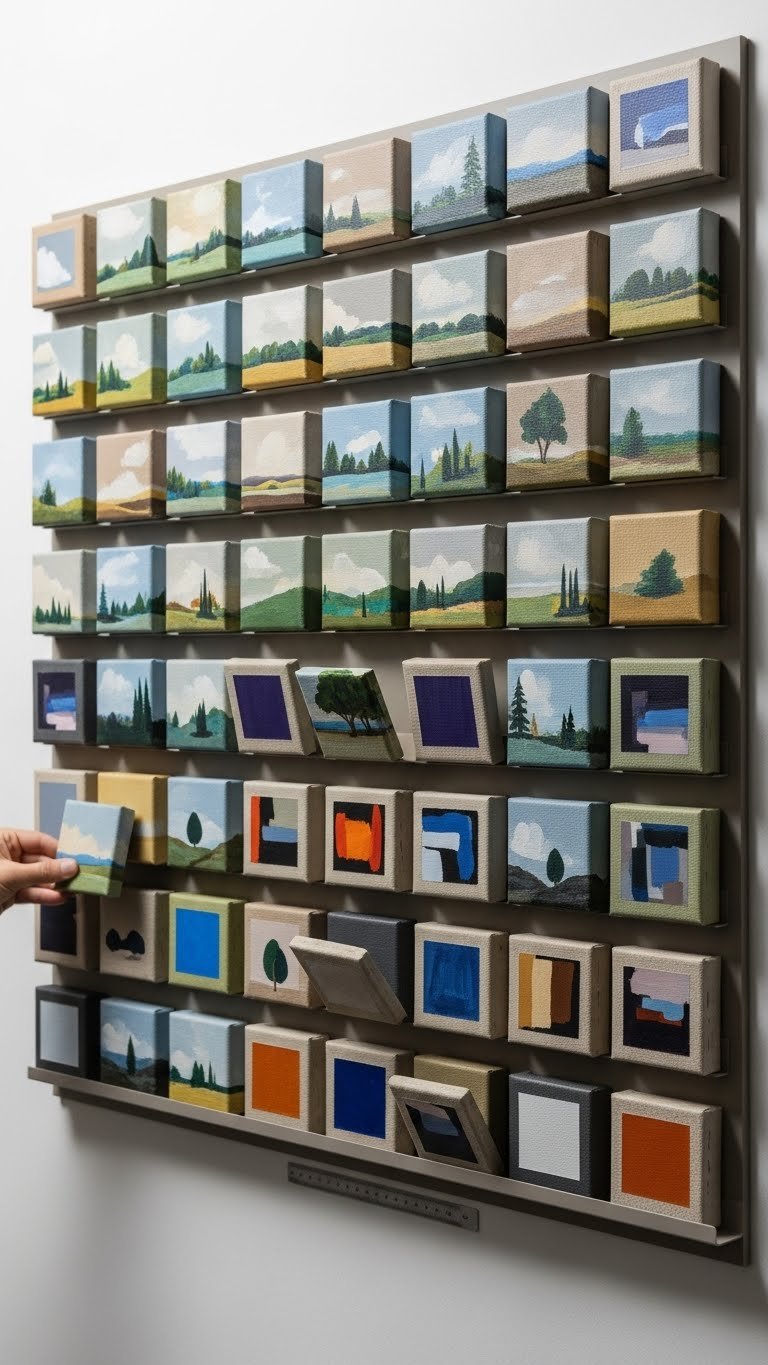
Scale down your gallery with a tight grid of small canvases that pack personality without overwhelming a shelf. You’ll curate a market-savvy mini canvas collection using pocket frames miniature for easy swaps. Place tiny landscapes beside bold micro abstract studies to balance calm and edge. Keep spacing consistent, choose a unifying palette, and let each piece offer portable freedom and high-impact style.
Geometric Objects With Metallic Touches
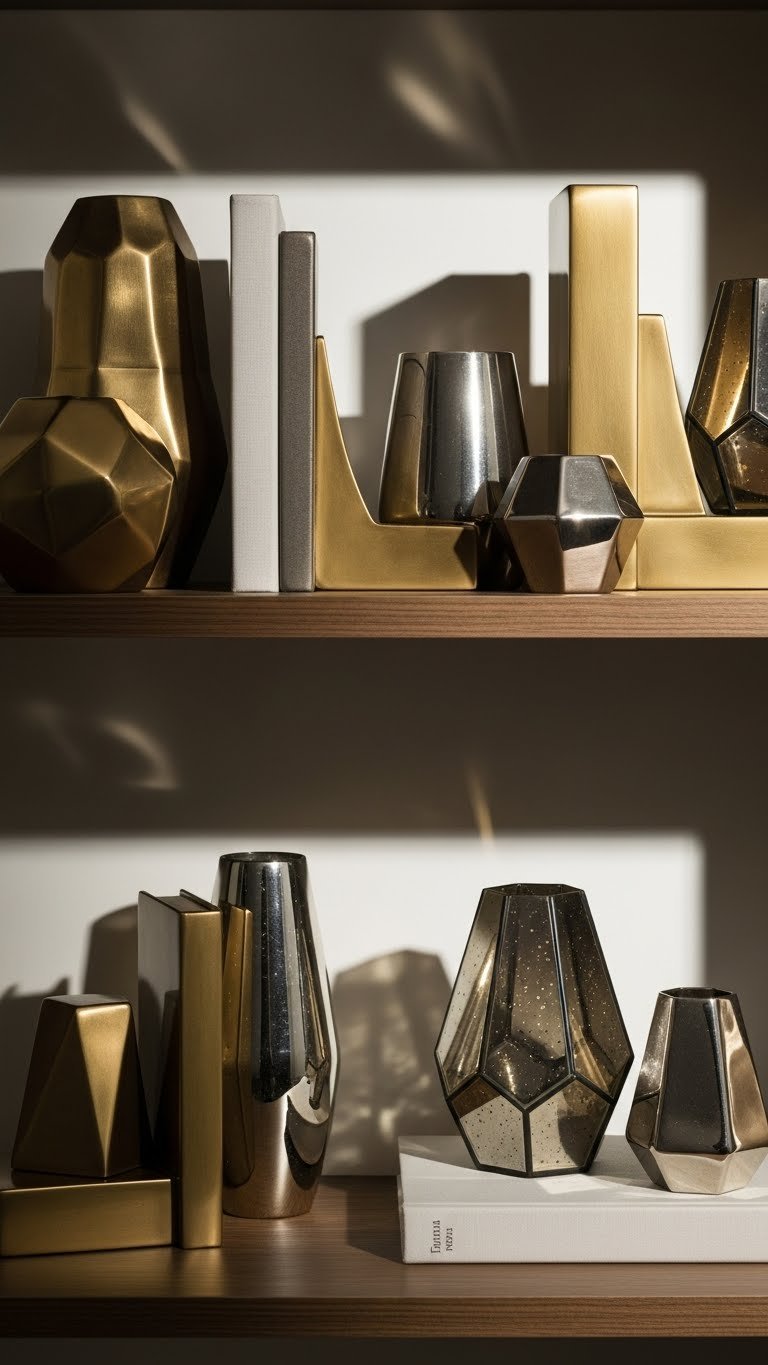
After arranging a pocket-sized gallery, bring contrast with geometric objects that add structure and shine to your shelf styling. You’ll mix faceted metalworks and angular brass pieces to create crisp silhouettes. Introduce geometric mercury vases for reflective depth and nickel accents for cool contrast. Curate sparingly, balance scale and negative space, and let these polished forms signal confident, liberated taste.
Seasonal Rotating Shelvescape
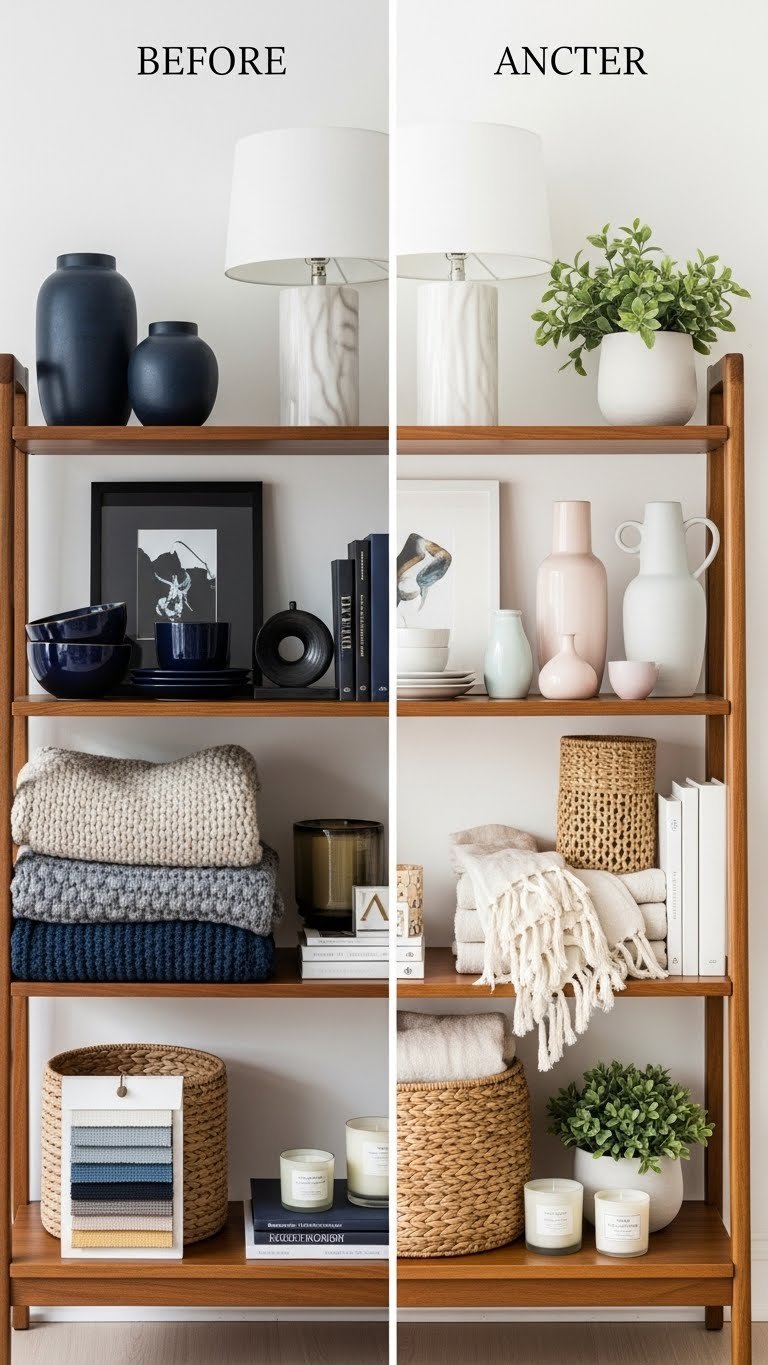
When the seasons change, rotate your shelvescape to keep your space feeling current and intentional; swap heavy, moody pieces for lighter textures, introduce seasonal colors in small accents, and let a few signature items anchor each look. You’ll embrace rotating colorways and seasonal textures, edit boldly, and curate fast, market-ready looks that feel freeing—minimal effort, maximum impact, and clear visual direction.
Layered Trays for Functional Decor
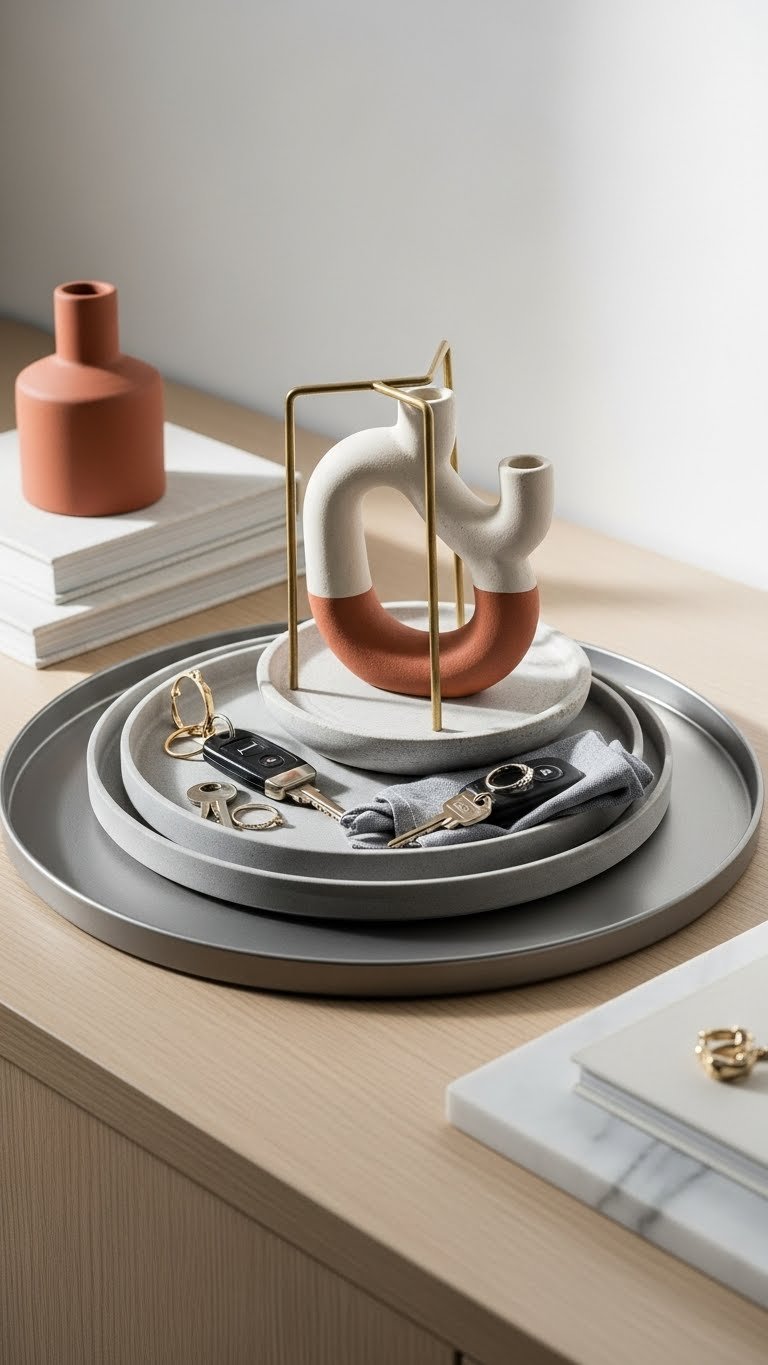
Layer trays to add function and polish to any surface: start with a large base tray to anchor the vignette, nest a smaller tray or shallow bowl for loose items, and top with a decorative object to create hierarchy and interest.
You’ll choose minimal trays and sculptural pieces to keep things airy, while tiered surfaces organize essentials, express personal style, and free your space for effortless living.
Asymmetrical Zig-Zag Balance
Paragraphs
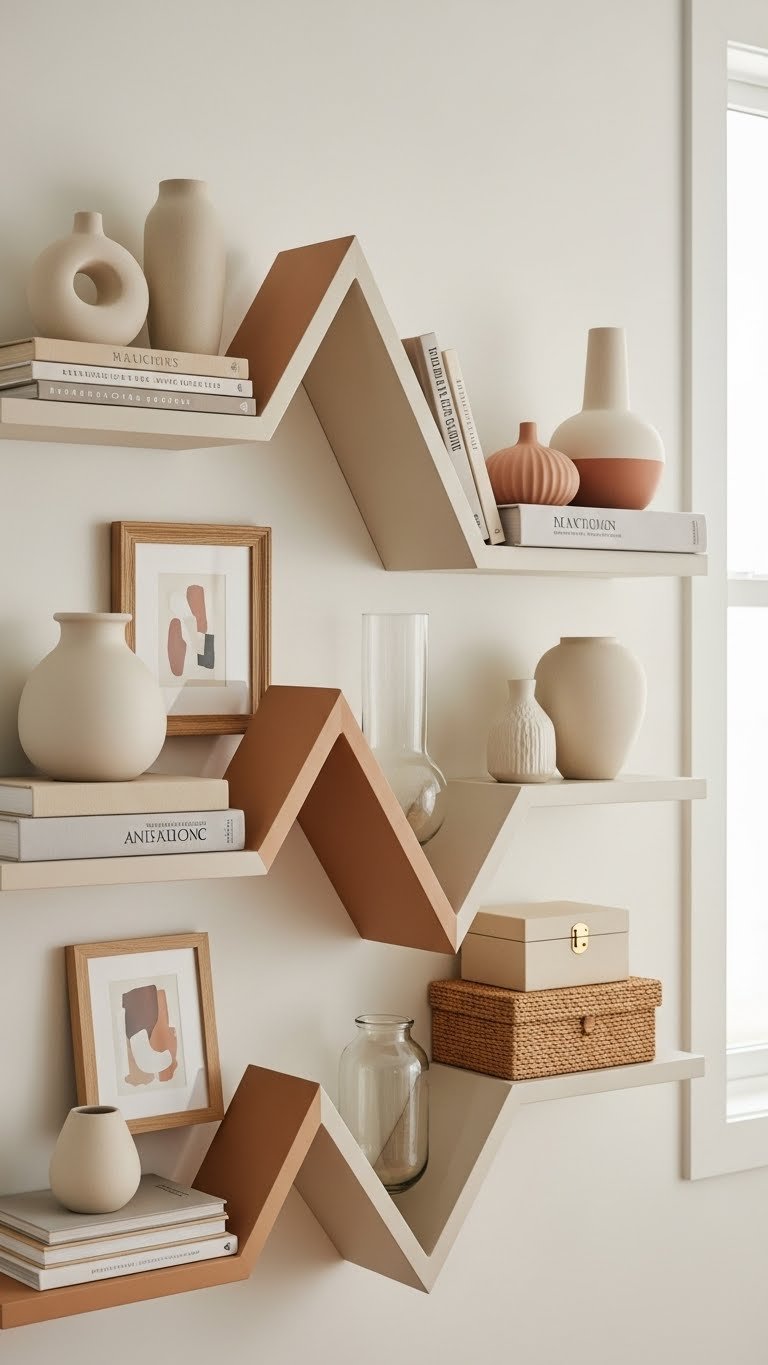
Although it may look spontaneous, asymmetrical zig-zag balance is a deliberate design strategy that guides the eye across a shelf by alternating visual weight rather than mirroring it.
You’ll create asymmetrical rhythm and confident movement using varied heights, textures, and negative space.
Apply zigzag layering to lead attention from piece to piece, freeing your styling choices while keeping a market-ready, curated look that sells.
Travel Souvenirs Curated by Color
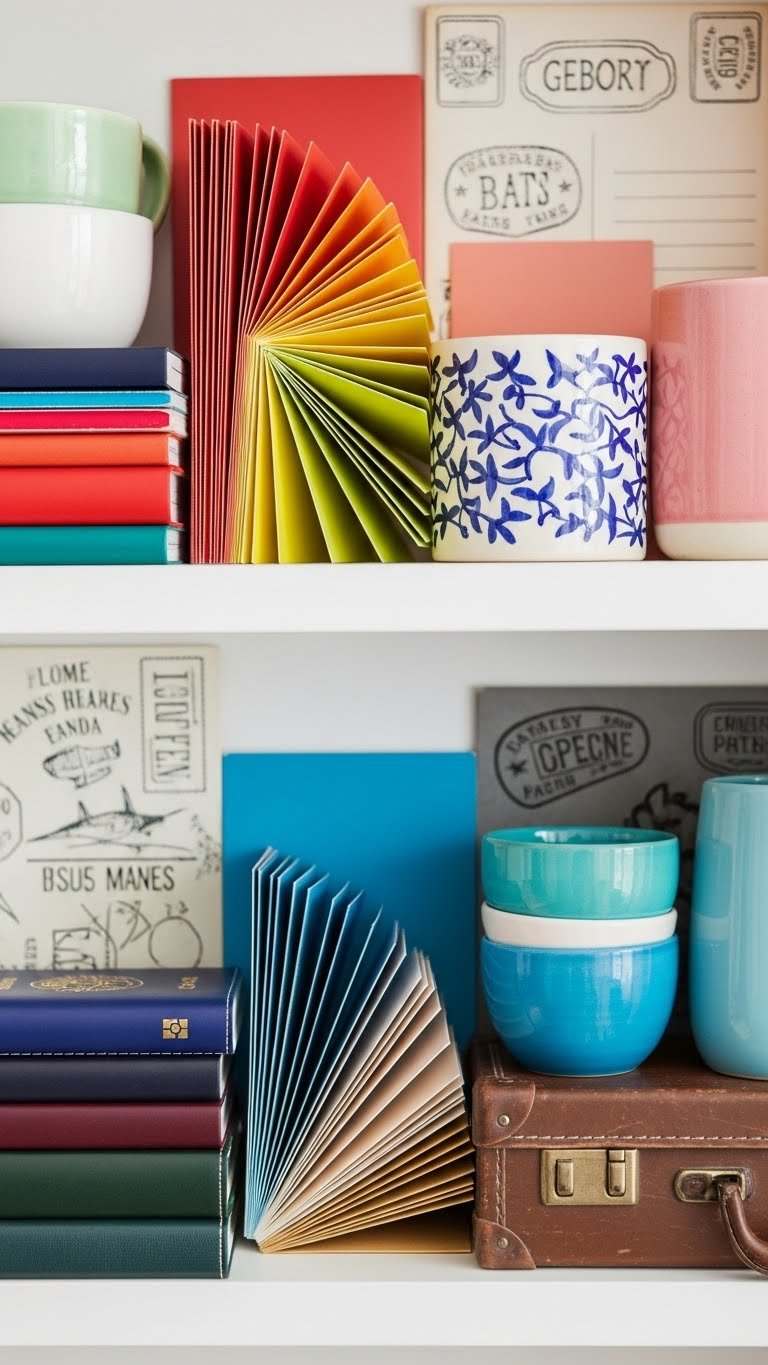
Why not let color organize your travel treasures so they read like a gallery? Curate shelves by hue: group passport patches, postcards and ceramics into color blocks.
You’ll layer textures and scale, add vintage suitcase labels as graphic anchors, and keep a clean rhythm. The result looks intentional, sells a lifestyle of mobility, and lets your souvenirs feel like deliberate, free-spirited design.
Dried Florals in Mixed Vases
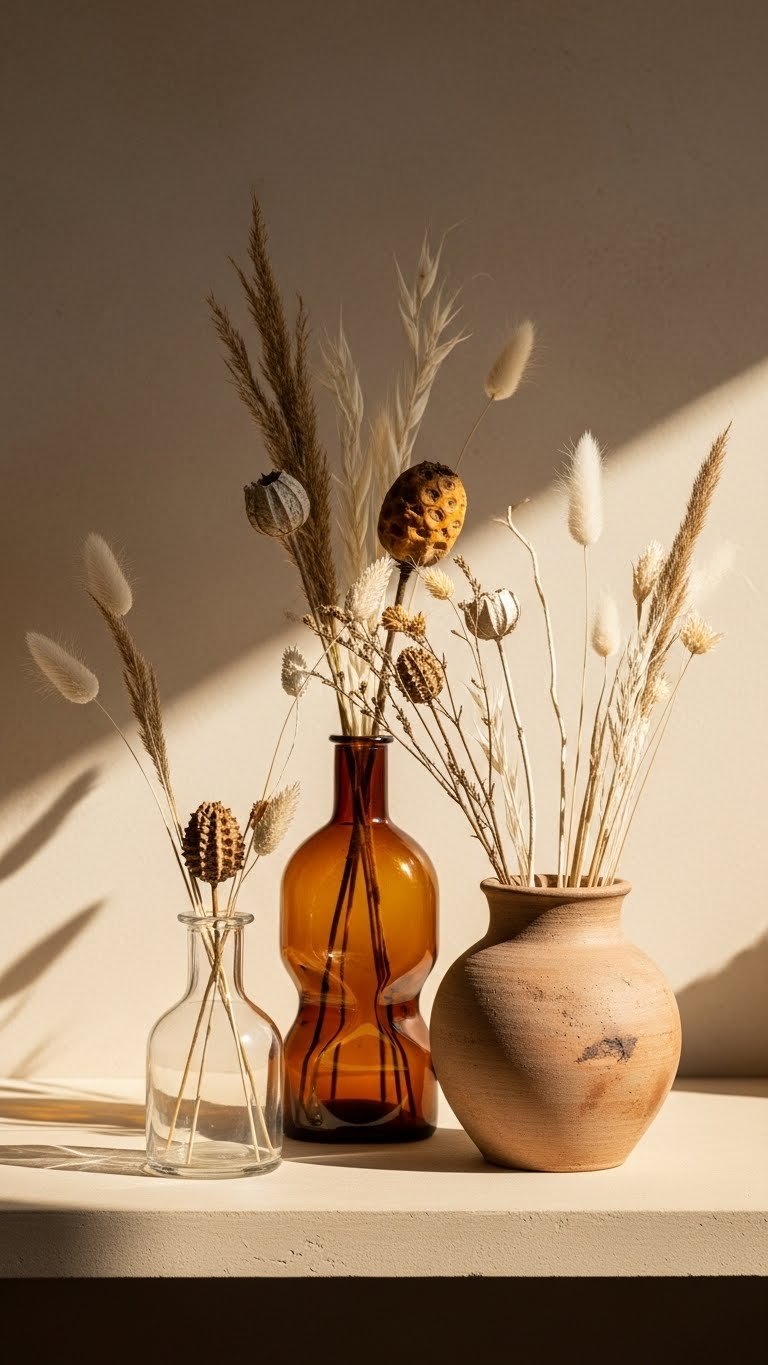
Often you’ll mix dried florals in mismatched vases to create a retail-worthy, lived-in look that reads like intentional styling.
You balance textures—dried grass, bleached stems, and seed pods—across varied heights and materials.
Use tiny bud vases as punctuation, pair a sculptural bottle with a raw earthenware, and let asymmetry suggest effortless, market-ready freedom while keeping the shelf purposeful.
Staged Kitchen Crockery and Canisters
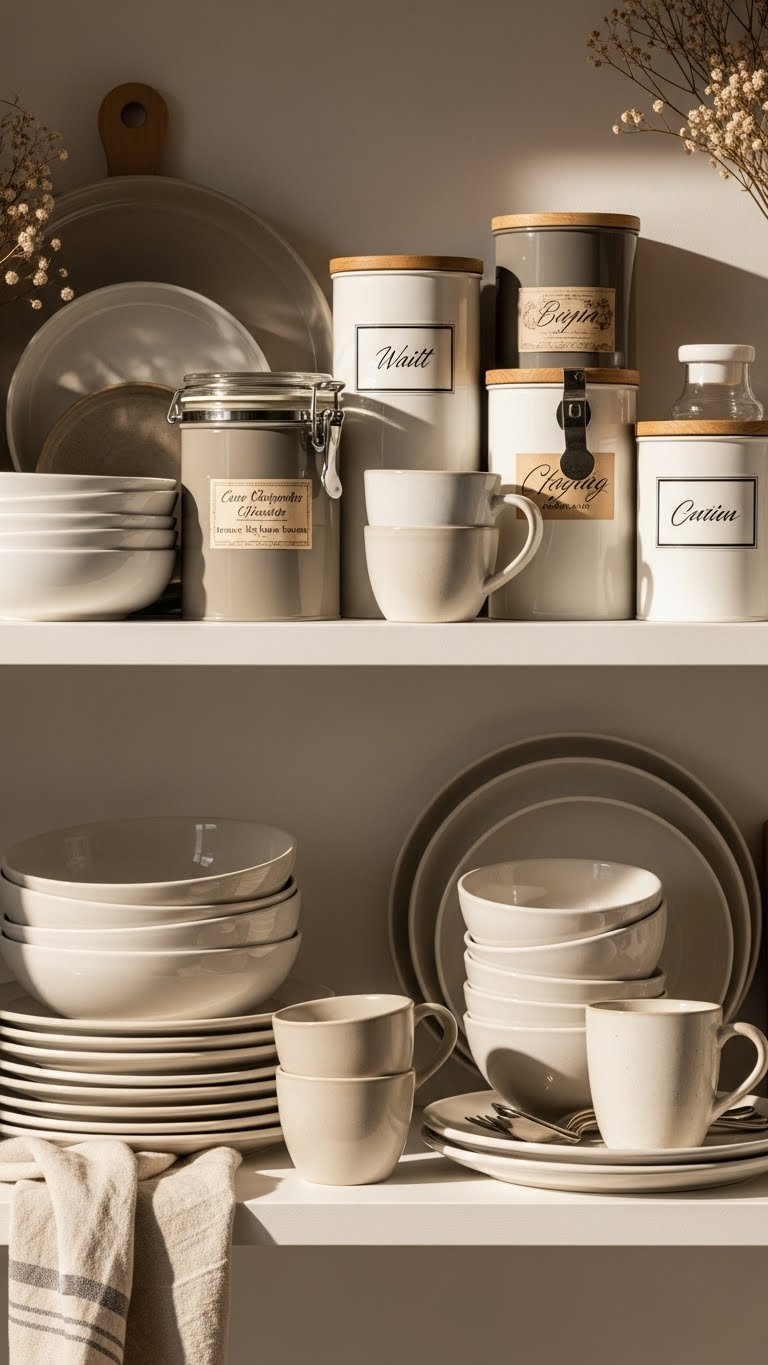
After the softness of dried florals, bring the shelf into everyday life with staged kitchen crockery and canisters that look used but perfectly arranged.
You’ll choose neutral palettes, mix matte and gloss finishes, and place layered labels for clarity and charm. Arrange by frequency of use so the display feels effortless, market-ready, and liberating—functional beauty that invites you to live freely.
Natural Wood and Woven Textures
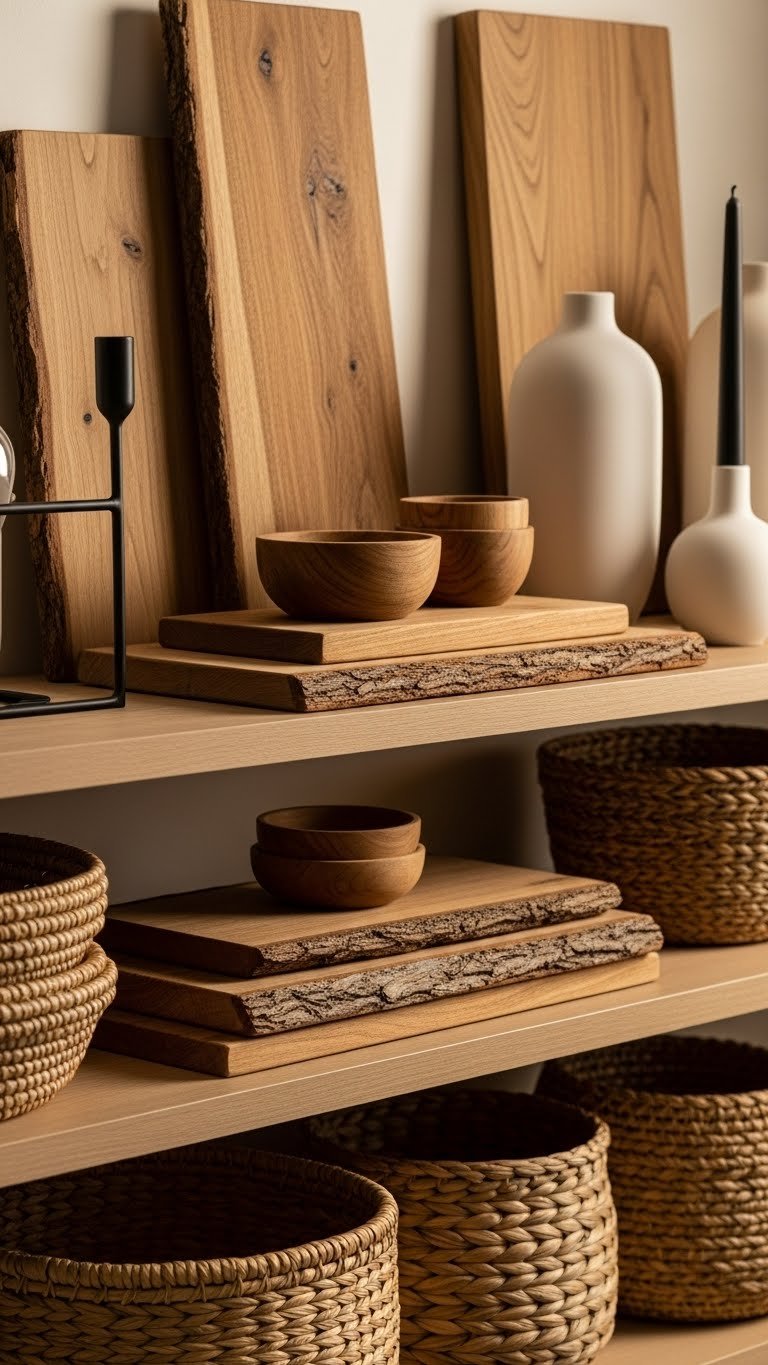
Bring in warm timber and woven pieces to ground the shelf with tactile, market-ready appeal.
You’ll layer raw grain boards, small bowls, and baskets to create woven contrast against sleek objects.
Choose pieces that feel effortless, edit for negative space, and vary scale subtly.
This approach sells a relaxed, curated look that invites movement and freedom while keeping the display intentional and market-savvy.
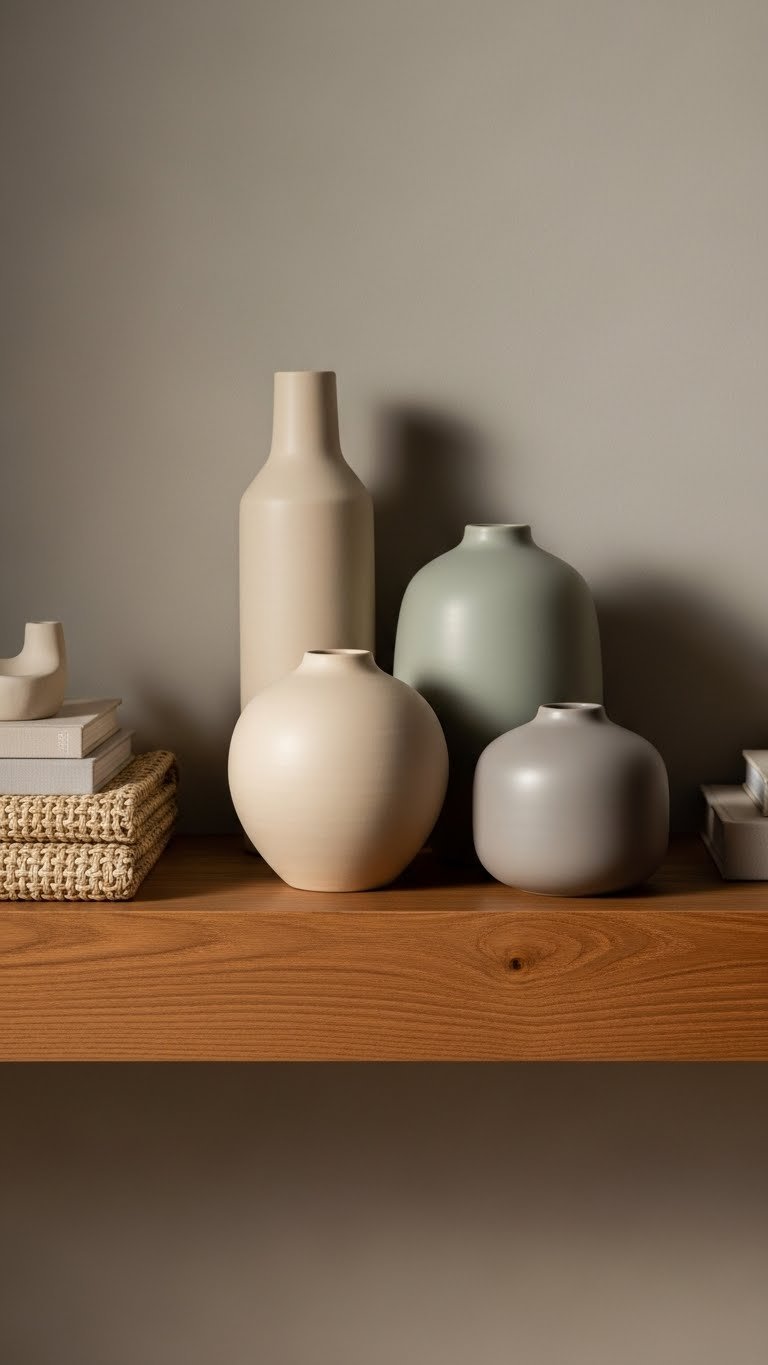
Ceramic Trio With Height Variation
Layering timber and woven textures sets a warm foundation, and a ceramic trio adds the refined punctuation that sells the look. You’ll choose pieces in a muted palette with matte glaze for subtle sophistication. Arrange them with staggered heights to guide the eye, create rhythm, and keep the shelf breathable. This feels curated, modern, and effortlessly free — a small investment, big impact.
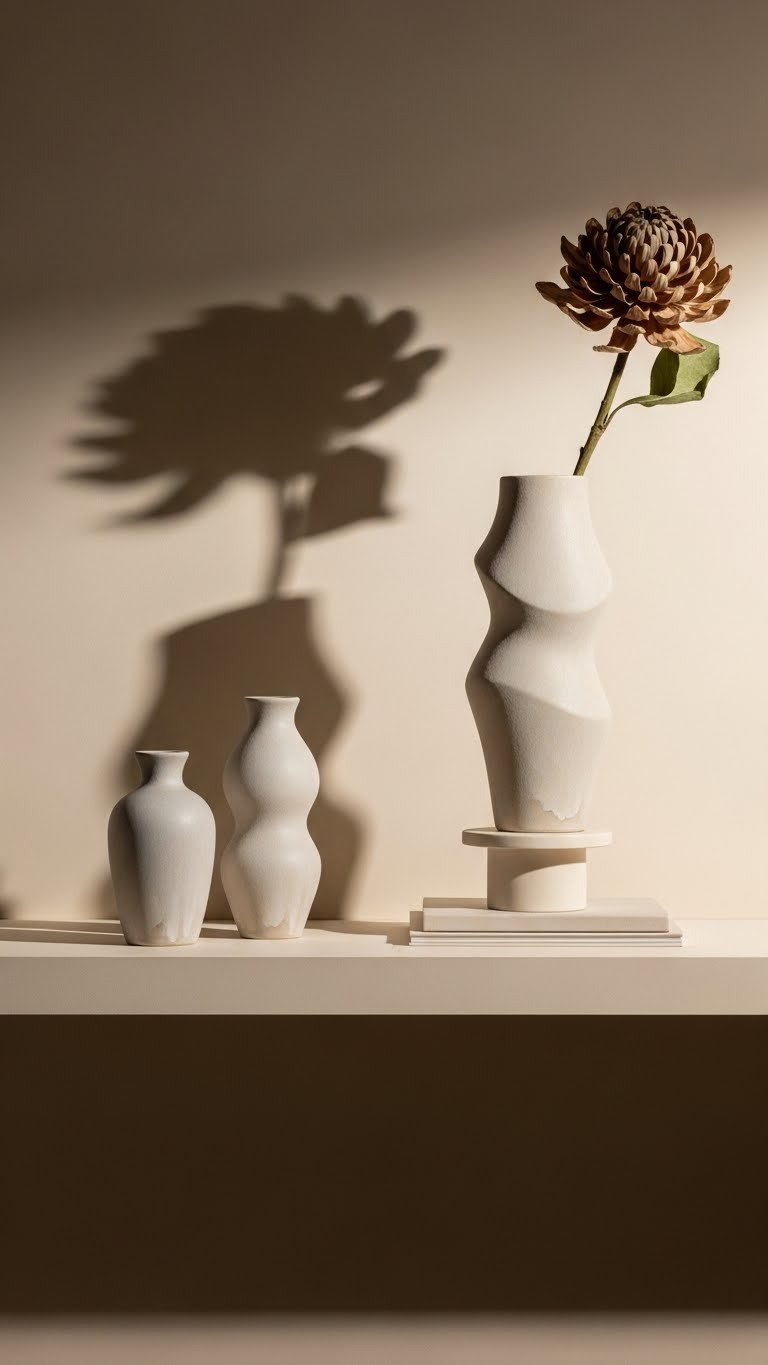
Top-Shelf Statement Vase Ensemble
Anchor your shelf with a single, attention-grabbing vase and let supporting pieces play secondary roles; you’re selling a focal point that reads luxe and intentional. Choose a tall vase pedestal to lift a sculptural bloom, then add a matte glaze pair nearby for contrast. You’ll create curated drama without clutter, projecting relaxed confidence while keeping merchandising precision and visual balance.
Capsule Color-Blocked Arrangements
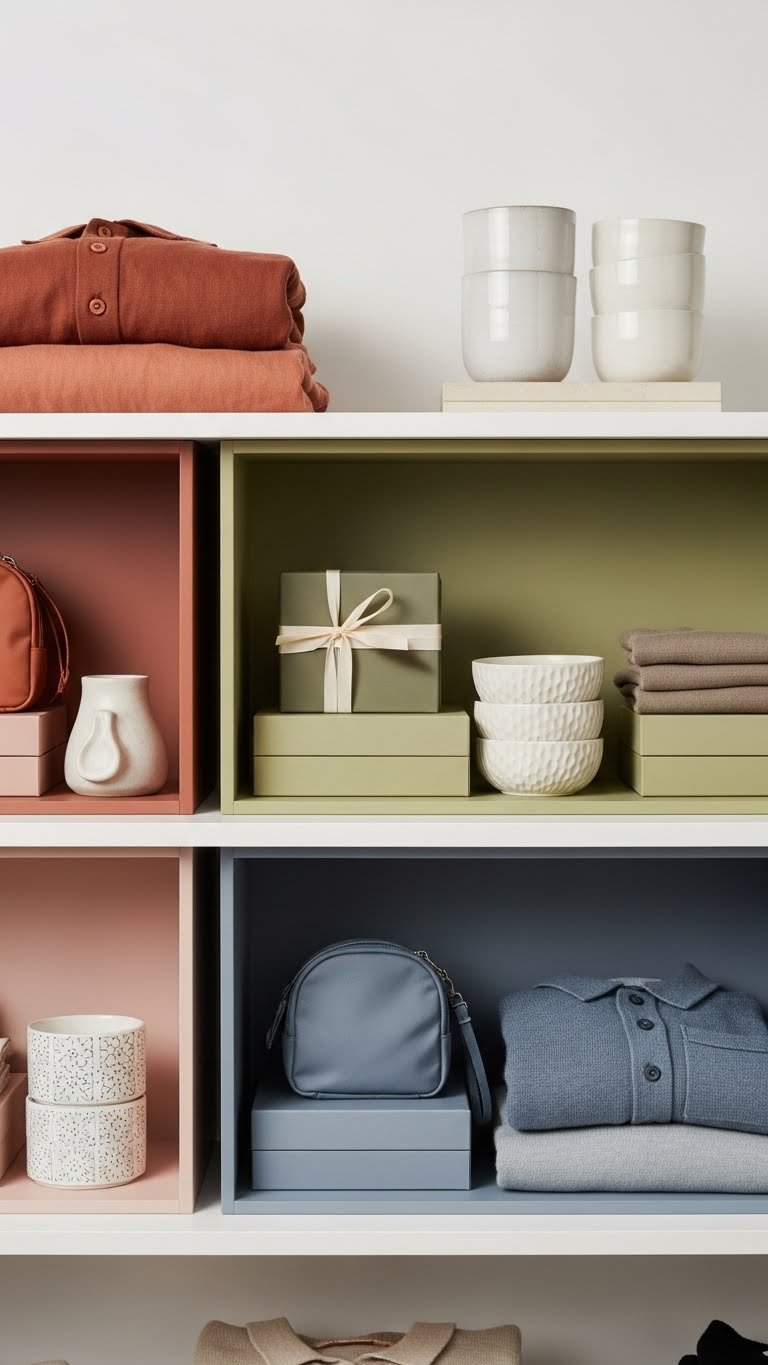
Often you’ll rely on a tight palette to make a high-impact statement: pick three complementary hues and assign each to a small cluster of objects so the eye reads bold, intentional blocks rather than scattered accents. You’ll favor muted gradients and tonal layering to sell calm cohesion; edit ruthlessly, choose market-ready pieces, and let crisp color capsules free the shelf from clutter while feeling deliberately curated.
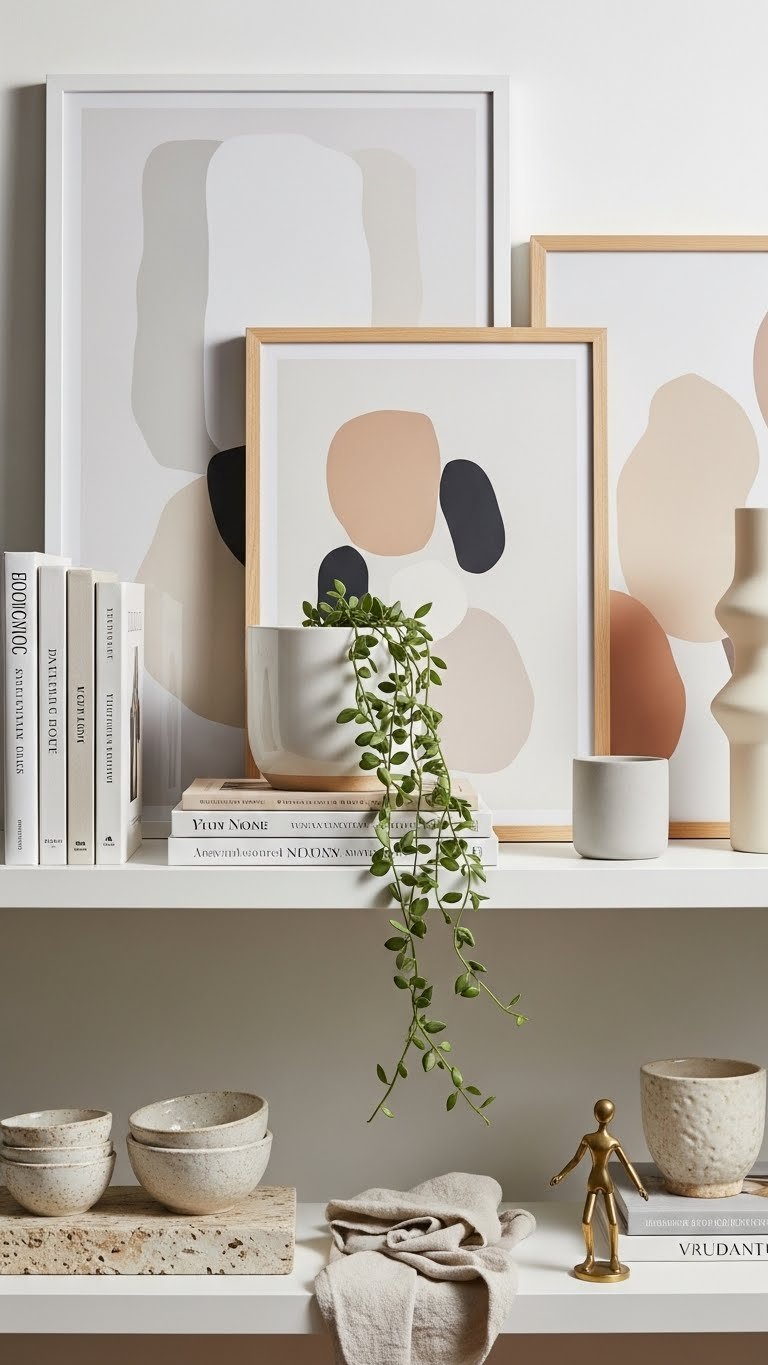
Art-Backed Shelves With Foreground Decor
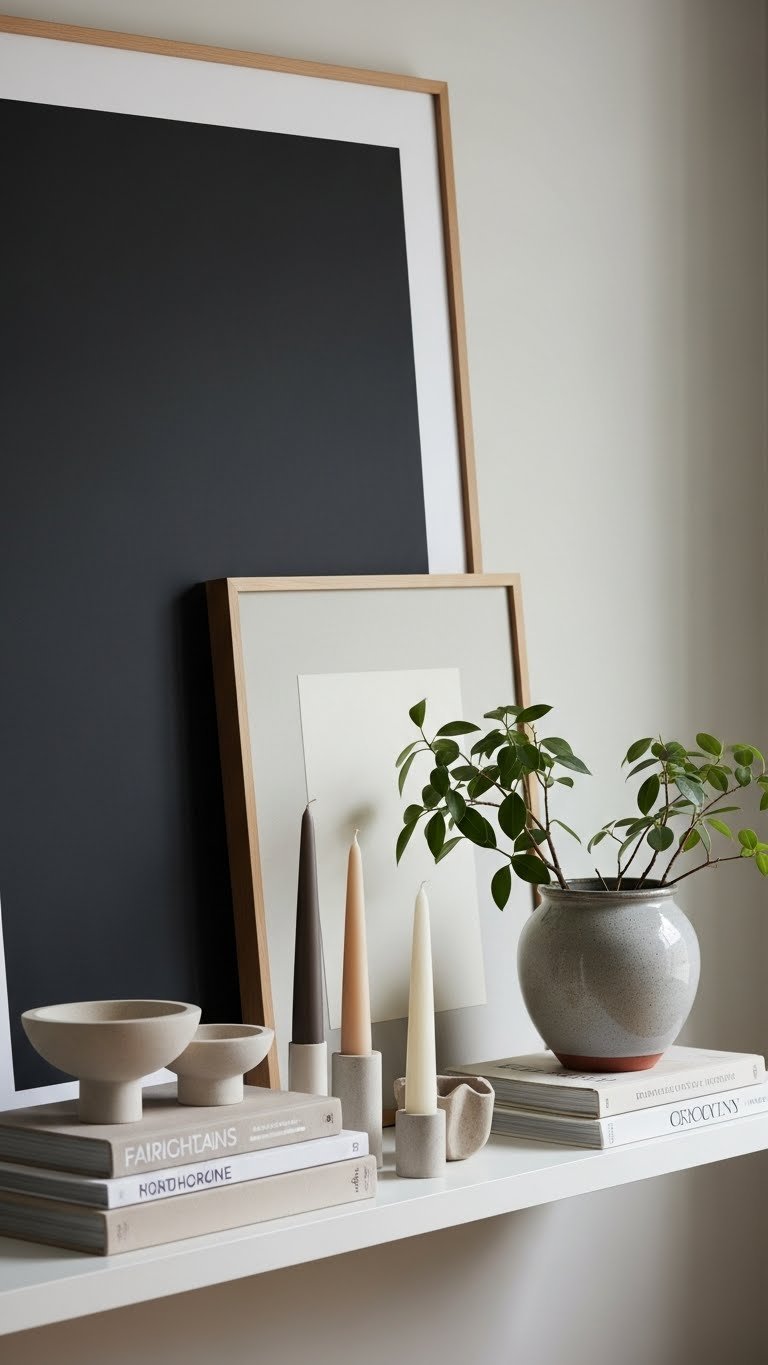
When you place a bold piece of art behind a row of carefully chosen objects, the shelf becomes a mini-gallery that sells a lifestyle.
You lean into framed depth, anchoring a statement work and using foreground layering with low sculptures, candles, and a single planter.
Keep scales varied, colors strategic, and negative space intentional so each shelf reads free, curated, and instantly salable.
Floating Shelf Mini Library Display
Paragraphs
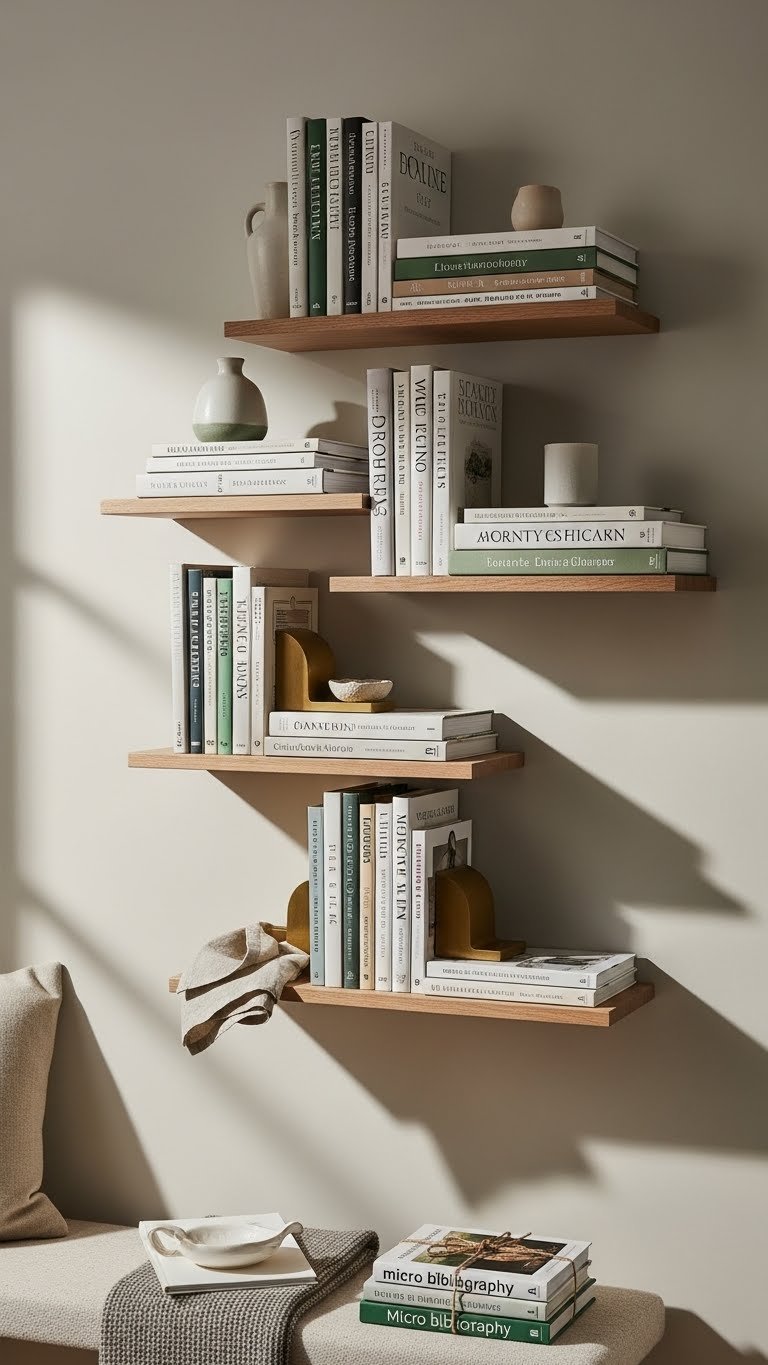
Think of a floating shelf mini library as a polished, space-saving statement that sells a lifestyle: you line slim shelves with a mix of spines facing out and covers forward, interspersing a few decorative objects to keep the display readable and refined.
You curate tiny reading nooks, arrange a micro bibliography by theme, and let negative space signal confidence and freedom in your home.
Botanical Corner With Trailing Ivy
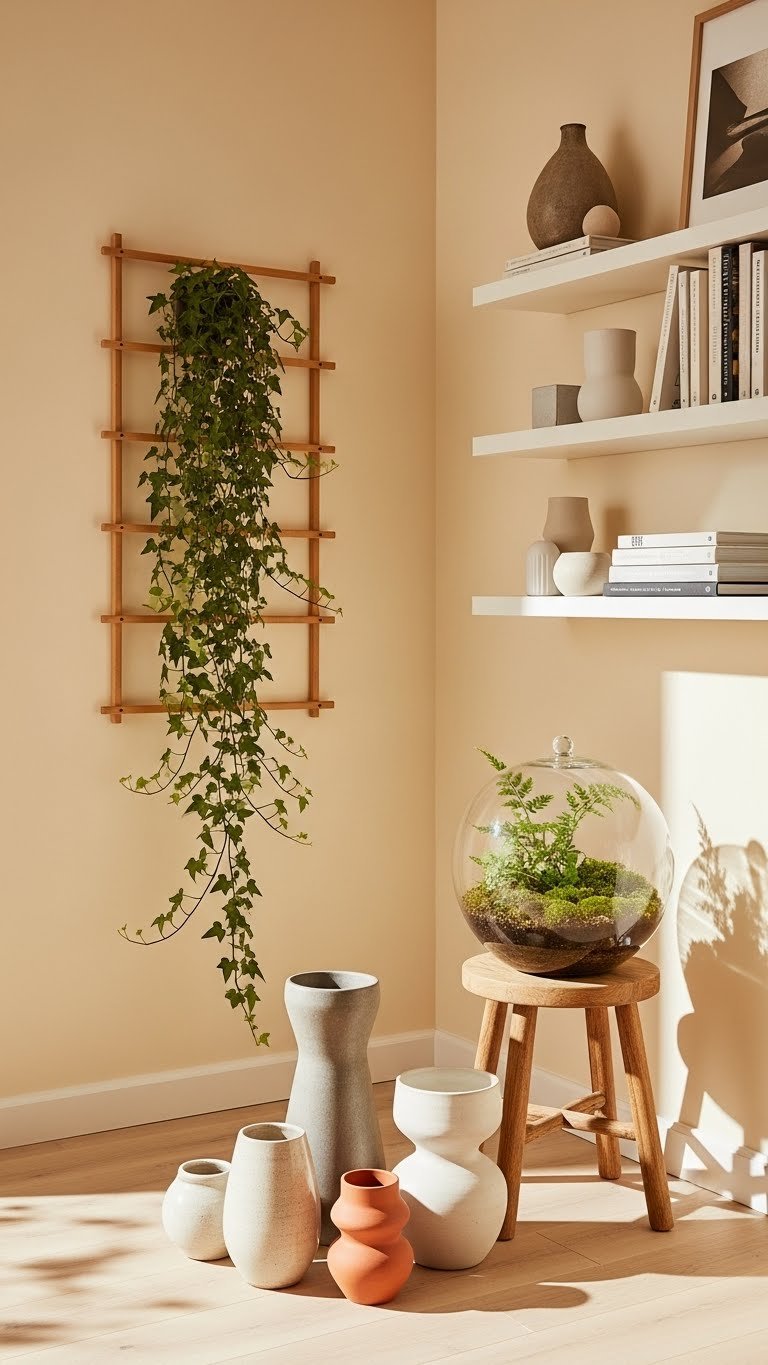
After the sleek restraint of a floating mini library, bring warmth and life to a nearby corner with trailing ivy that softens lines and draws the eye.
You’ll anchor an ivy trellis against a sunlit wall, layer a glass terrarium vignette nearby, and mix sculptural pots. The result feels curated, market-ready, and effortlessly free — a living corner that sells the lifestyle.
Decorative Box Stacks for Concealed Storage
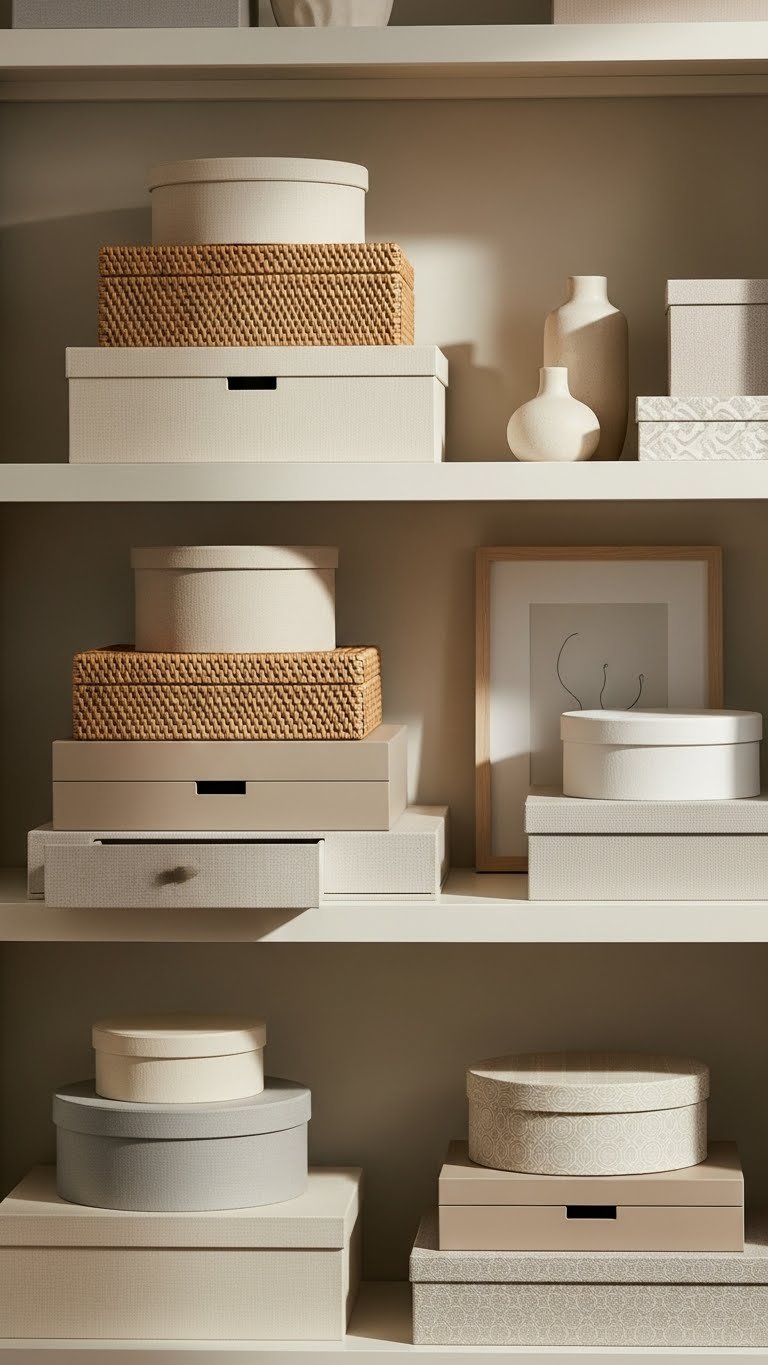
Layer decorative box stacks to hide clutter without sacrificing style — you’ll use boxes as both storage and sculptural accents. Choose neutral decor boxes and mixed textures so your shelves read intentional. Arrange stacked containers by size to create rhythm, include secret drawers for valuables, and maintain hidden storage that feels effortless. This approach sells calm, utility, and the liberated look buyers crave.
Curated Hobby Display With Memorabilia
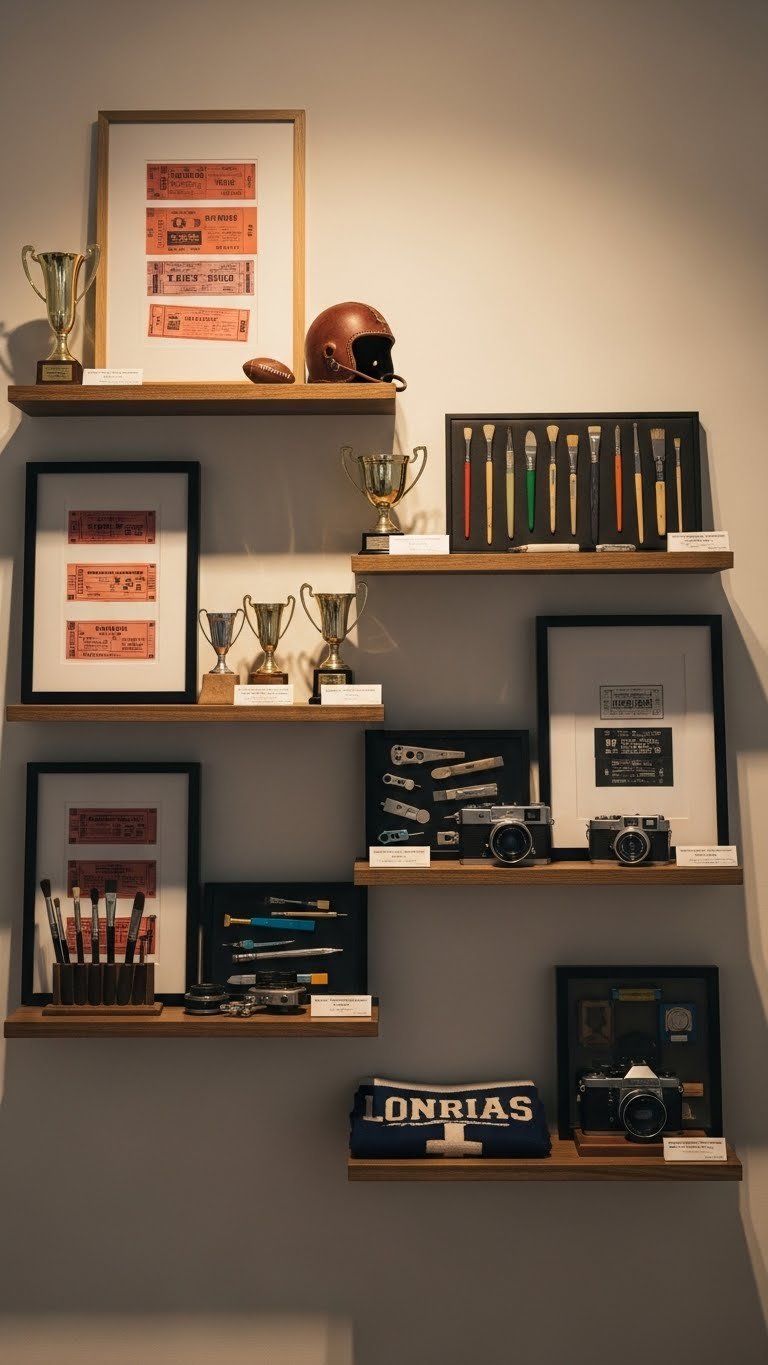
Showcase your passions with a curated hobby display that feels intentional and market-ready: group memorabilia by theme, color, or era to create visual cohesion and tell a clear story buyers can instantly grasp.
You’ll mix framed ticket stubs with displayed hobby tools, small trophies, photos, and select gear on staggered shelves.
Keep negative space, consistent framing, and labels to emphasize provenance and freedom to explore.