
You’ll build shelves that look like a well-edited magazine spread, not a store display — warm woods, matte ceramics, polished brass and a few glossy accents layered with staggered book stacks, marble bookends, and a hand-thrown vase. Think odd-numbered vignettes, trays to contain groups, and soft directional light so each object feels intentional. Keep some negative space and the eye will land exactly where you want it — here’s how to start.
Curated Stack of Fashion-Inspired Decorative Books
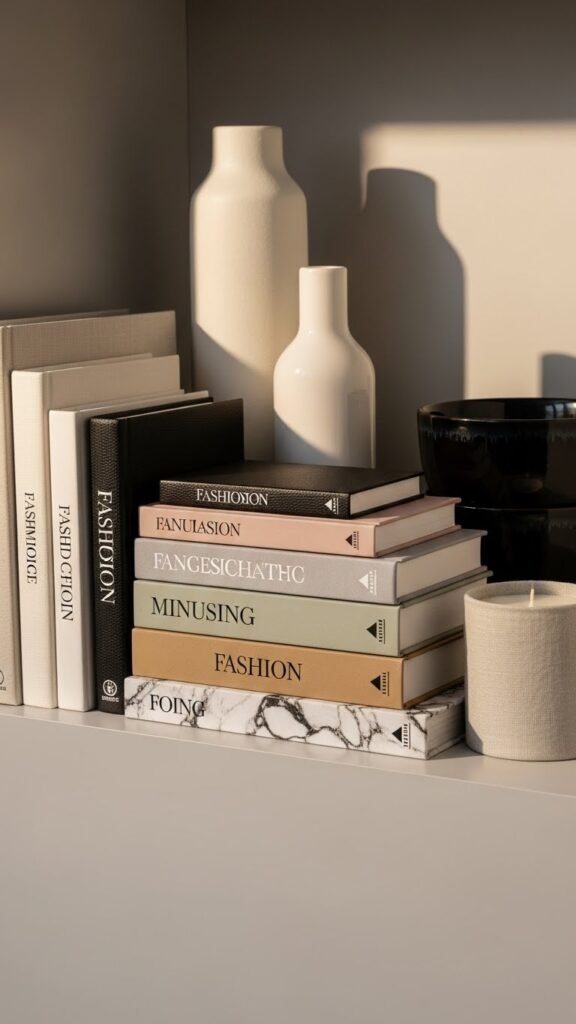
Stack a small pile of fashion-inspired decorative books to anchor a shelf and give it instant editorial flair; choose volumes with tactile covers—linen, leatherette, marbleized paper—and stagger their heights so the spines read like a visual rhythm. You’ll mix monochrome covers and pops of muted color, play texture contrast against sleek ceramics, and let each stack feel effortless, confident, and ready for someone who values freedom.
Marble Bookends With a Horizontal Book Base
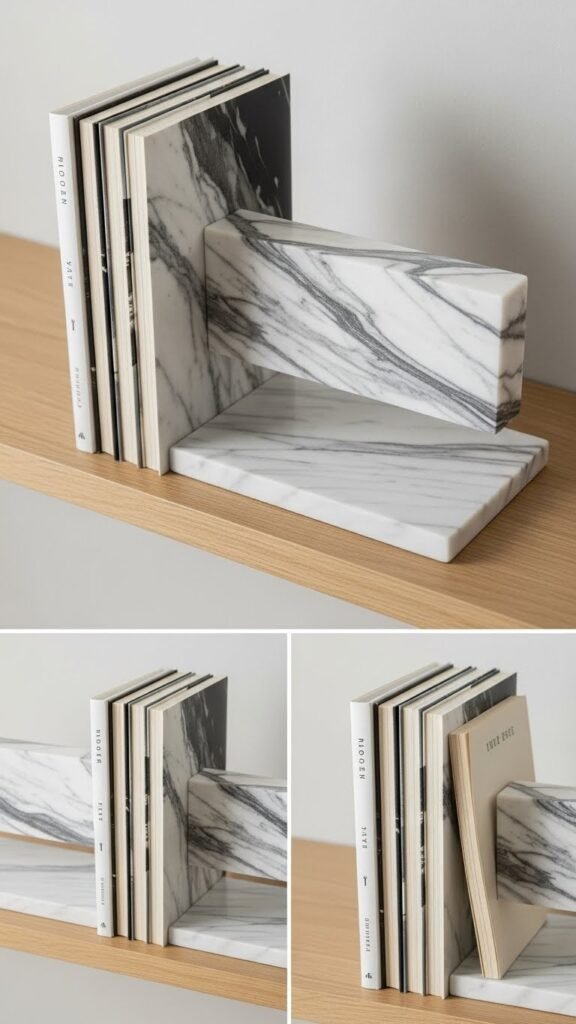
Anchor your shelf with marble bookends that include a horizontal base wide enough to support a row of slim volumes, and you’ll get both sculptural weight and seamless function.
You’ll love the contrast of polished marble veins against soft-paper edges; the horizontal base keeps spines aligned while freeing you to swap titles. It’s modern, tactile, and quietly liberating.
Gold Cookbook Stand Styled as a Display Pedestal
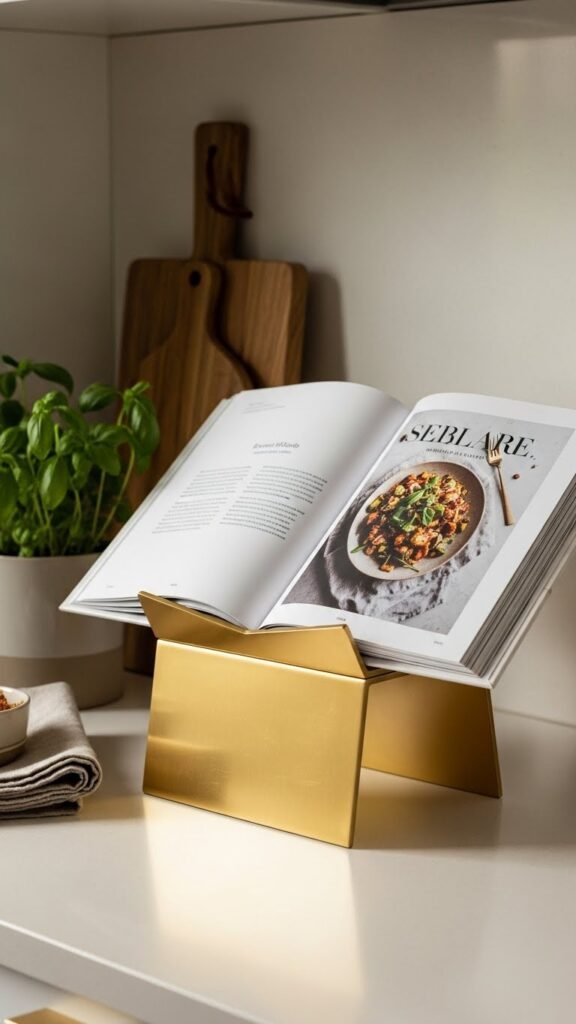
Lift your cookbook from the countertop clutter and let a gold stand turn it into a kitchen focal point; the metallic sheen reads both luxe and lived-in, making recipes feel like curated exhibits.
You’ll use a gold pedestal as a cookbook pedestal, positioning an open page like art. It invites easy reference, minimalist styling, and a free, confident vibe that elevates daily rituals.
Layered Books Topped With a Ceramic Object
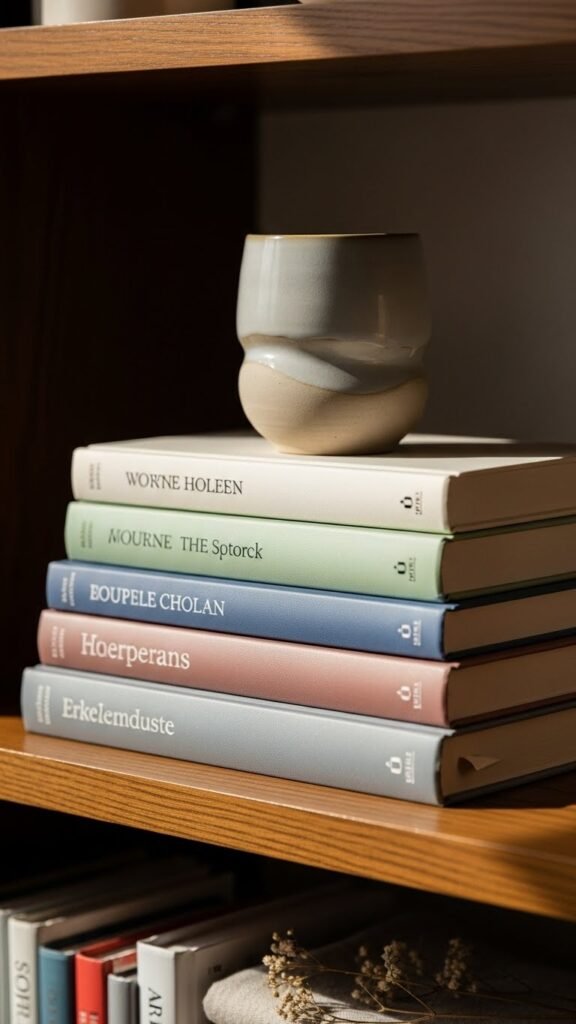
When you stack a few well-chosen books and top them with a tactile ceramic piece, you create an instant vignette that reads like a small, intentional sculpture.
You’ll arrange stacked spines by color and scale, letting texture and hue guide the eye. The ceramic contrast—matte glaze against paper—anchors the display, inviting you to rearrange freely and keep the shelf feeling lived-in.
Glass Cloche Encasing a Mini Plant
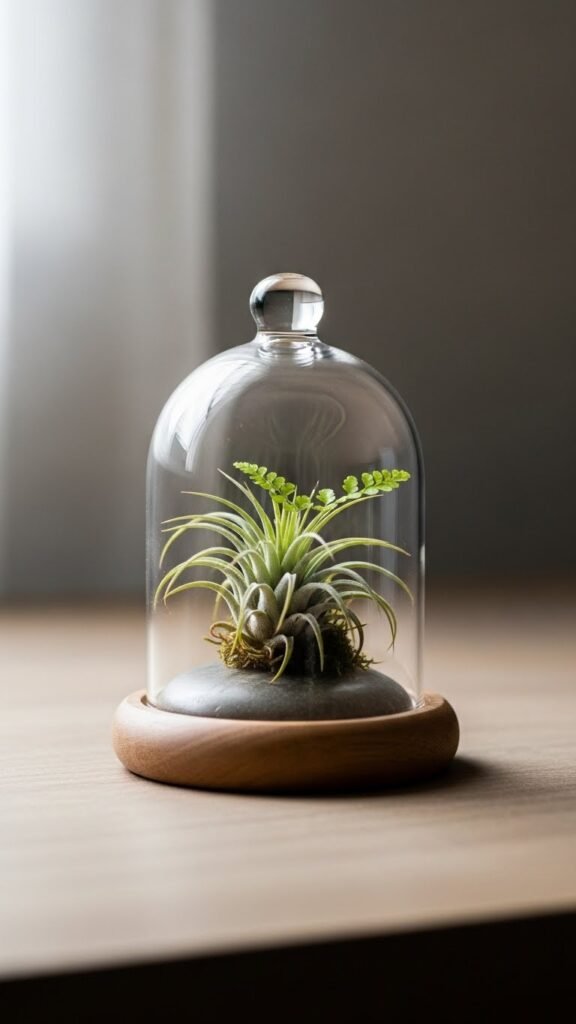
A glass cloche instantly turns a small plant into a deliberate focal point, giving it the look of a miniature greenhouse and a touch of old-world charm.
You’ll curate a miniature terrarium under glass, spotlighting texture and scale. Pair an airplant display or tiny fern with a warm base—raw wood or stone—so the piece feels free, intentional, and quietly modern.
Potted Succulents in a Minimal Tray
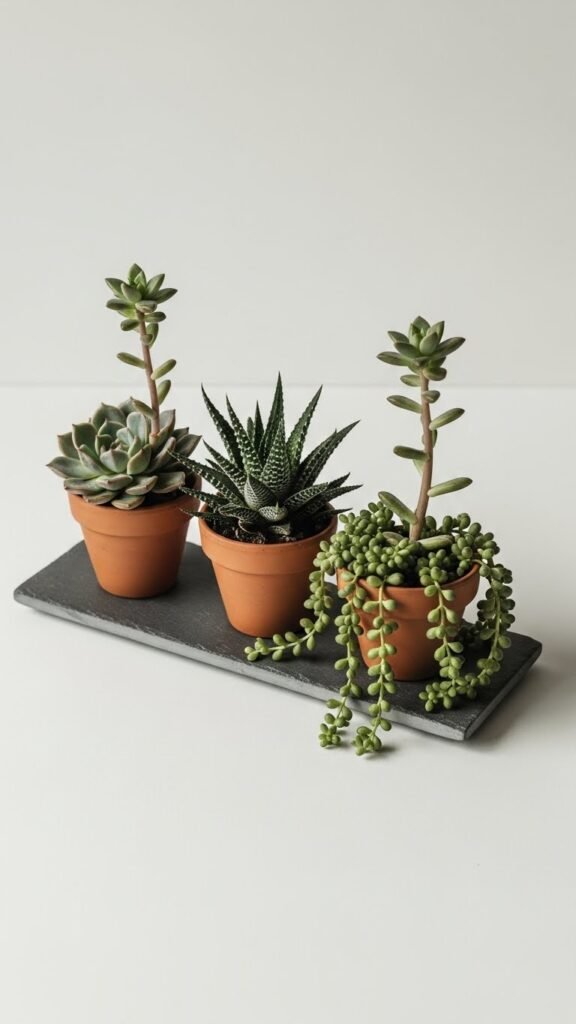
Arrange potted succulents in a low, minimal tray to create a compact, sculptural vignette that reads modern and effortless. You’ll balance a terracotta trio for warmth against a cool slate tray, spacing varied heights and textures for movement. Let negative space breathe, rotate pieces until the composition feels free, and keep watering sparse so the arrangement stays crisp, tactile, and undeniably relaxed.
Trailing Ivy Draped Over Shelves for Boho Vibes
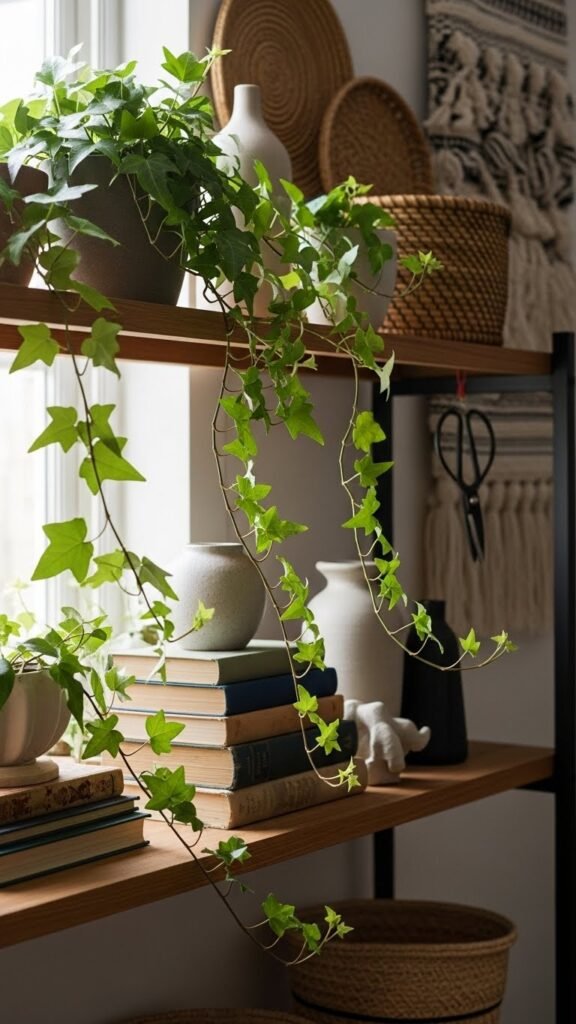
Shift from compact, sculptural succulents to something more relaxed and verdant: let trailing ivy spill languidly over shelf edges to bring instant boho warmth.
You’ll shape playful cascades with a simple draping technique, tucking vines around books and ceramics.
It’s trend-aware yet effortless — a liberated, lived-in look that rewards light maintenance and occasional pruning for airy, unruly charm.
Artificial Orchid Arrangement in a Sculptural Vase
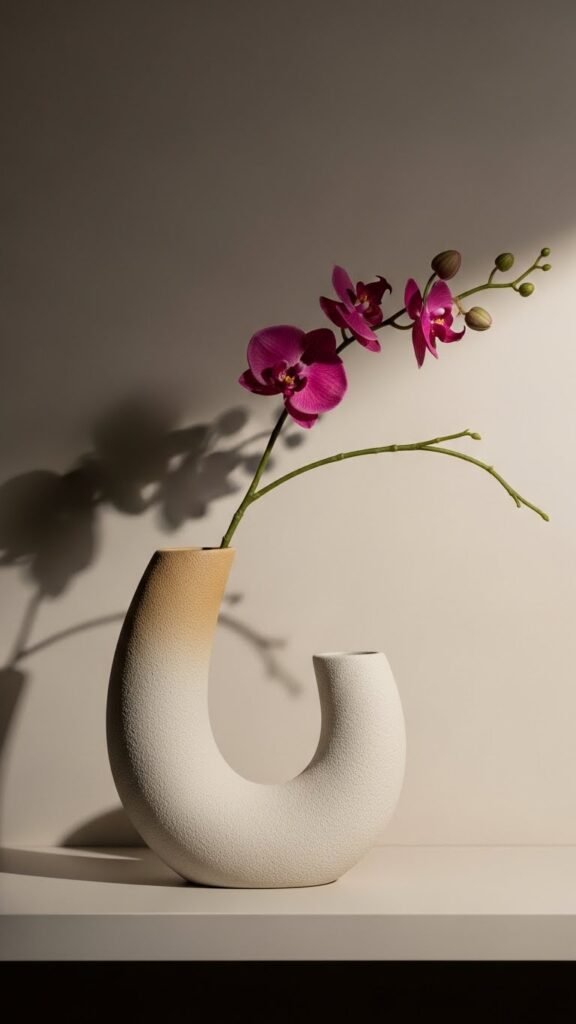
Bring sculptural drama to a shelf by placing lifelike orchids in a textured, curving vase that feels like modern art. You’ll use silk stems trimmed for clean lines, set in matte pottery that grounds the composition. Favor asymmetrical blooms to suggest movement, and rely on tonal placement—muted neutrals against a single pop—to keep the look liberated, intentional, and effortlessly chic.
Decorative Boxes Stacked for Height and Hidden Storage
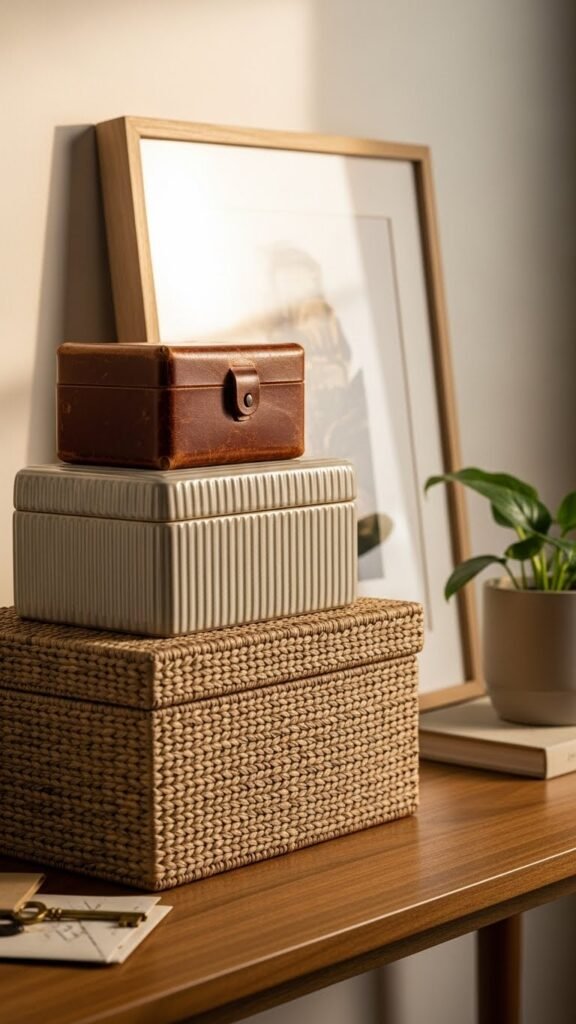
Stack a pair or trio of decorative boxes to add instant verticality and a tidy hiding place for odds and ends; the layered silhouette lifts the eye while keeping clutter out of sight.
You’ll choose boxes with hidden compartments and textured patterns—worn leather, ribbed ceramic, woven grass—that feel collected not curated. Stack freely, vary scale, and let each box whisper personal stories while saving your sanctuary.
Acrylic Apothecary Jars Filled With Collected Trinkets
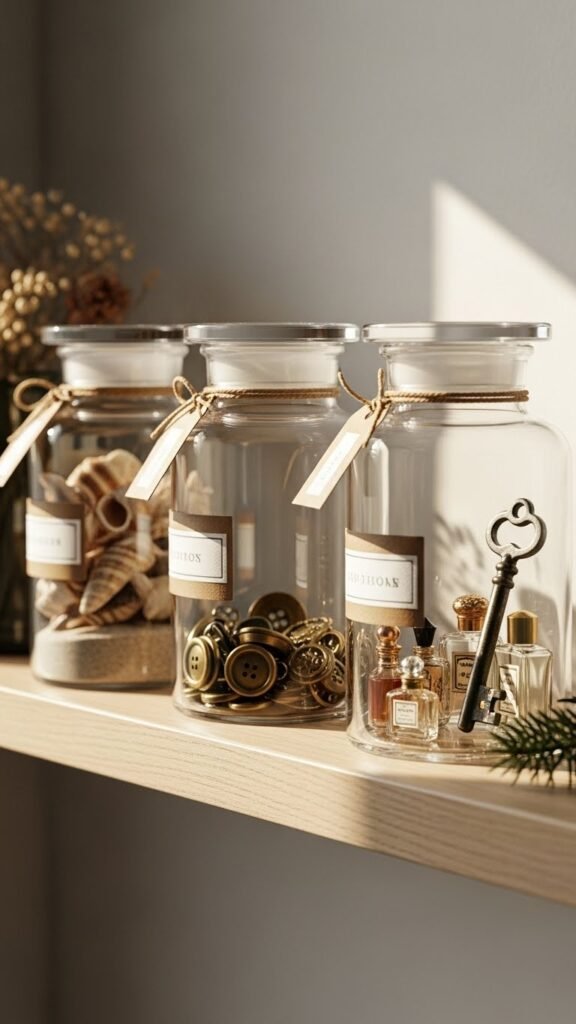
Line up a trio of clear acrylic apothecary jars and let your collected trinkets do the talking—shells, brass buttons, tiny perfume bottles, or the odd vintage key look modern and precious behind glass. You’ll curate a vintage apothecary vibe with airy, liberated styling, rotating contents with seasonal trinket swaps. Keep labels minimal, grouping by color or memory for effortless, personal display.
Gold Metal Basket Corraling Small Objects
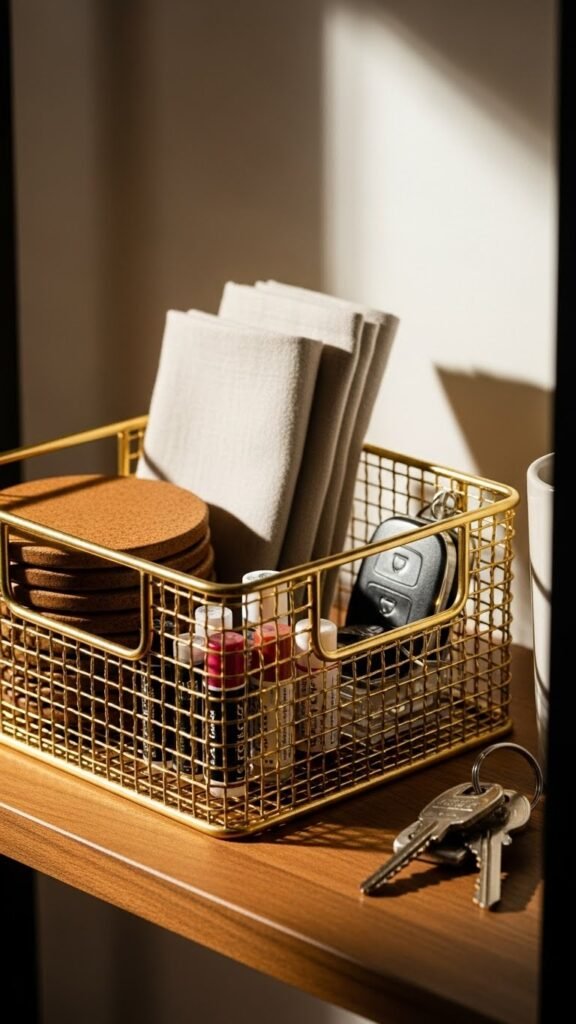
Tuck a gold metal basket onto a shelf to instantly corral small objects with effortless polish—you’ll get shimmer without the stuffiness, as warm brass tones catch light and pull together mismatched pieces like stacked coasters, folded linen napkins, or a cluster of lip balms and keys.
The woven grid offers airy structure; use it as a compact corral to keep everyday essentials chic, visible, and free.
Rose Gold Magazine Holder as a Leaning Display
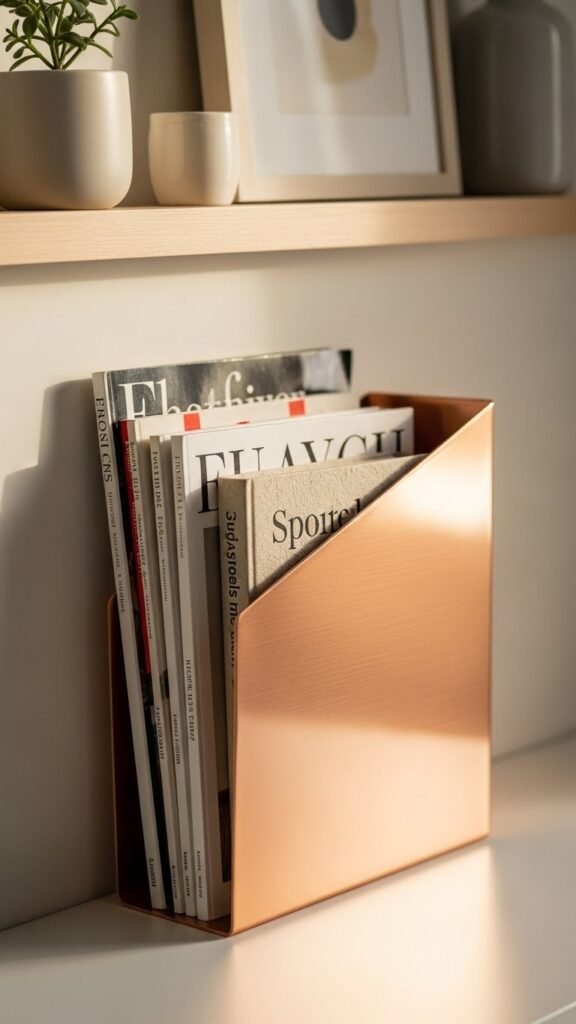
When you lean a rose gold magazine holder against a shelf or wall, it doubles as a sculptural display that warms the space with its soft metallic glow; glossy spines and textured covers slip into view at a casual angle, turning unread stacks into curated moments. You’ll enjoy the metallic contrast and angled silhouette—effortless, liberated styling that reads modern, tactile, and intentionally relaxed.
Mixed-Material Pairing: Wood, Metal, and Glass
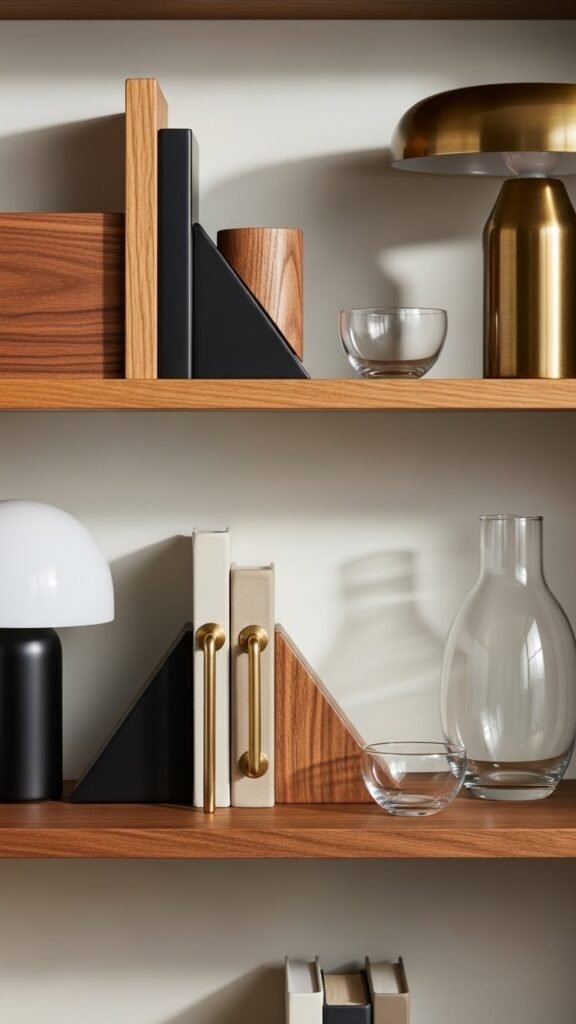
Although mixing wood, metal, and glass might feel intimidating, it’s one of the quickest ways to give a shelf depth and personality: pair the warm grain of oak or walnut with cool metals—think matte black or brushed brass—and let a few glass elements catch the light to add airiness and contrast.
You’ll balance warm patina with clear reflections, creating tactile contrast that feels modern, unfussy, and free.
Shiny and Matte Finish Contrast Grouping
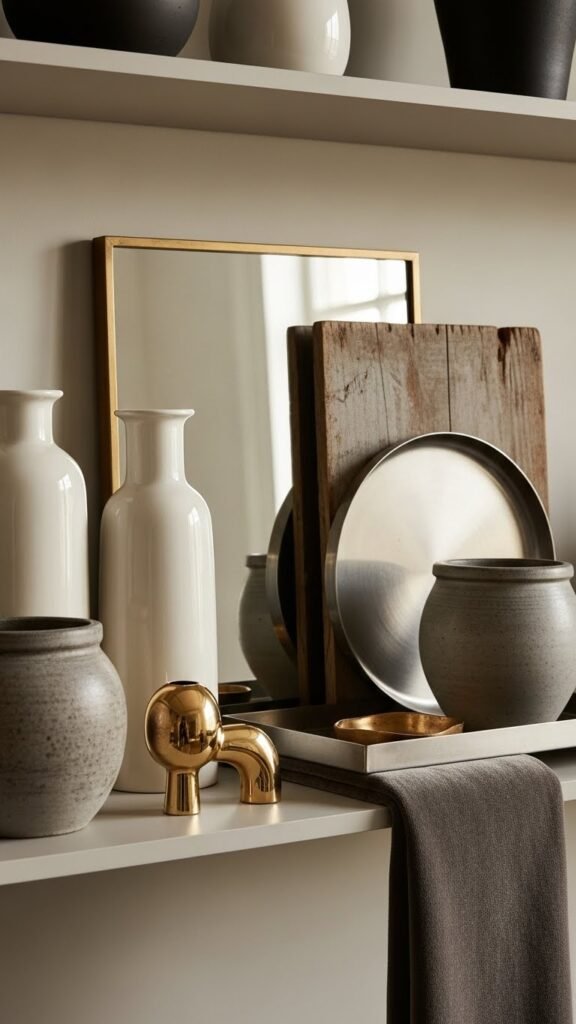
If you want your shelf to read as intentional rather than accidental, mix shiny and matte finishes to create visual rhythm: glossy ceramics, polished brass, or a mirror-backed frame will pop against matte pottery, worn wood, or brushed metal, guiding the eye across the vignette.
Balance high gloss accents with textured matte pieces and soft matte velvet textiles so polished contrast feels modern, liberated, and tactile.
Odd-Numbered Miniature Collections on a Single Shelf
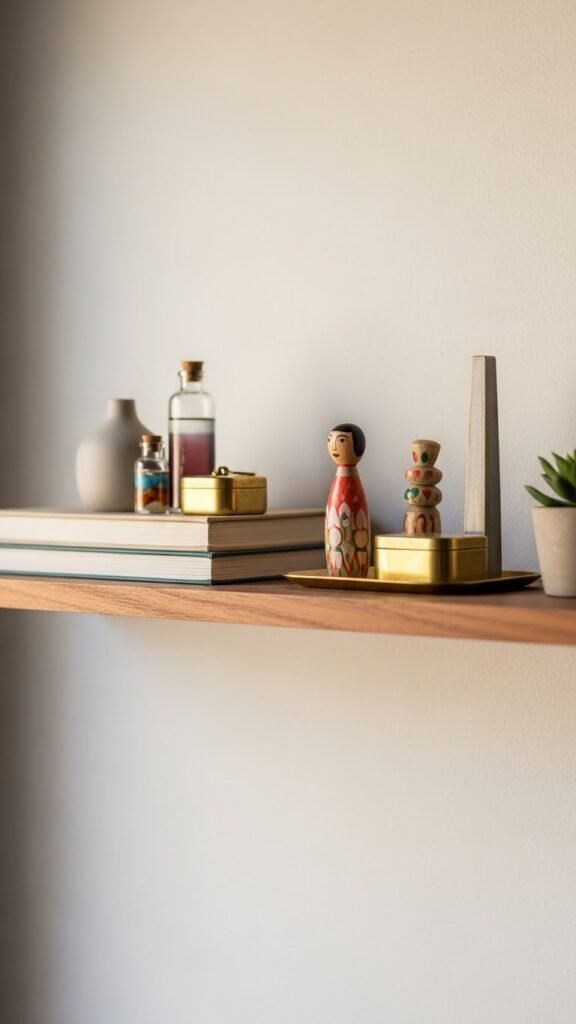
Pairing finishes teaches you how contrast commands attention, and the same principle applies to grouping small objects: odd-numbered miniature collections read as deliberate and magnetic.
You’ll arrange miniature vignettes in threes or fives, mixing texture and color.
Play with varied heights to create rhythm, leave negative space for breathing room, and let each tiny piece feel chosen, not assembled.
Layered Artwork Backdrops With Foreground Objects
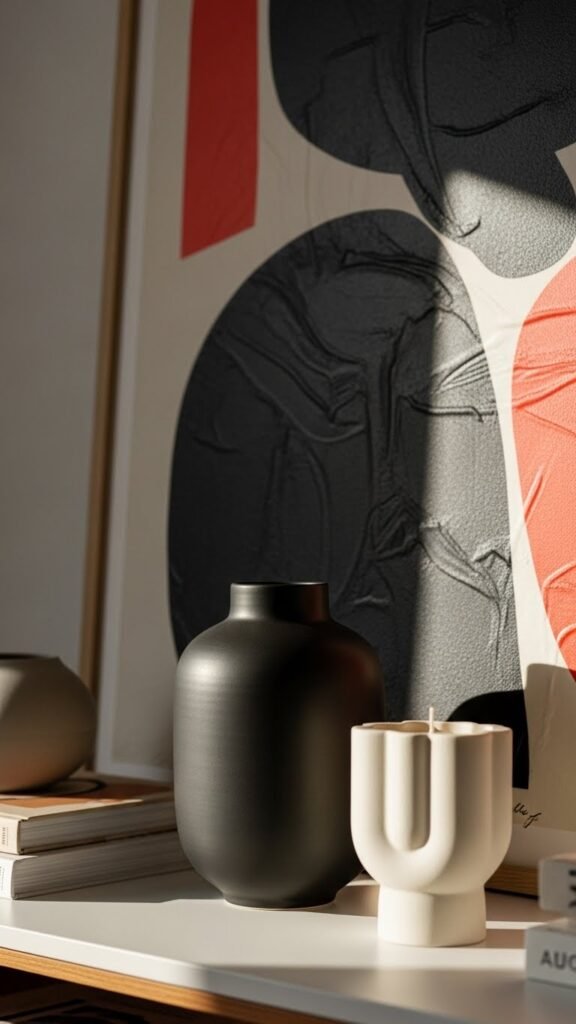
Layer a statement print or textured painting behind a carefully chosen foreground object to create depth and a curated, gallery-like moment on your shelf—think a large graphic lithograph leaning against the wall with a ceramic vase or sculptural candle in front. You’ll mix matte frames with tactile ceramics, letting shadow depth and layered scale whisper effortless style, so you can rearrange freely and feel intentional every time.
Geometric Frames Paired With Organic Sculptures
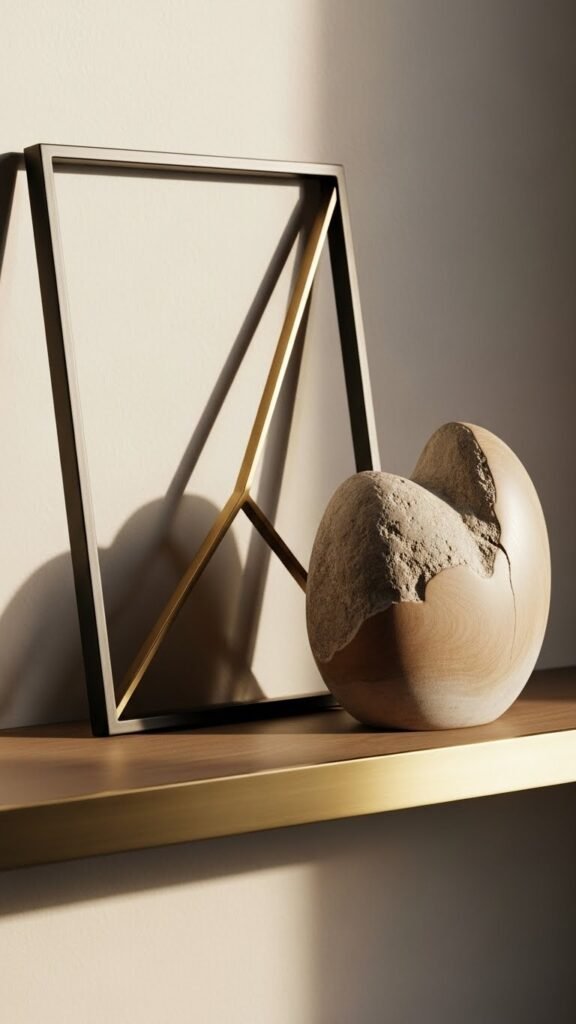
When you set a crisp, angular frame beside a rounded, hand-carved sculpture, the contrast feels intentionally modern rather than accidental, drawing the eye to both precision and imperfection.
You’ll cultivate organic contrasts and angular balance by varying scale, finish, and negative space. Let matte wood, brass edges, and soft stone anchor a shelf that feels free, curated, and quietly adventurous.
Wallpaper-Backed Shelf for a Patterned Pop
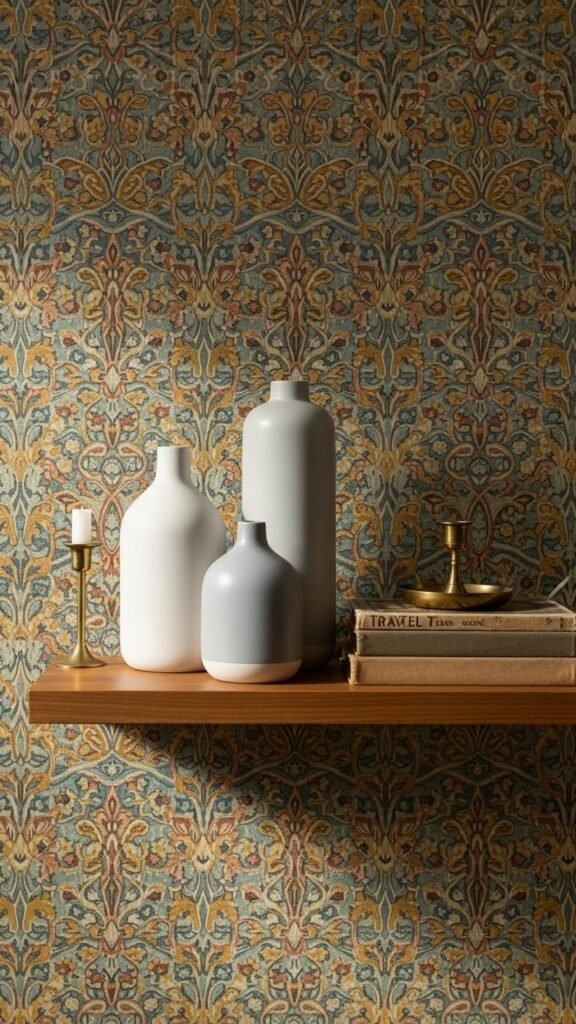
Against a wallpapered back, a simple shelf becomes a focal point—so pick a pattern that sings at a glance and supports the objects you’ll display.
You’ll layer contrast: matte ceramics, brass accents, and a patterned backing that frames each piece. Mix bold scale with subtle colorways, or choose vintage wallpaper for wanderlust charm, letting the shelf feel curated, personal, and free.
Trays That Group and Contain Varied Items
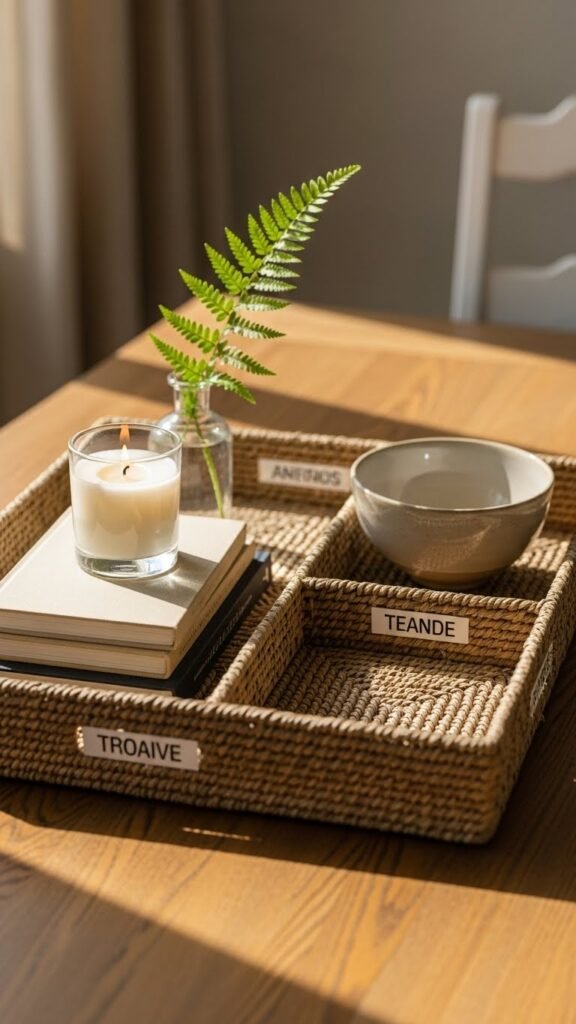
Pull a few favorite pieces onto a tray and you instantly give them order and intent; trays act like small stages that hold mixed objects—books, candles, a fern cutting, a favorite bowl—so each item reads as part of a curated story.
Choose a woven seagrass tray with labeled compartments, and you’ll corral treasures, encourage rotation, and let the arrangement feel effortless and free.
Sculptural Object Anchored on a Stack of Books
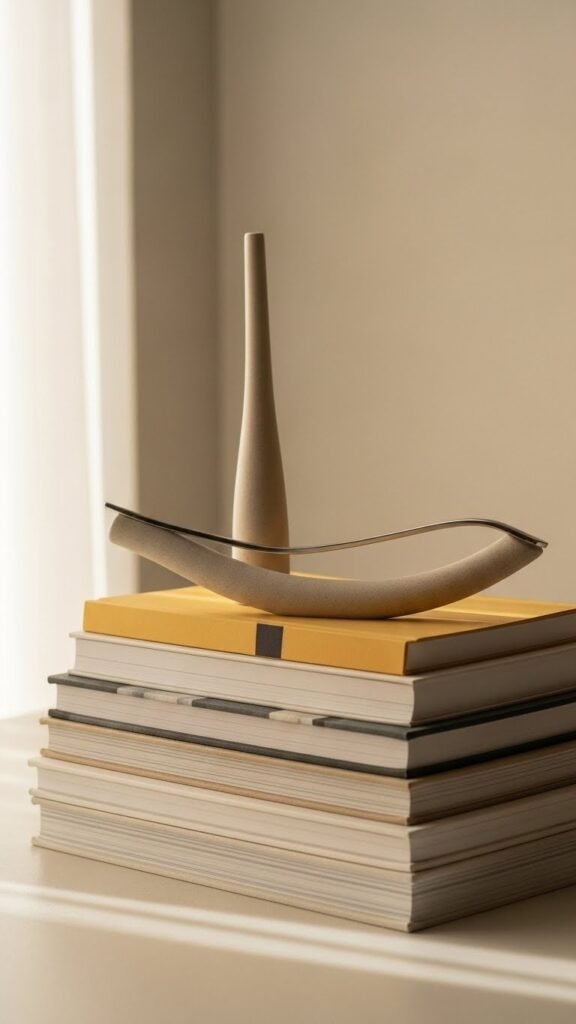
Tuck a sculptural object atop a neat stack of books and you instantly create a focal point that feels both intentional and lived-in. Let a stacked sculpture — slim metal or matte ceramic — rise from its bookbase pedestal, contrasting paper edges with sculpted form. You’ll curate movement and stillness, play with scale, and invite a casual, liberated vibe without fuss or strict symmetry.
Biophilic Textures: Stone, Woven, and Wood Accents
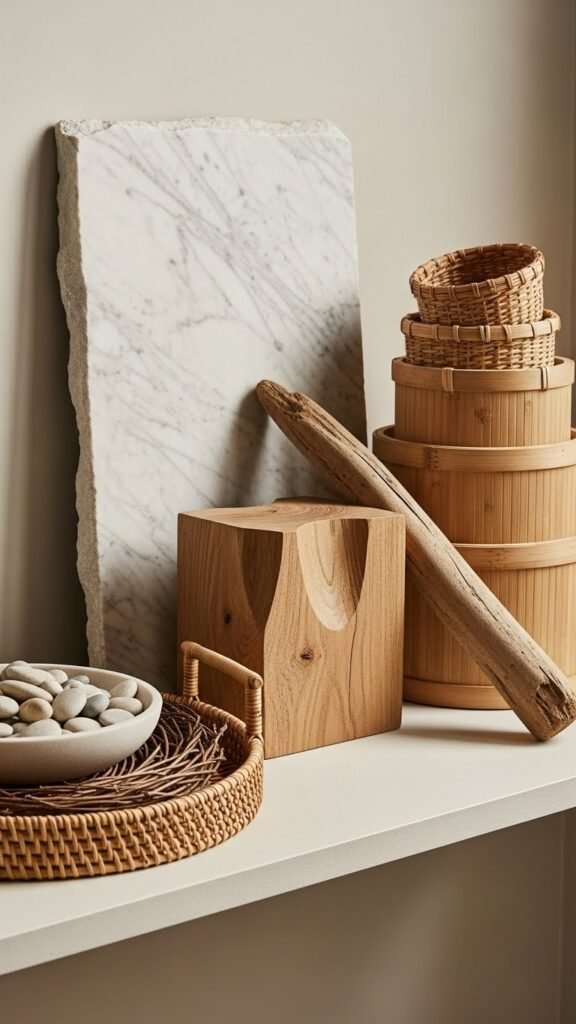
When you layer stone, woven fibers, and warm wood on a shelf, the result feels quietly rooted and freshly modern—rough-hewn marble or a pebble bowl offsets the soft nest of a rattan tray while a sculpted oak block grounds the vignette.
You’ll balance a tactile pebble, bamboo baskets, and smooth driftwood, letting texture dictate rhythm and lending your space effortless, liberated calm.
Asymmetrical Arrangements Using Varying Shapes
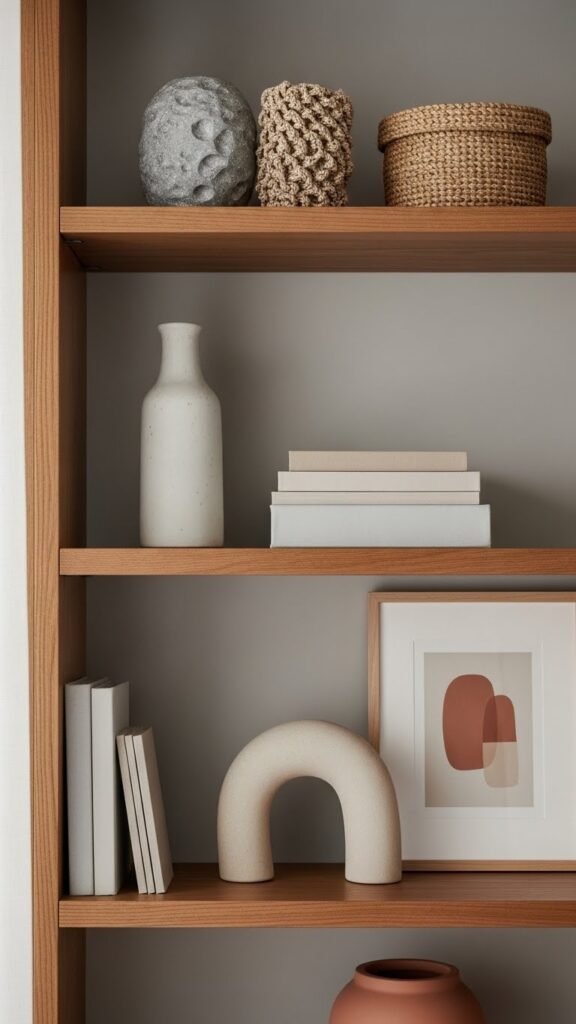
You’ve established a tactile base with stone, woven fibers, and warm wood—now let shape take the lead. Play with offset silhouettes: tall ceramics beside squat books, a curved sculpture balancing a rectangular frame. You’ll create irregular vignettes that feel spontaneous, freeing the eye. Trust contrast, negative space, and unexpected pairings to make each shelf look deliberately unrestrained and modern.
Glass and Metallic Accents for Modern Glam
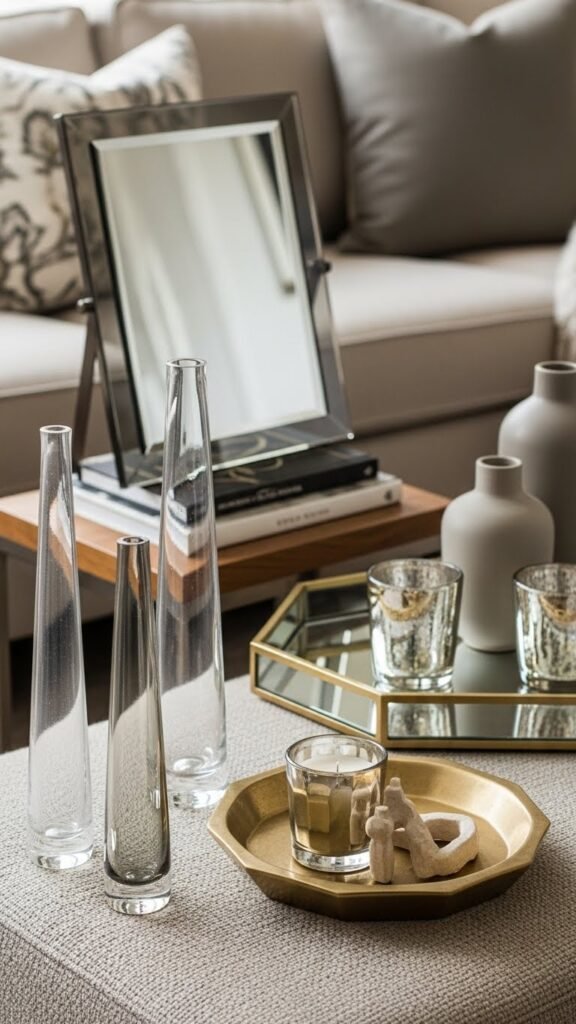
If you want a hint of luxe without veering into ostentation, introduce glass and metallic accents that catch light and cut through the tactile warmth you’ve already layered; think slender blown-glass vessels, a faceted brass tray, or a smoked mirror leaning against a stack of books.
You’ll mix mirrored trays and mercury glass with matte ceramics, letting reflective pops feel deliberate, confident, and free.
Negative Space-Focused Minimalist Shelf
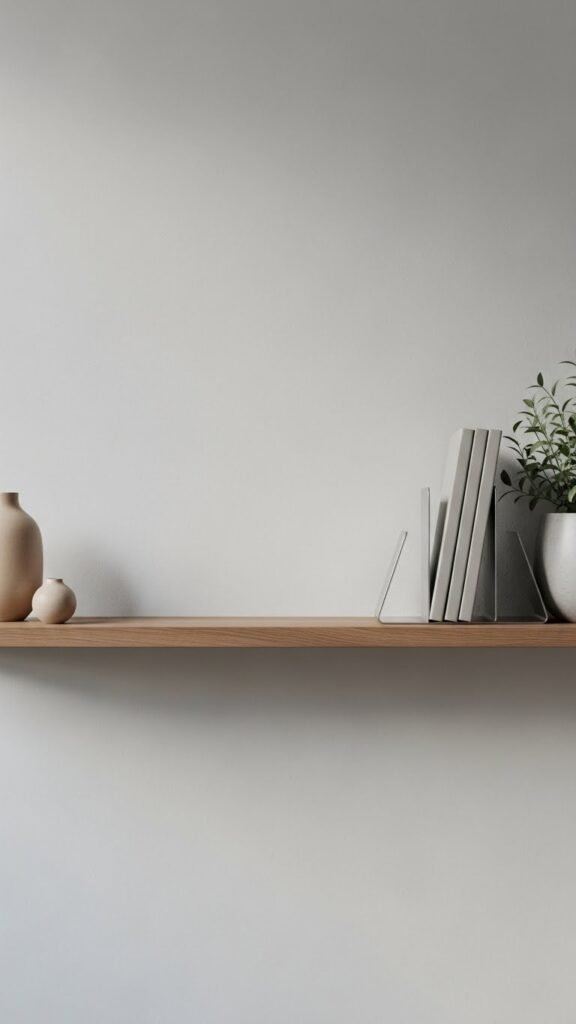
Although the eye craves objects, a negative-space-focused minimalist shelf makes silence its most deliberate accent, so you’ll place far fewer pieces and let emptiness define the composition. You’ll practice mindful placement, choosing pared back pottery, a single sculptural bookend, and a subtle plant. Aim for tonal cohesion—muted hues and clean lines—so each element breathes and freedom becomes the shelf’s quiet statement.
Industrial Mix Featuring Metal and Concrete Elements
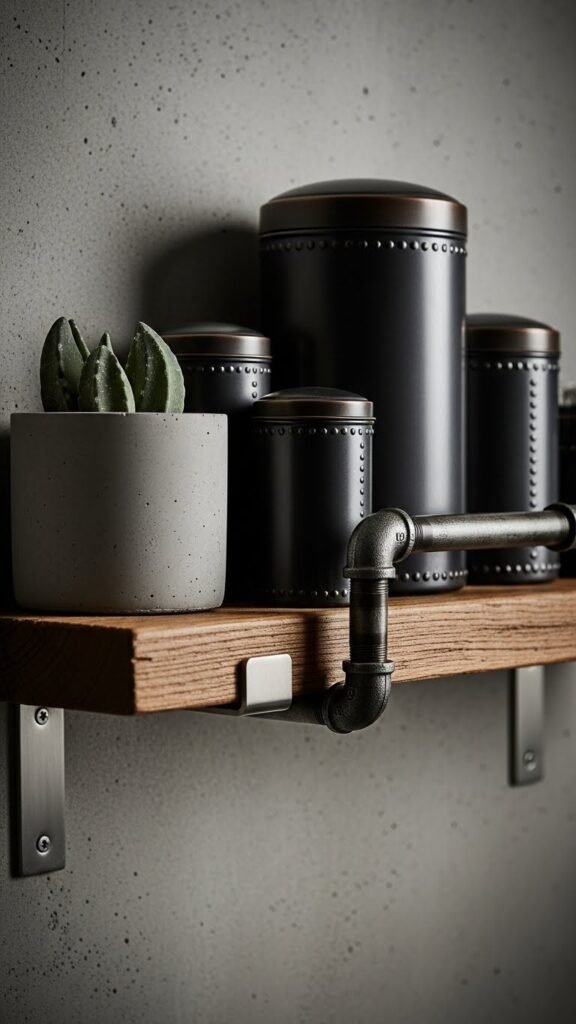
When you blend raw metal with cool concrete, the shelf becomes an industrial vignette that feels deliberate rather than unfinished; each piece—brushed-steel brackets, a reclaimed wood plank with a honed concrete planter, a cluster of blackened-copper canisters—asserts texture and purpose.
You’ll play raw steel against concrete contrast, add riveted accents and salvaged pipes, and let rugged details invite bold, liberated living.
Rule-Of-Thirds Composition With Layered Heights
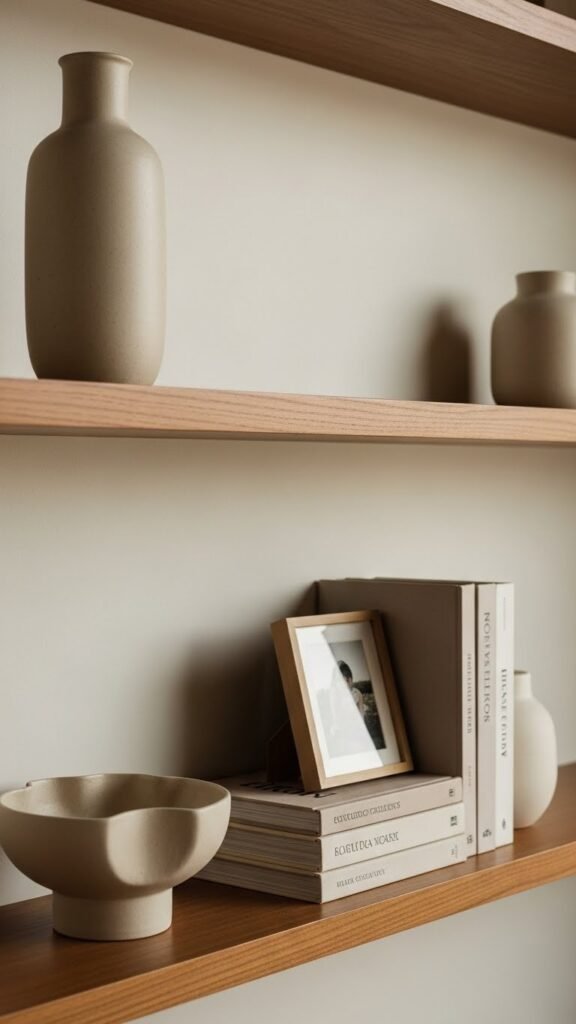
Because your eye naturally settles along thirds, compose shelves so focal pieces land at those intersections and smaller accents fill the negative space, creating a balanced, effortless look. You’ll use golden thirds to guide placement, arranging staggered silhouettes—tall vase, mid stack, low bowl—so each piece breathes. Embrace asymmetry, leave gaps, and let curated restraint feel liberating and intentional.