
You’ll make your home feel airy and lived-in by focusing on light, texture, and honest materials—think pale walls, large north-facing windows, and warm oak underfoot. Keep silhouettes simple, layer soft linens and chunky wool throws, and add a few tactile ceramics or leather accents for contrast. I’ll walk you through 23 practical ways to achieve that bright, cozy Scandinavian vibe—starting with daylight and storage solutions that actually work.
Maximise Daylight With Large, Unobstructed Windows
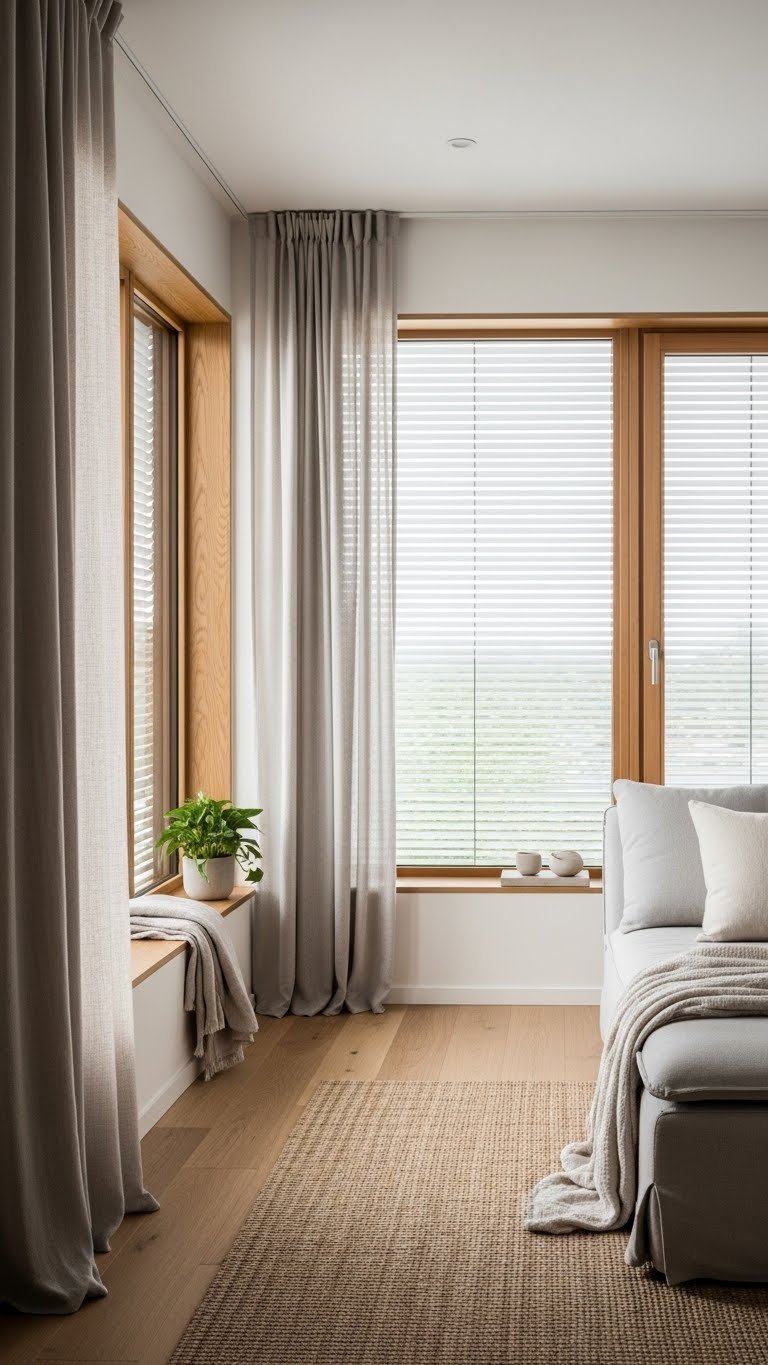
By opening wall space to large, unobstructed windows you’ll flood rooms with soft, northern light that flatters natural textures and reduces the need for artificial fixtures.
You’ll prioritize mindful window placement and subtle solar shading—thin slatted blinds or external screens—so you control glare without blocking views.
Embrace uncluttered sills, warm timber frames, and breathable fabrics to keep spaces airy and free.
Paint Walls in Crisp White or Very Pale Tones
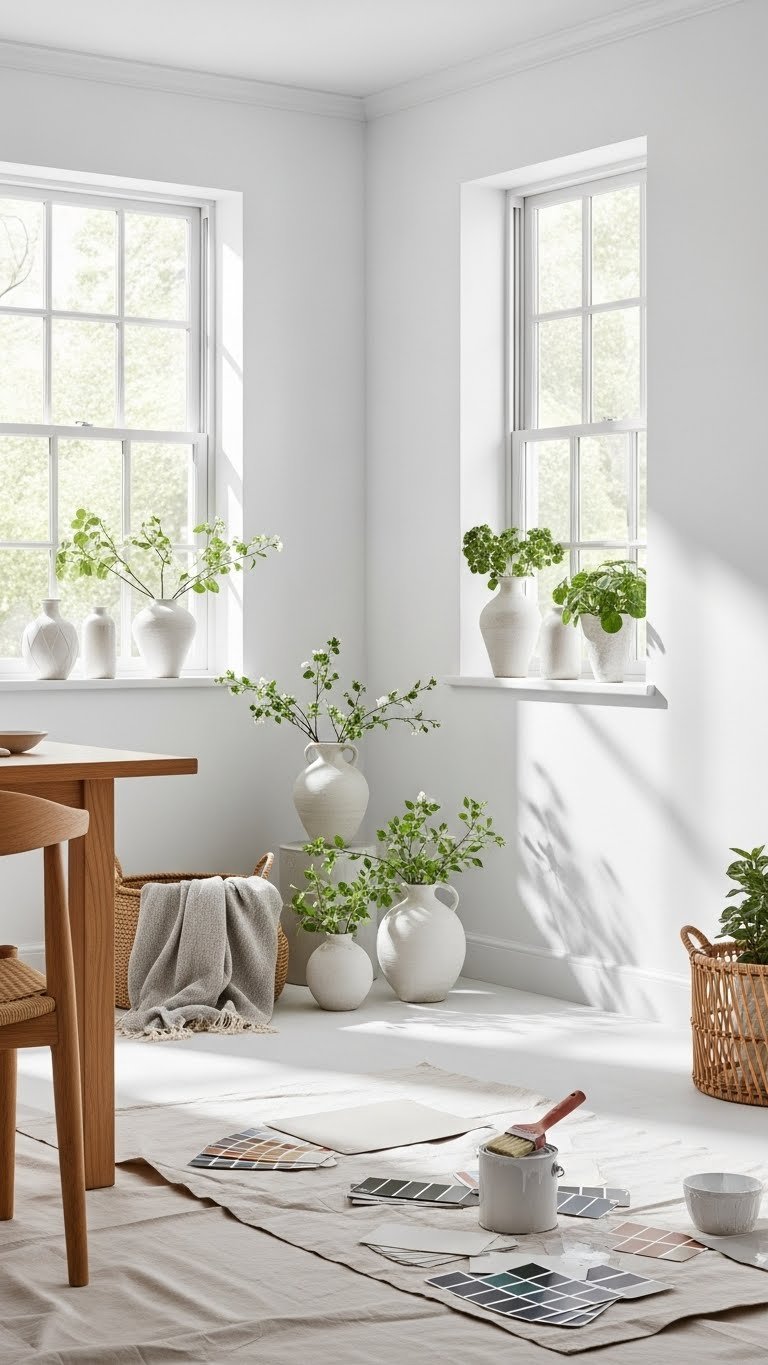
When you choose crisp white or a whisper of pale gray, walls become a canvas that intensifies texture, light, and the subtle warmth of wood and woven fabrics.
You’ll test paint samples in different lighting, trust a quality primer selection for smooth coverage, and let pale tones amplify textiles, ceramics, and plants.
The result feels airy, intentional, and liberating.
Choose Light-Toned Wood Flooring and Furniture
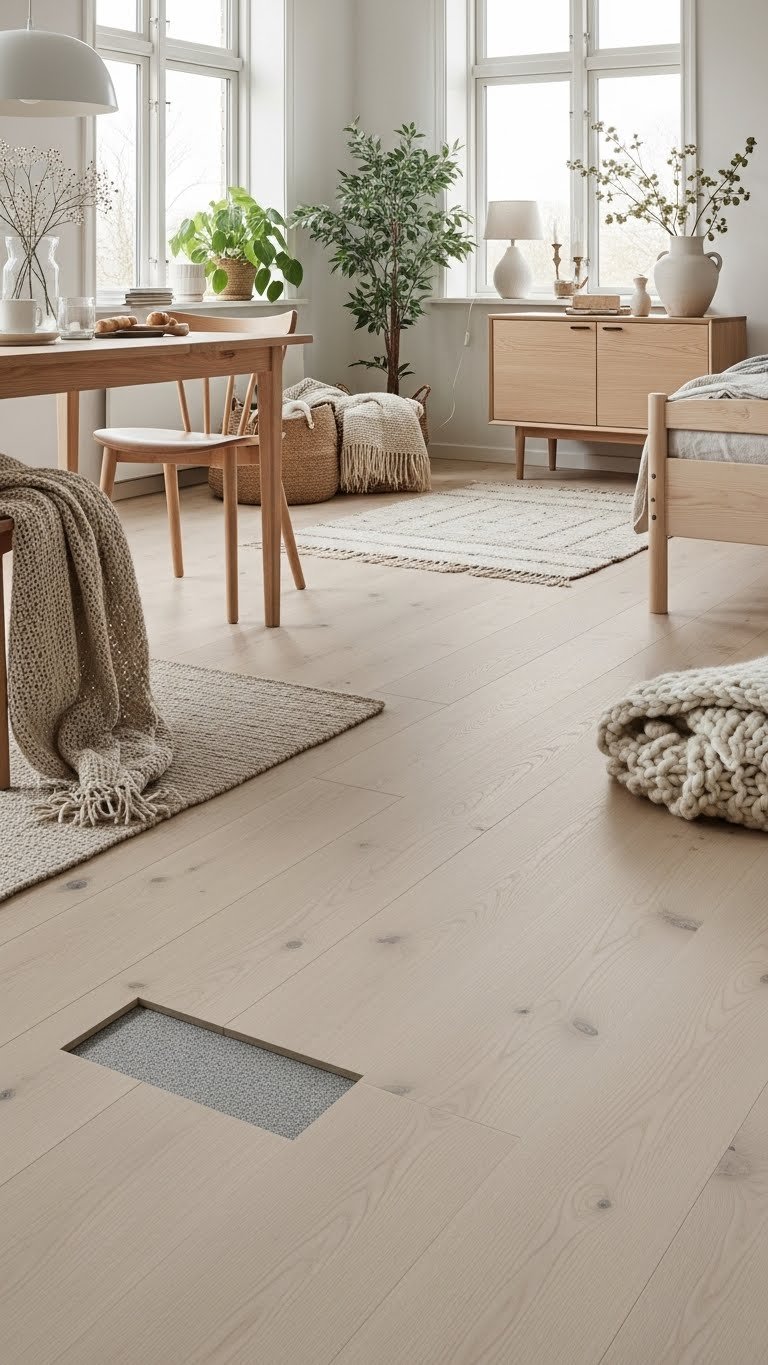
Opt for light-toned wood floors and furniture to instantly brighten a room and anchor that clean Scandinavian look—think pale oak, ash, or bleached maple with visible grain for inviting texture. You’ll choose engineered alternatives for durability and stable installation, pair planks with acoustic underlay to soften sound, and mix raw textures and minimalist profiles so your space feels airy, free, and tactile.
Keep Window Treatments Minimal and Sheer
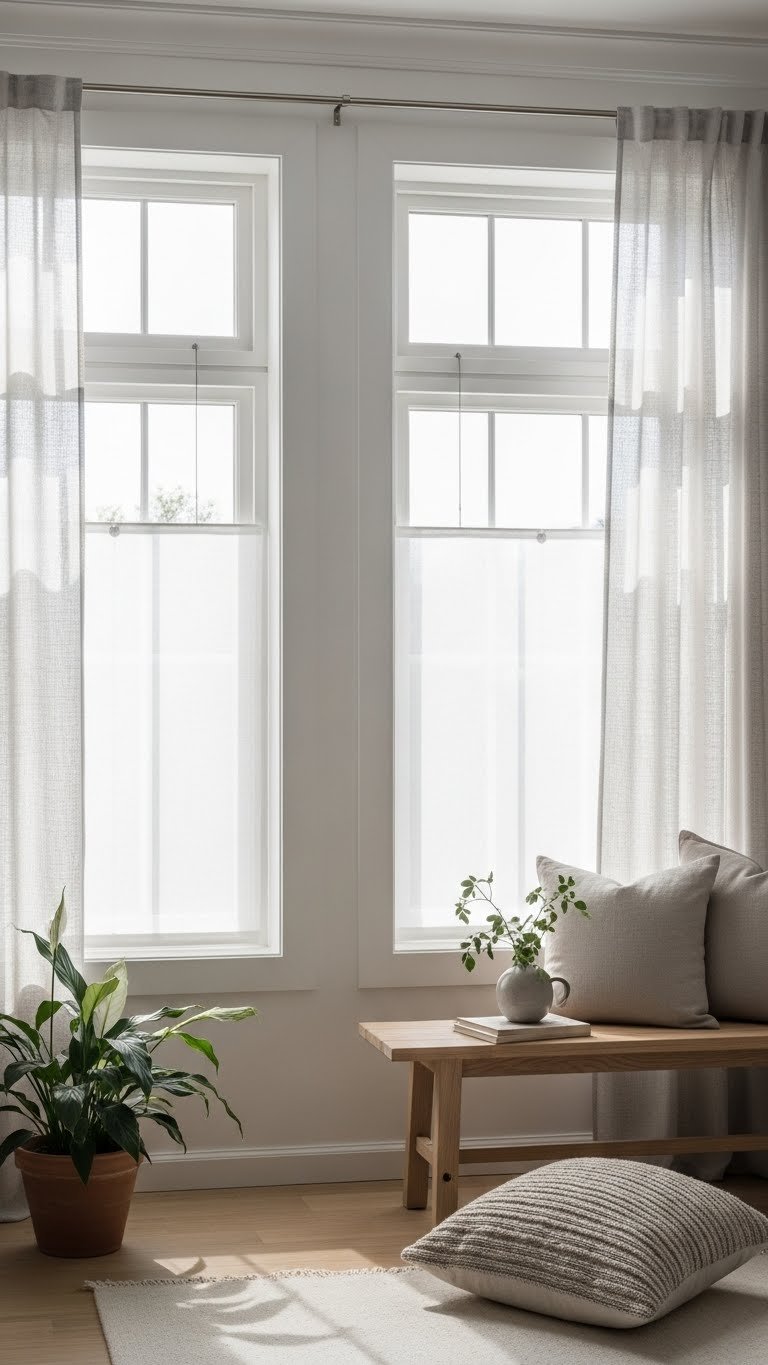
Although you want privacy, keep window treatments minimal and sheer to maintain that airy Scandinavian feel. You’ll choose lightweight linens or gauzy panels that filter light, opt for sheer cafe curtains at lower panes, and mount them on delicate tension rods. This keeps sightlines open, highlights texture, and lets you move freely—bright, breezy, and quietly refined without clutter or heavy fabric.
Embrace a “Less but Better” Minimalist Approach
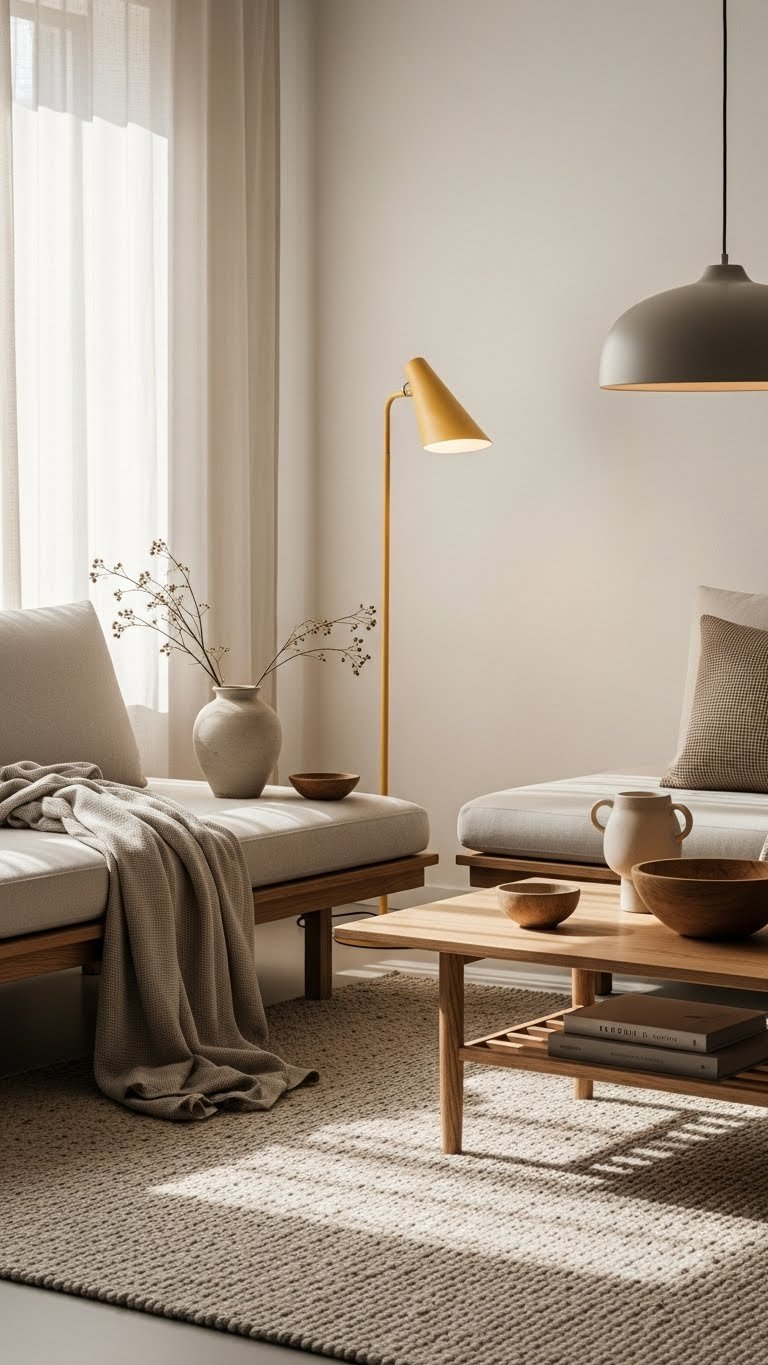
Because you’re focusing on essentials, choose pieces that earn their place—clean-lined furniture, tactile textiles, and purposeful lighting—so every item contributes texture and function without noise.
You’ll practice functional decluttering, keeping surfaces serene and circulation open.
Rely on intentional curation: edit boldly, celebrate natural materials, and let calm, textured layers and warm light grant you the freedom to live simply and beautifully.
Use Multifunctional Furniture to Save Space
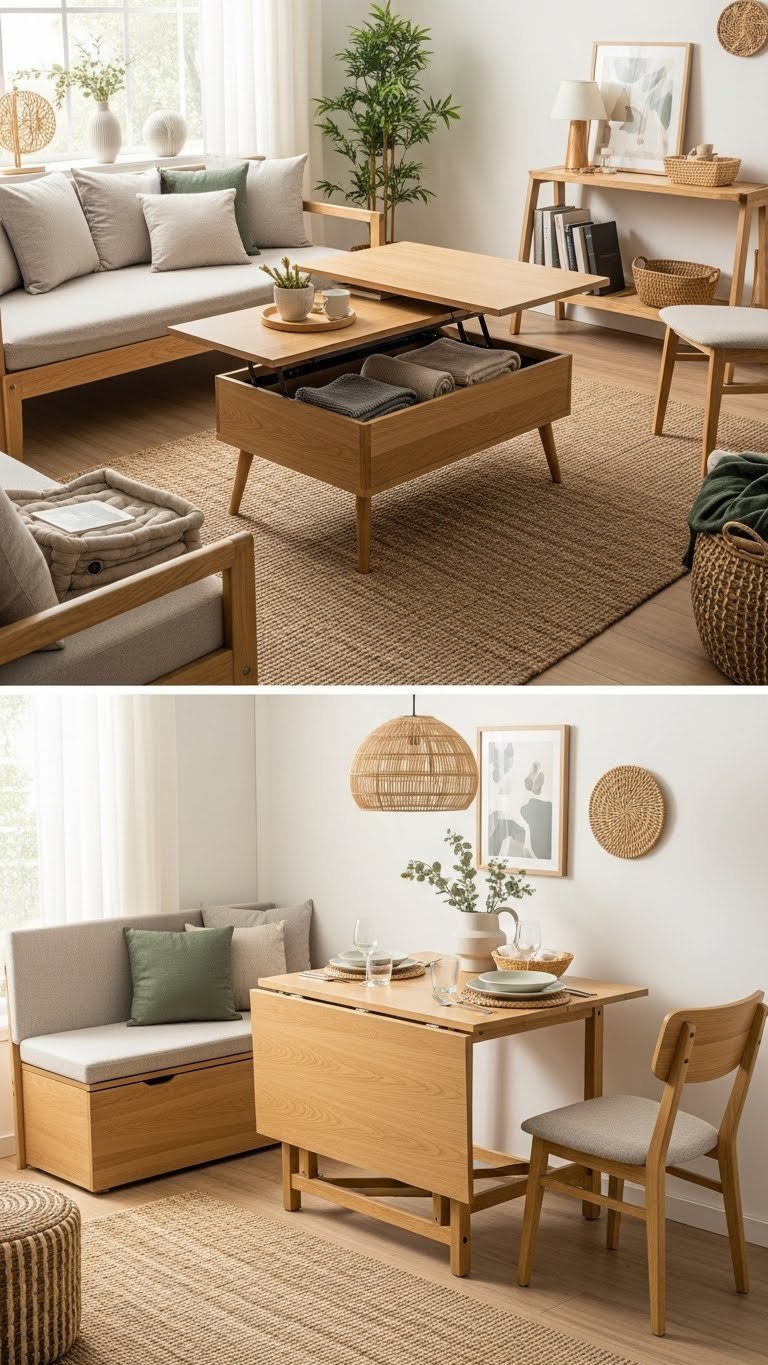
Make pieces pull double duty to keep your space airy and purposeful: think a daybed that doubles as a sofa, a coffee table with hidden storage, or a dining bench that tucks under a slim console.
You’ll choose a convertible bench for seating and storage, add a folding table for flexible dining or work, and layer natural textures so functionality still feels warm and free.
Opt for Clean Lines and Simple Furniture Silhouettes
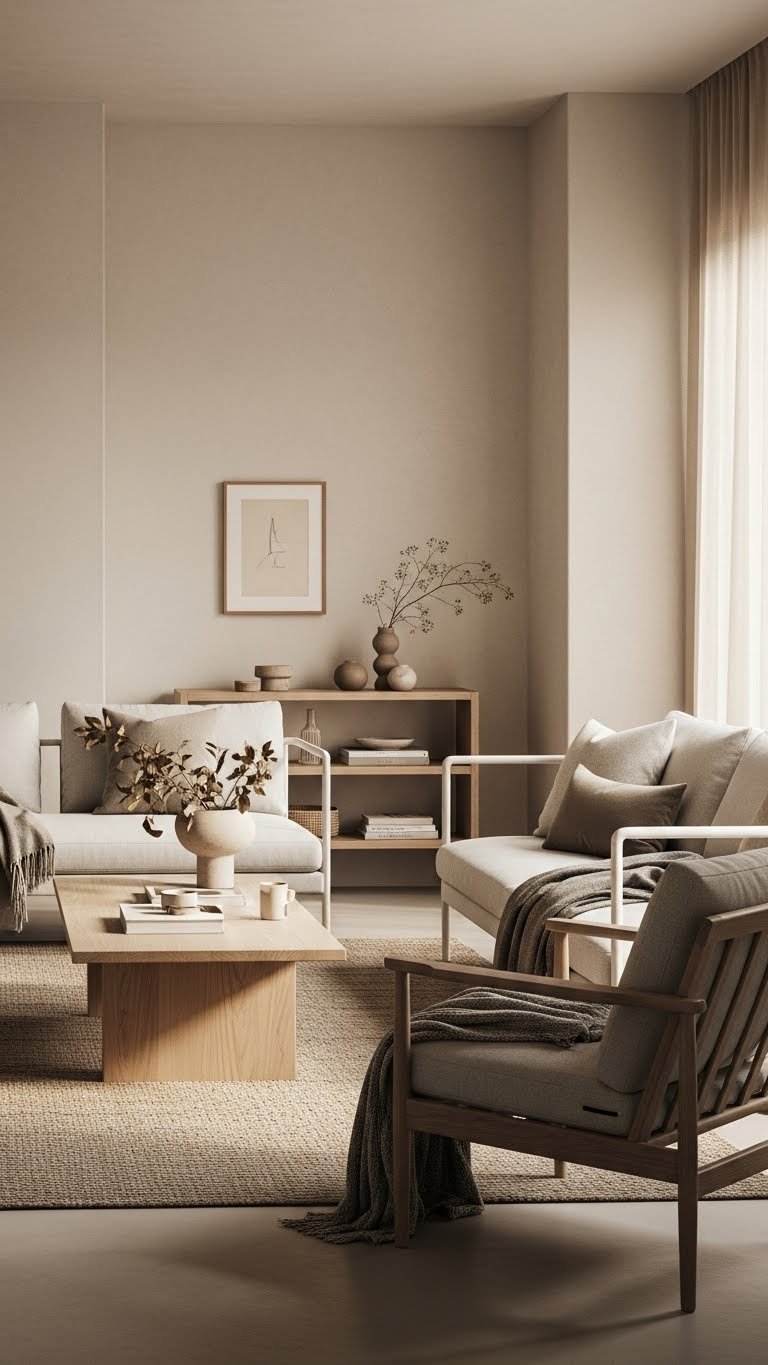
Often you’ll find that pared-back silhouettes instantly calm a room, letting textures and natural light take center stage. You’ll choose furniture with slim profiles and unadorned forms that free movement and visual space. Opt for natural wood, tactile fabrics, and muted hardware to keep details subtle. This restrained approach highlights texture, encourages flow, and gives you a breathable, liberated home.
Layer Lighting With Ambient, Task, and Accent Sources
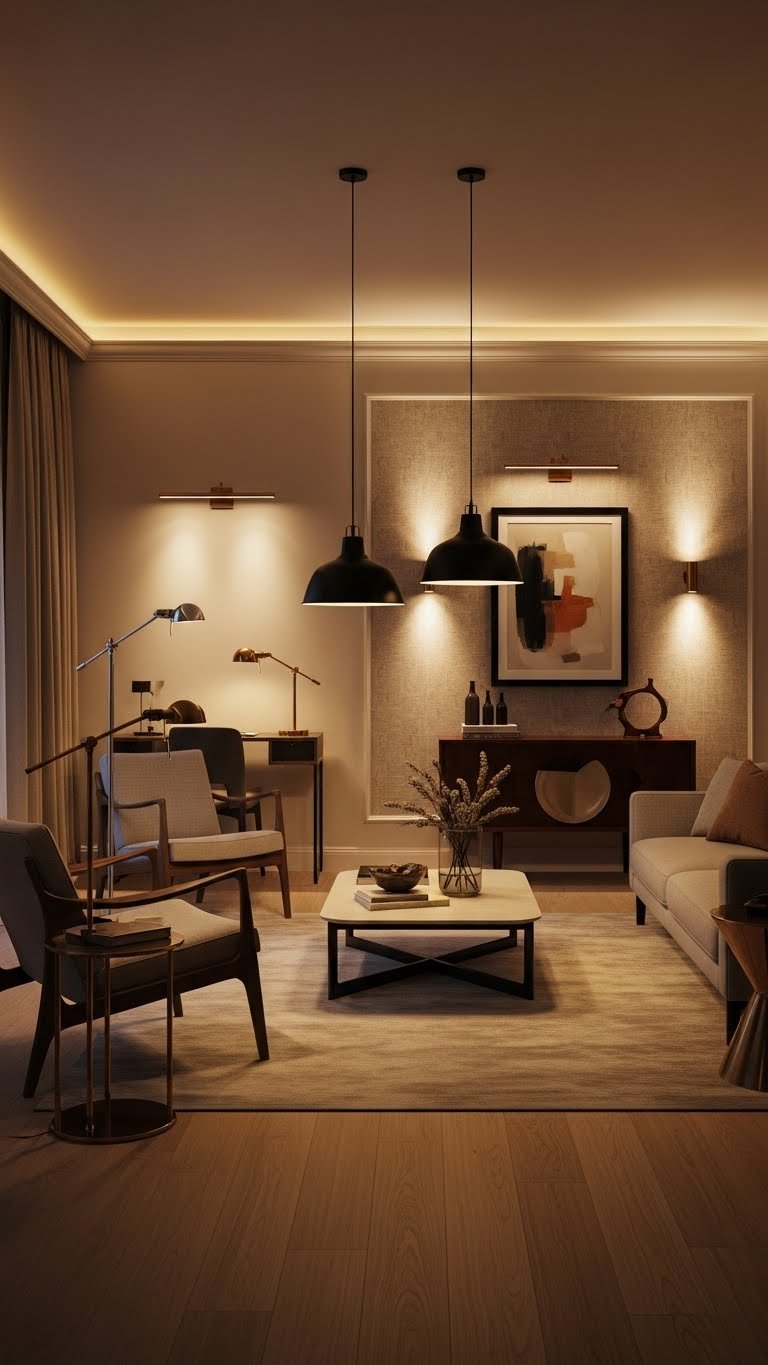
You’ll want to layer lighting to create depth and mood: start with soft ambient light to wash the room, add task fixtures where you read or work, and use focused accents to highlight texture and art. Embrace dimmable pendants for adjustable overhead drama, place layered sconces to frame seating, and mix directions and finishes so light sculpts surfaces and frees your space.
Use Warm-Temperature Bulbs for a Hygge Glow
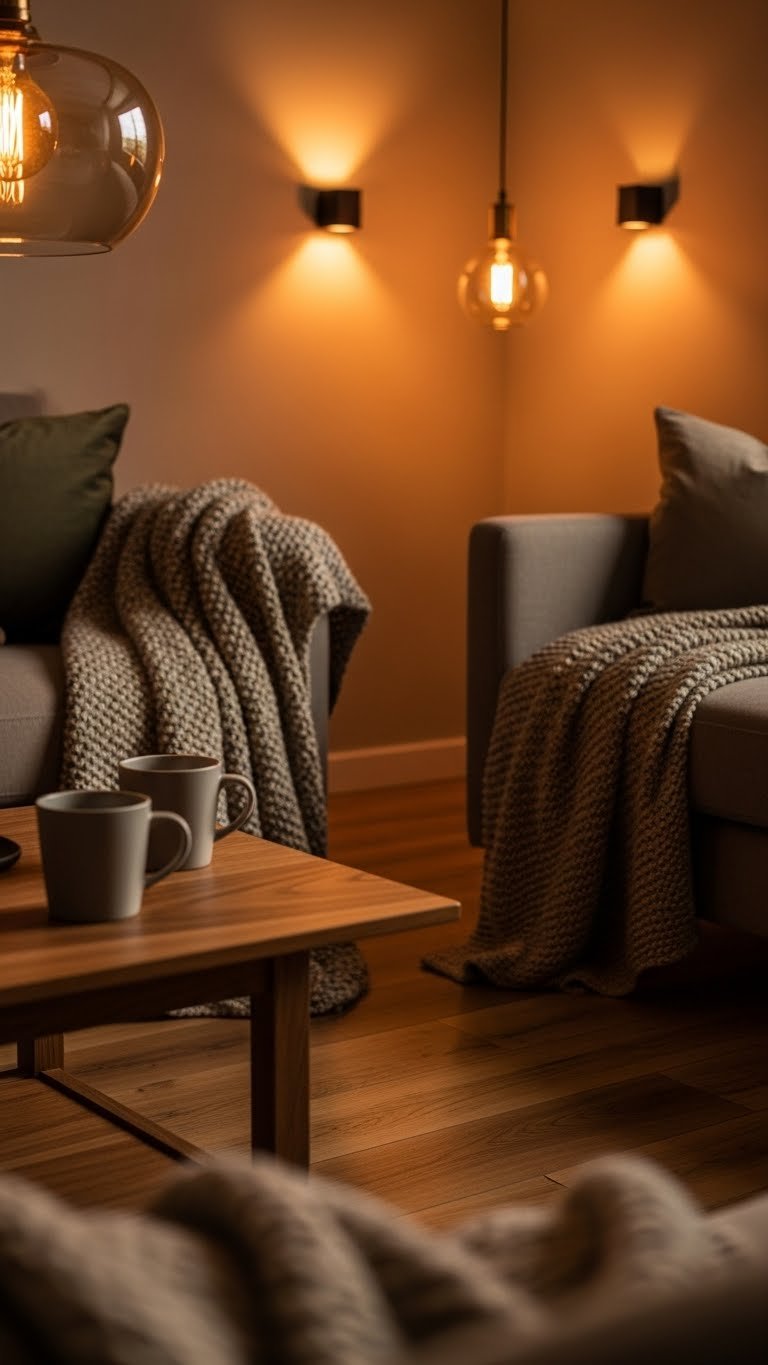
Frequently, swapping cool bulbs for warm ones instantly softens a room and brings that sought-after hygge glow. You’ll choose amber LEDs to flatter wood grain, wool throws, and matte ceramics, creating textured warmth.
Fit dimmable fixtures so you can tune mood and freedom of light — bright for mornings, low and cozy for evenings — keeping spaces calm, tactile, and effortlessly inviting.
Add Candles and Lanterns for Intimate Lighting
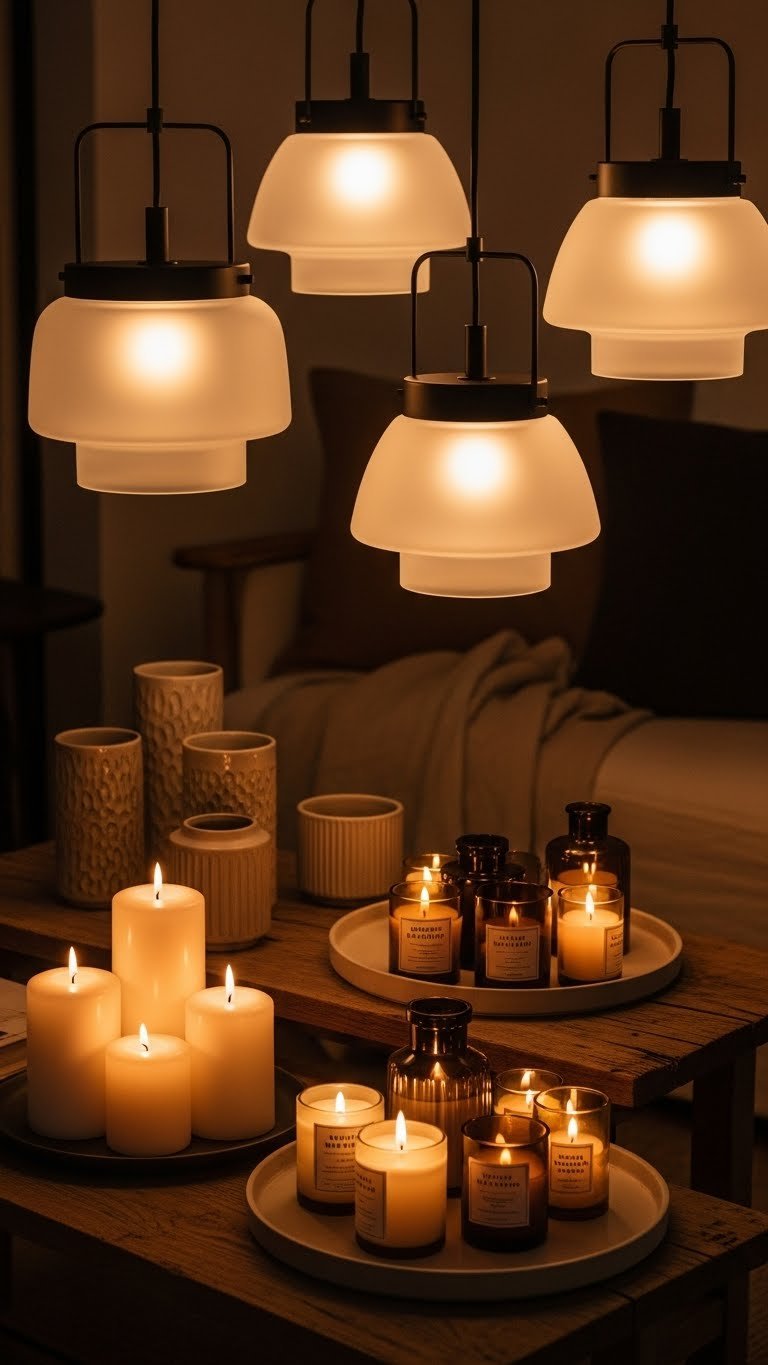
Often, lighting a few candles and setting out lanterns transforms a room into an intimate, tactile haven.
You’ll mix scented votives on trays, cluster pillar candles by low tables and install hanging lanterns for layered height. Choose matte metals, frosted glass and earthen textures to create soft shadows. It feels modern, liberated and tactile—lighting that invites slow evenings and personal rituals.
Incorporate Textured Rugs and Woven Accents
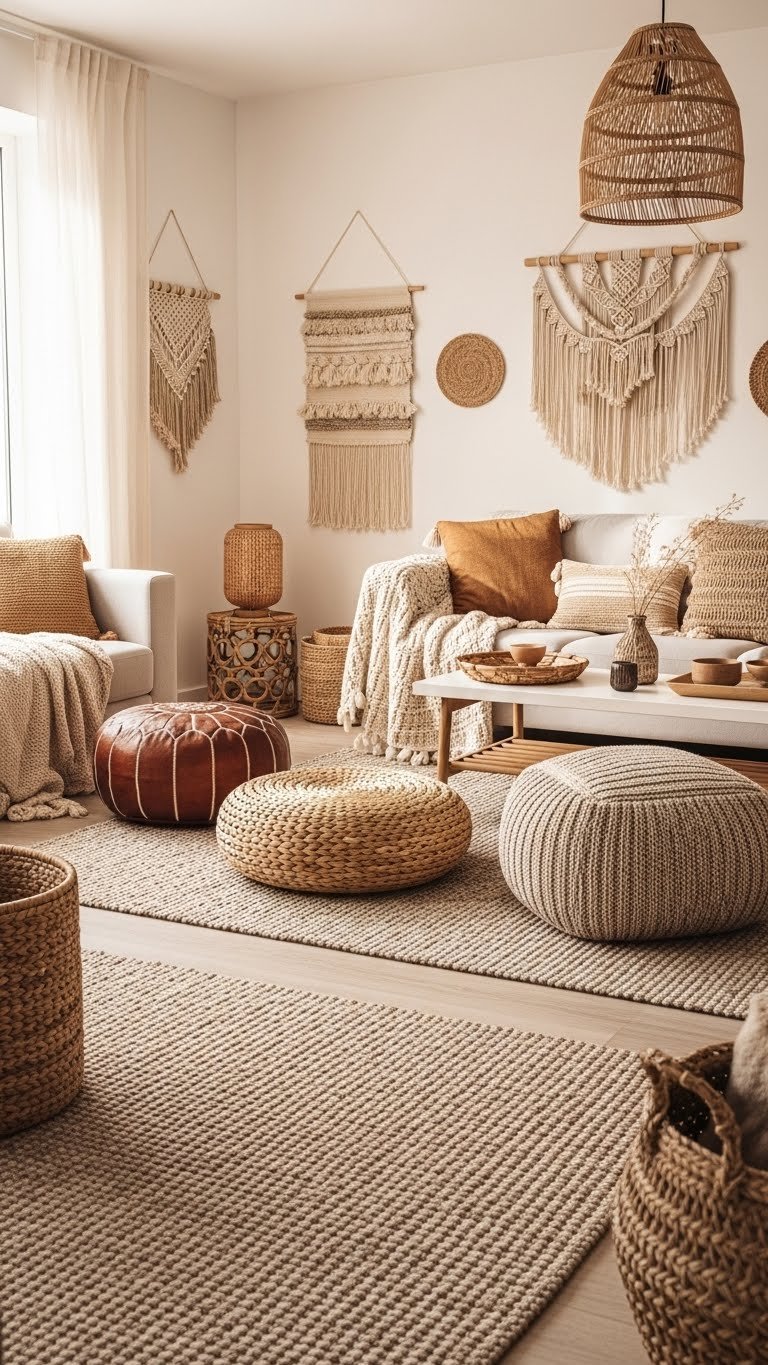
You’ve layered soft throws and cushions; now ground the room with textured rugs and woven accents that amplify that tactile story. Choose neutral, nubby rugs to anchor zones, add handwoven poufs for casual seating, and hang textured wallhangings to lift vertical space.
Mix natural tones and bold knits to keep it airy yet grounded—inviting movement, comfort, and the freedom to rearrange.
Select Light Wood Joinery and Handcrafted Pieces
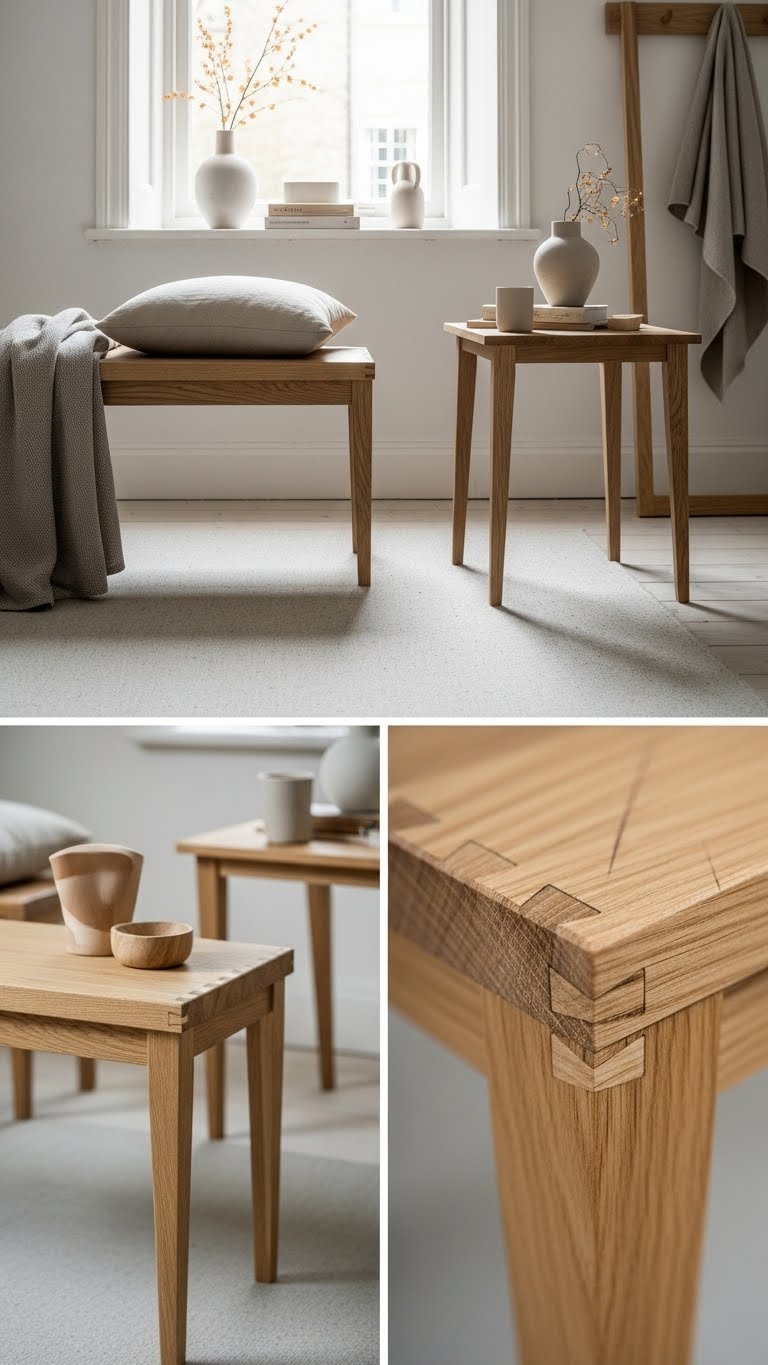
Bring in light wood joinery and handcrafted pieces to keep the room feeling airy and honest—think slim oak legs, visible dovetail joints, and hand-planed surfaces that celebrate texture and craft. You’ll choose pieces with hand cut dovetails and bespoke joinery, favoring simple profiles and tactile grain. Let honest construction and subtle imperfections free the space, grounding minimalism with warmth and personality.
Add One or Two Muted Accent Colours Sparingly
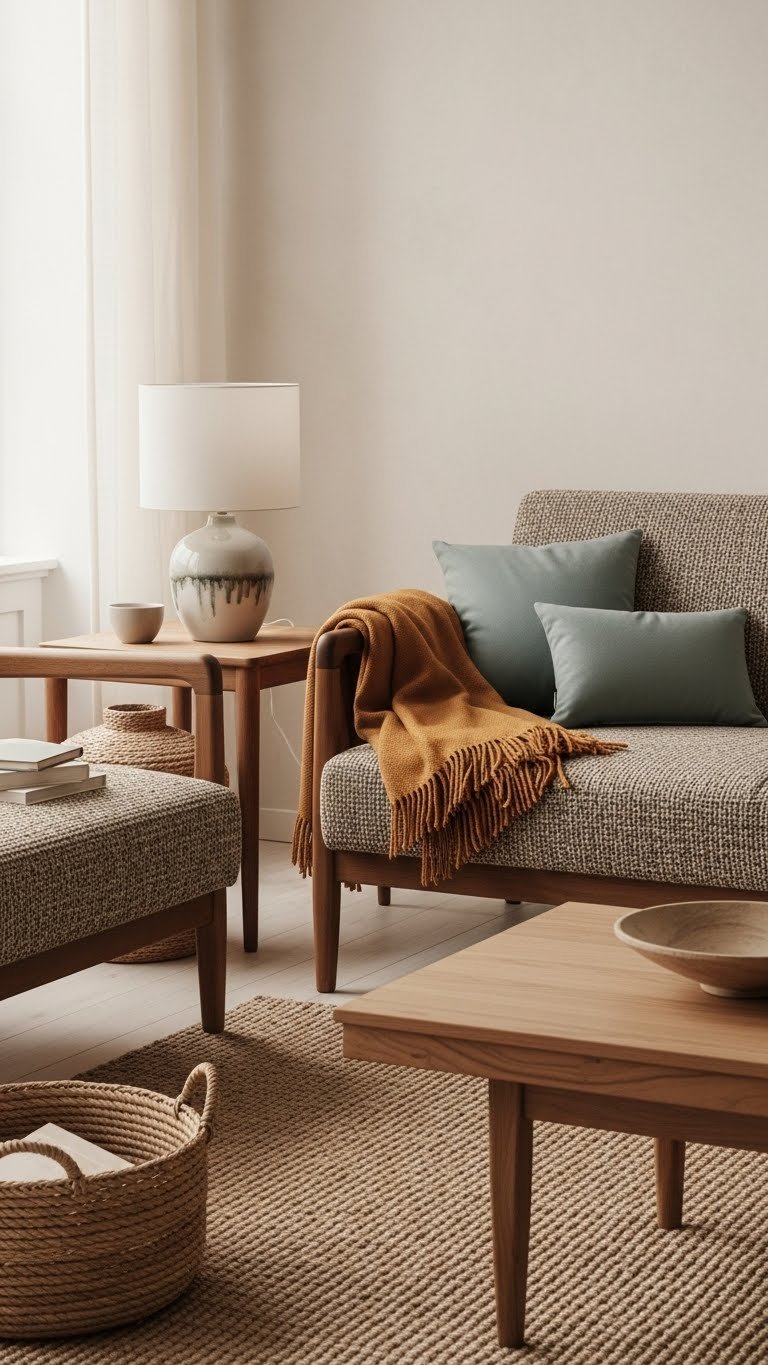
If you want to keep the palette calm but layered, introduce one or two muted accent colours and use them sparingly to reinforce texture and form. Choose muted teal or a hint of vintage mustard as anchors—small cushions, a throw, or a lamp. Let colour punctuate woven surfaces, ceramic tones, and wooden grain so the room feels open, curated, and free.
Use Subtle Nature-Inspired Patterns on Soft Furnishings
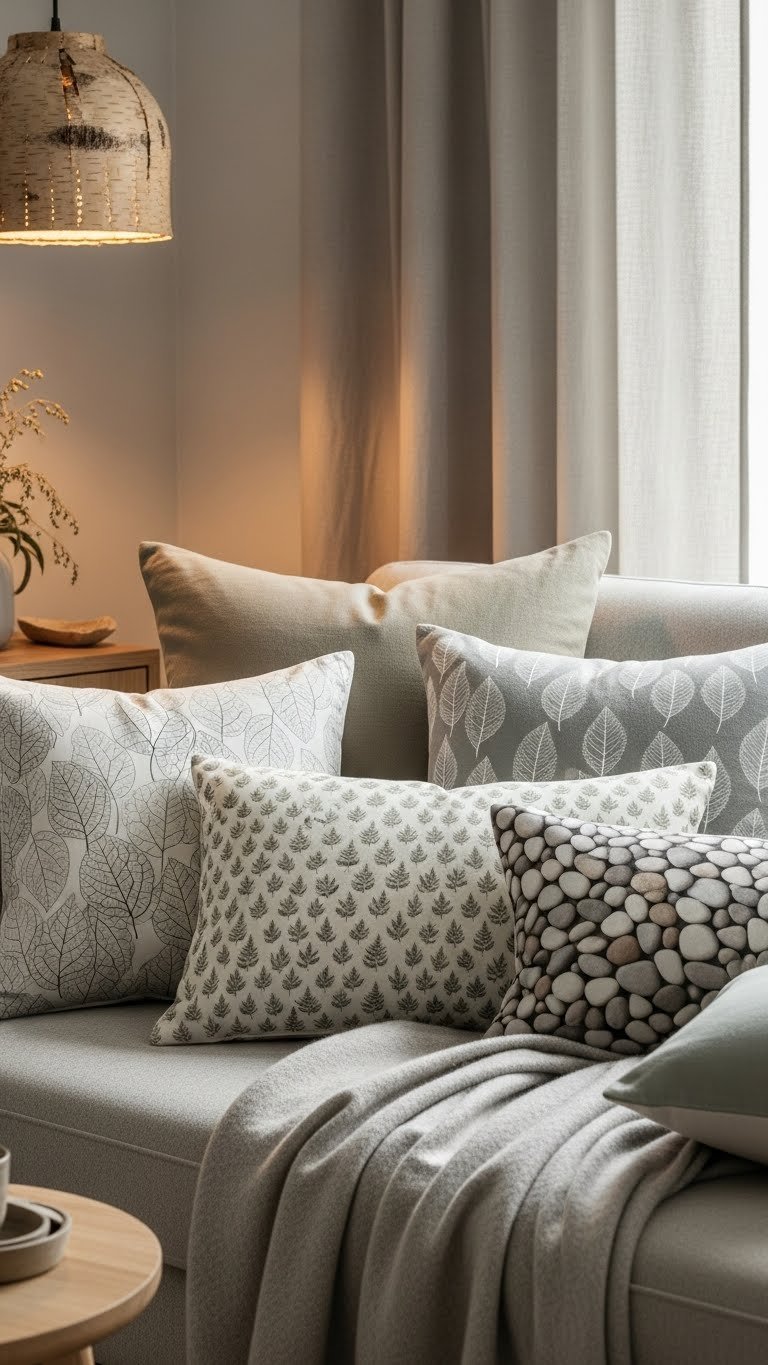
Often, you’ll find that subtle nature-inspired patterns—think delicate leaf veins, small-scale fern repeats, or soft pebble motifs—add depth without shouting, especially on cushions, throws, and linen curtains.
You’ll balance texture and calm by choosing muted palettes, mixing leaf motif cushions with plain wool throws, and echoing natural accents like birch bark lampshades for a liberated, tactile Scandinavian vibe.
Place a Single Large Artwork as a Visual Anchor
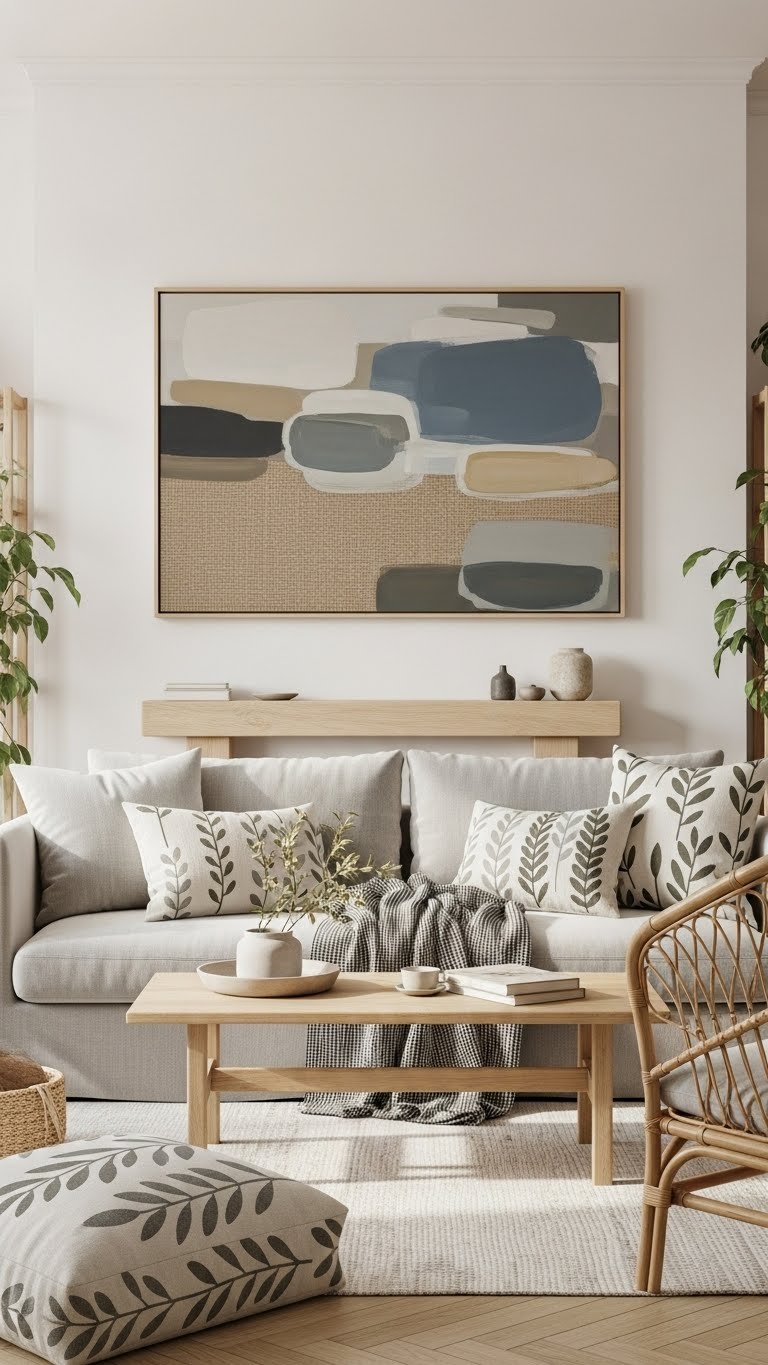
After soft textiles and nature motifs set the room’s tactile tone, a single large artwork will anchor the space and sharpen its calm. You’ll choose bold placement — centered above a sofa or mantel — to create movement without clutter. Favor pieces that deliver tonal contrast in muted palettes, tactile brushwork or woven textures, letting the art claim freedom while the room remains serene and airy.
Bring in Low-Maintenance Houseplants for Biophilia
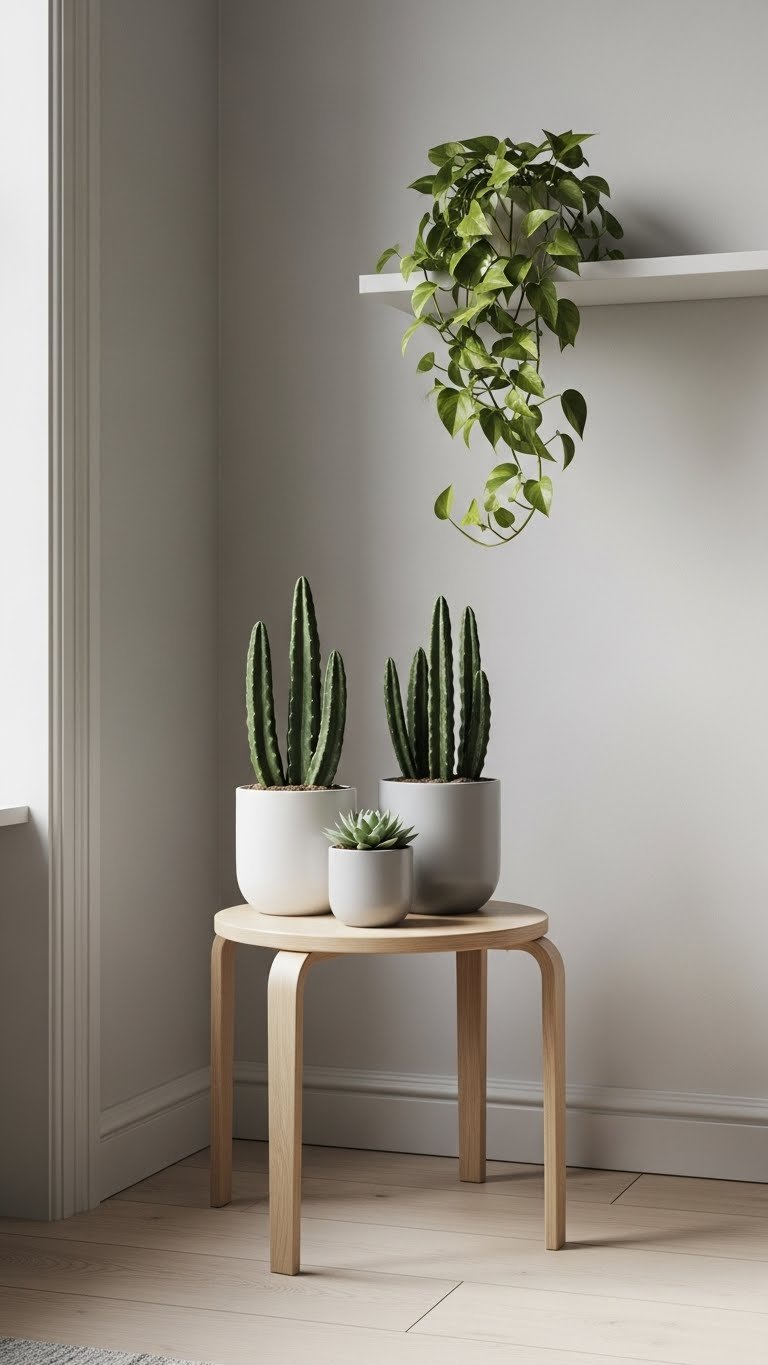
Regularly adding a few low-maintenance houseplants livens a Scandinavian room without stealing its calm — you get texture, airiness and a quiet biophilic link to nature with minimal fuss.
Choose low maintenance succulents in sculptural pots and a trailing, air purifying pothos on a shelf. You’ll enjoy tactile greenery, effortless care, and a liberated, breathable space that feels rooted yet uncluttered.
Choose Durable, Matte Finishes for Practicality
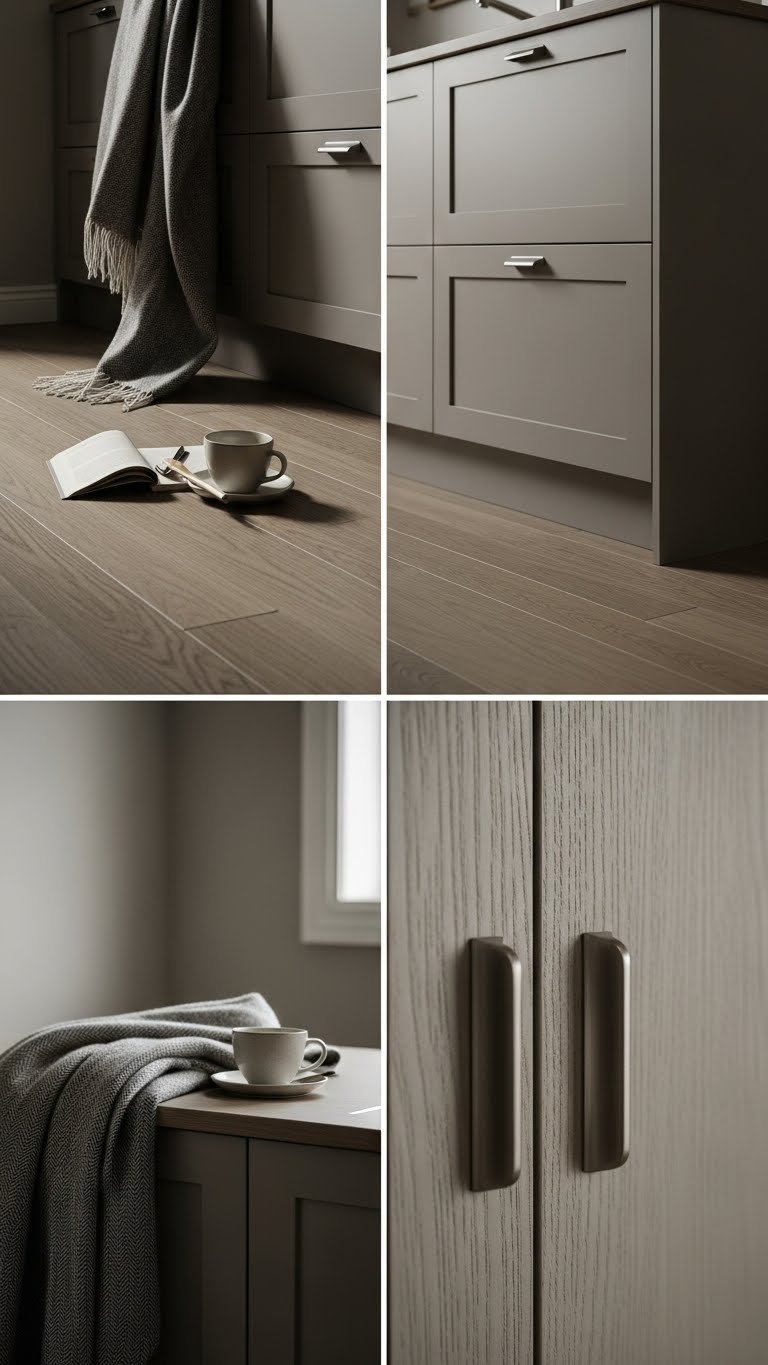
While you want surfaces that feel soft and subdued, pick matte, hard-wearing finishes that hide wear and diffuse light — they keep the room looking lived-in but refined.
You’ll choose matte durability for floors, cabinetry, and hardware, enjoying tactile texture without glare. These finishes simplify practical maintenance, resist fingerprints, and let you live freely—messes clean up faster, style stays effortless.
Mix Leather or Felt Accents for Tactile Contrast
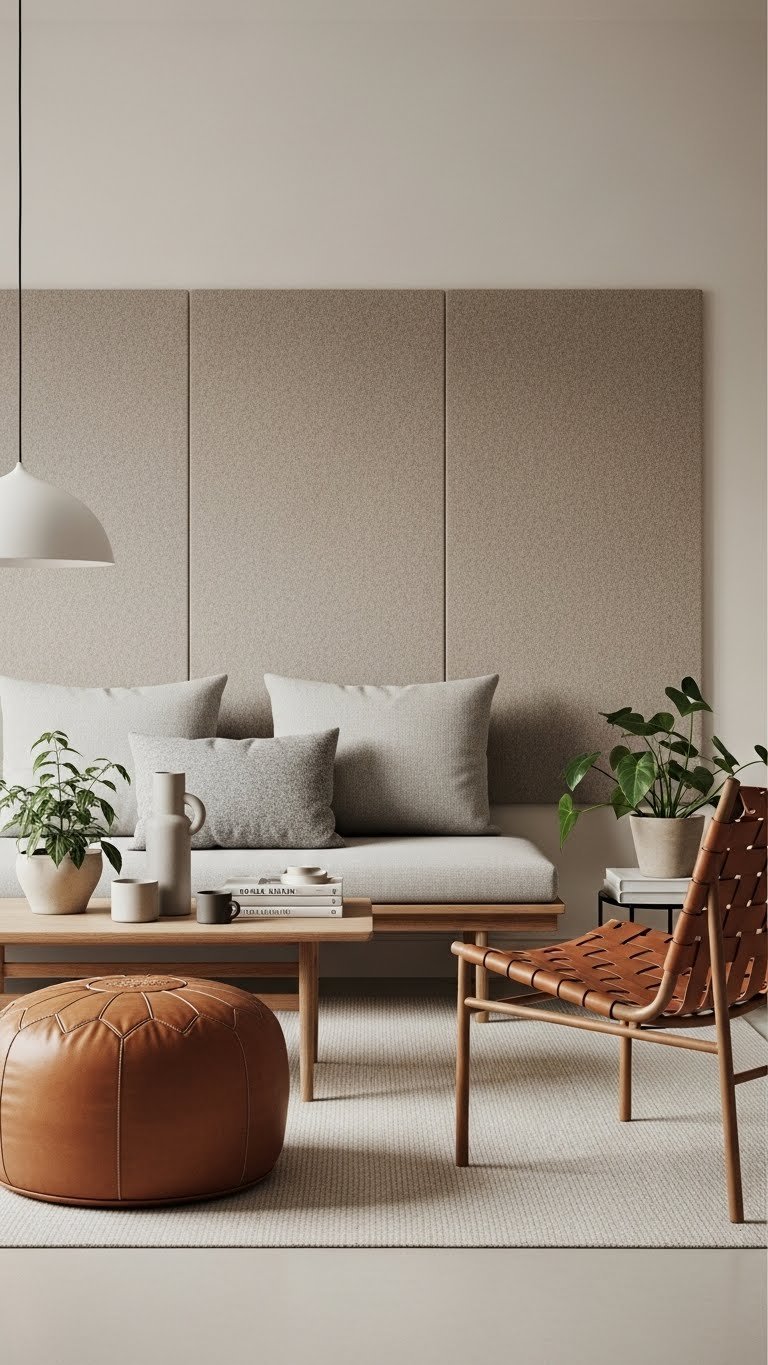
Anchor your scheme with leather or felt accents to add tactile contrast and visual warmth. You’ll layer warm leather straps, poufs or chair details against soft felt cushions and wall panels to create depth without clutter. Choose pared-back shapes and neutral tones, mix matte and polished finishes, and let texture do the talking so your space feels liberated, cozy and unmistakably Scandinavian.
Keep Surfaces Clear With Carefully Curated Accessories
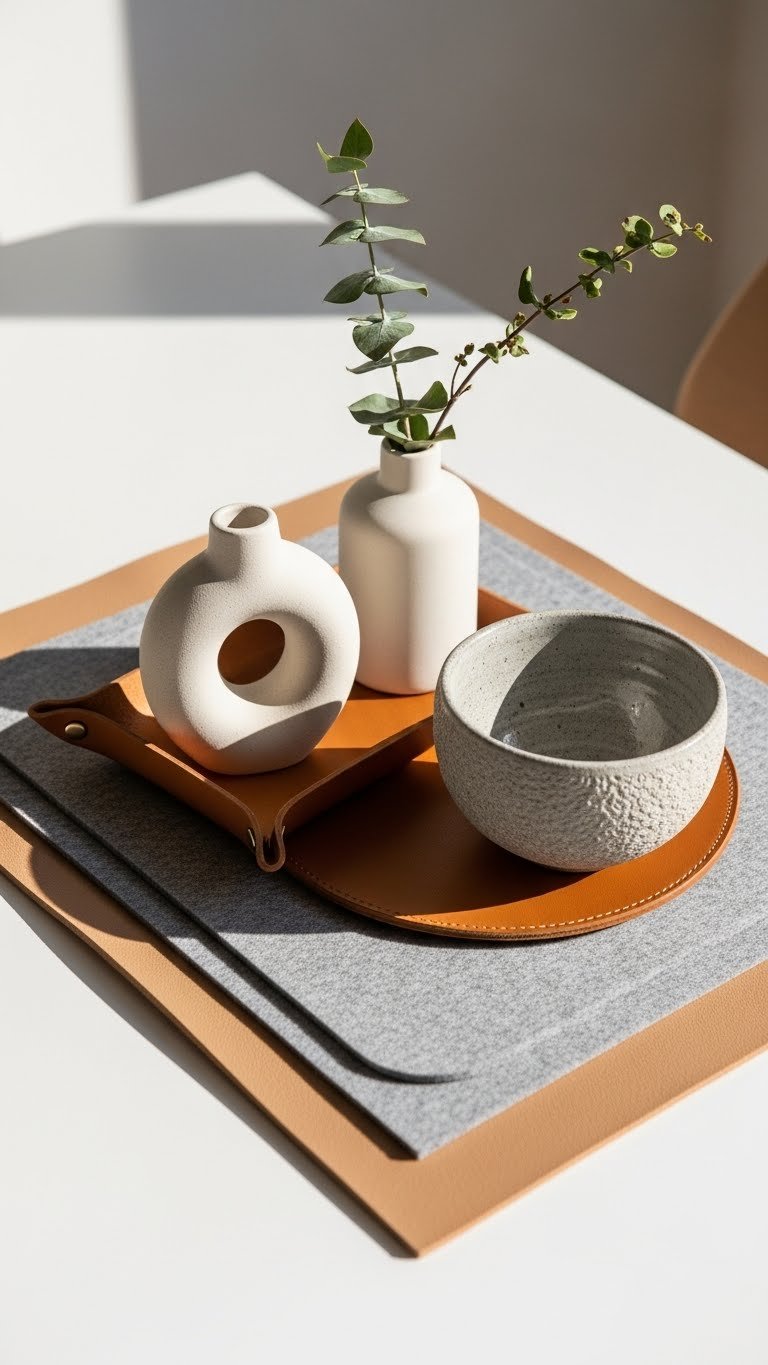
After you’ve layered leather and felt for tactile richness, pare down surfaces so each object reads clearly.
You’ll choose a few sculptural pieces, a small vase, and a tactile tray, then practice seasonal rotation to keep displays fresh.
Embrace zero clutter rituals: daily reset, one-in-one-out, and mindful editing so your space stays airy, intentional, and free.
Pick Timeless, Modular Pieces That Adapt Over Time
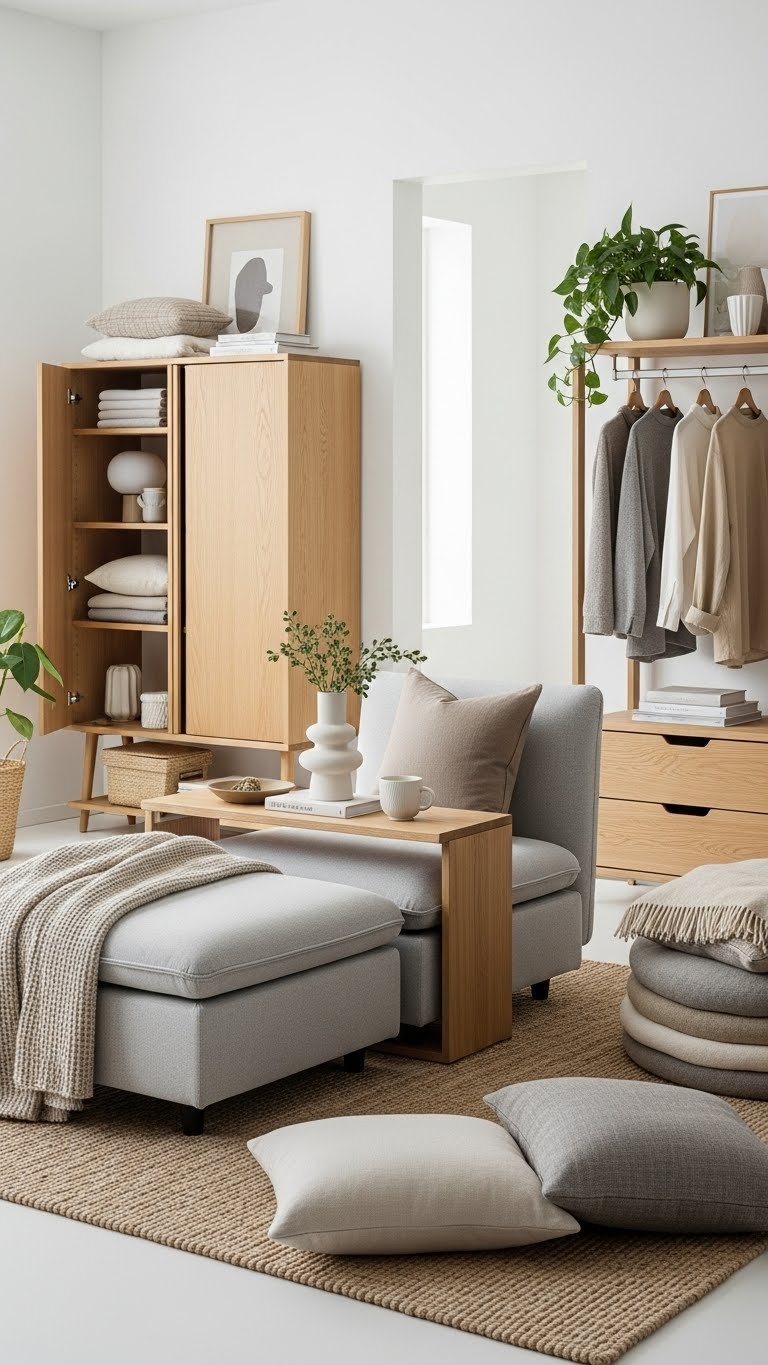
Choose pieces that feel edited and built to last, so they move with you through seasons, spaces, and style shifts. You’ll favor clean lines, tactile wools, warm woods, and modular wardrobes that reconfigure as needs change. Pick convertible ottomans for seating, storage, and occasional tables. These timeless, mix-and-match elements give you freedom to remix texture and layout without sacrificing a calm, cohesive Scandinavian aesthetic.