
You want a living room that feels calm, curated, and built to last. Start with a restrained nature‑inspired neutral palette and anchor big pieces in one strong tone, then layer texture, shape, and light so the space reads intentional rather than flat. I’ll show 23 practical moves—from paint testing to heirlooms—that make neutral feel timeless and never boring.
Choose a Restrained Nature‑Inspired Neutral Palette
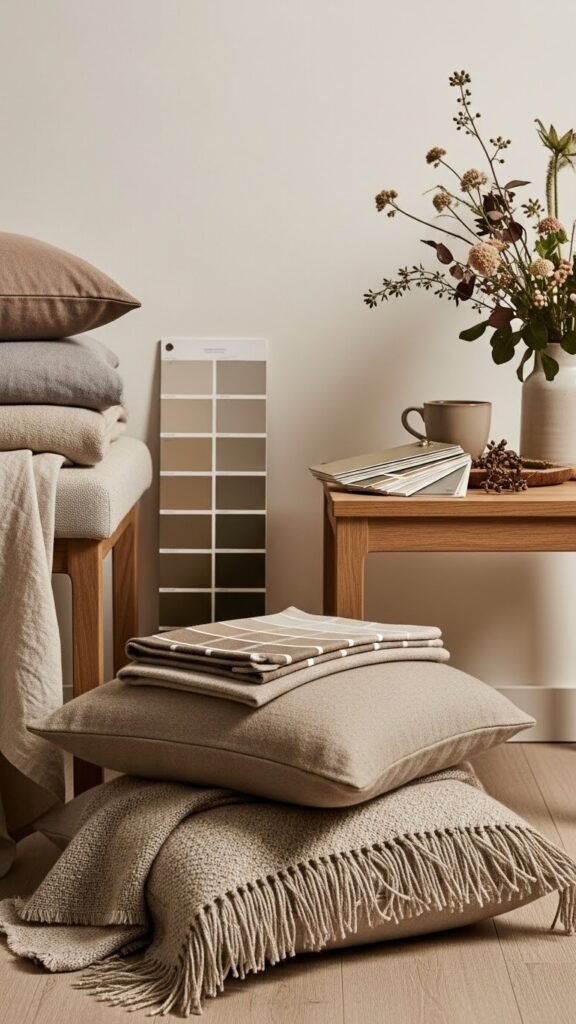
When you pick a nature‑inspired neutral palette, aim for a limited range of tones—think warm greiges, soft taupes, muted olive and stone—to create a cohesive, calming backdrop that feels intentional rather than bland.
You’ll layer earthy pigments and quiet mosses sparingly, add seasonal botanicals and muted florals as accents, and keep finishes restrained so each element breathes, giving you effortless, liberated elegance.
Pick a Single Anchor Neutral for Large Elements
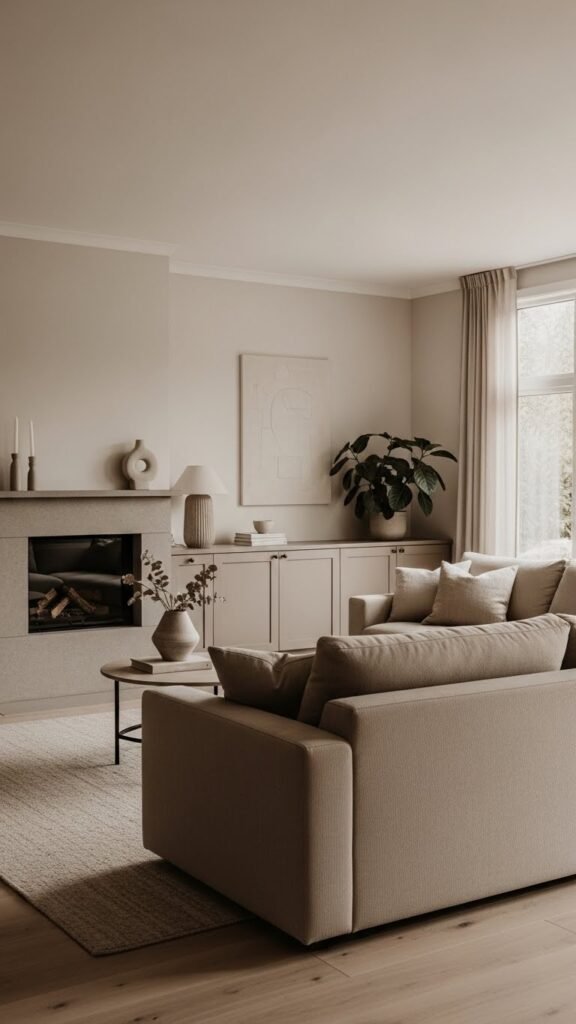
Because large pieces set the tone for the whole room, pick one anchor neutral—such as warm greige, soft taupe, or muted stone—and commit to it for your sofa, rug, or major cabinetry. Choose a single anchor as your tonal focus so your living room breathes. Let grounding fabric and restrained textures unify focal furnishings, freeing you to layer personality without losing calm cohesion.
Use a Three‑Value Approach for Light, Mid, and Dark Neutrals
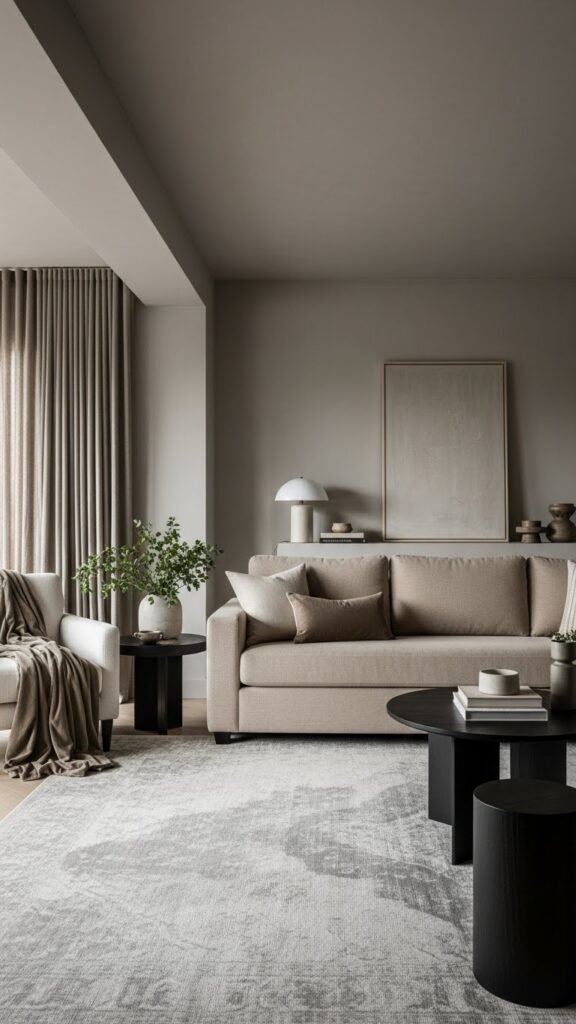
If you want a neutral palette that reads as intentional rather than flat, use a three-value system: pick a clear light, a confident midtone, and a rich dark to anchor the room.
Choose soft gray for the light plane, warm beige as your mid, and a deep charcoal or espresso as the anchor. That trio gives balance, movement, and liberation to your space.
Layer Natural Textures for Tactile Interest
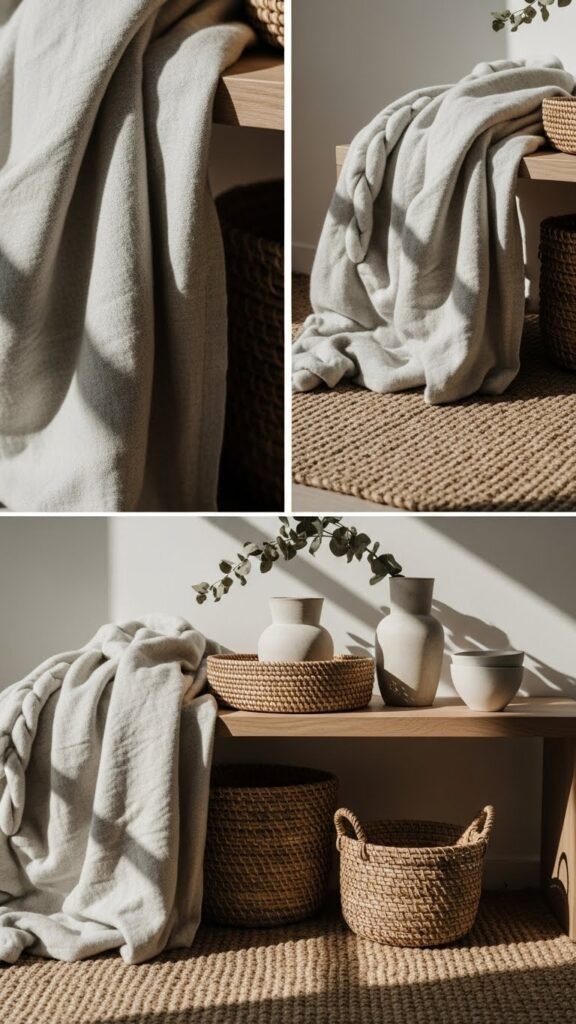
Start by mixing a handful of natural materials—linen, wool, jute, rattan, and clay—so each surface contributes a distinct tactile note to the room.
You’ll layer tactile wallcoverings, sisal woven baskets, and smooth ceramics to create contrast without clutter.
Keep palettes muted, let textures speak, and edit boldly so the space feels calm, liberated, and intentionally tactile.
Mix Woven Rugs and Throws to Add Depth
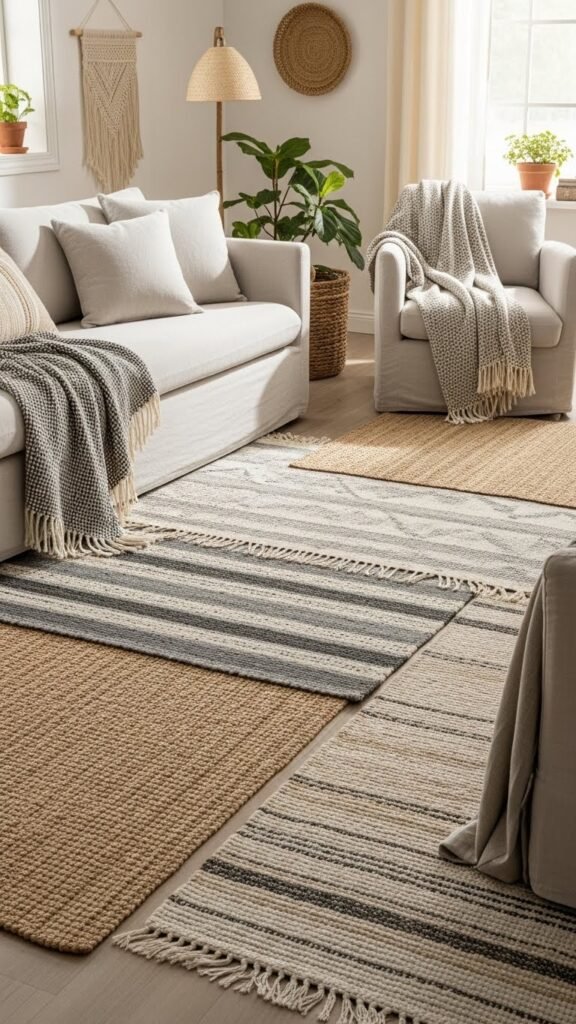
A few carefully chosen woven rugs and layered throws will instantly deepen your neutral scheme, adding scale and movement without changing the color story. Embrace woven layering to define zones and guide traffic while keeping things airy. Mix natural fibers and patterns sparingly, then drape textured throws for contrast and comfort. You’ll create a calm, liberated room that feels crafted, not fussy.
Combine Mixed‑Material Furniture for Surface Contrast
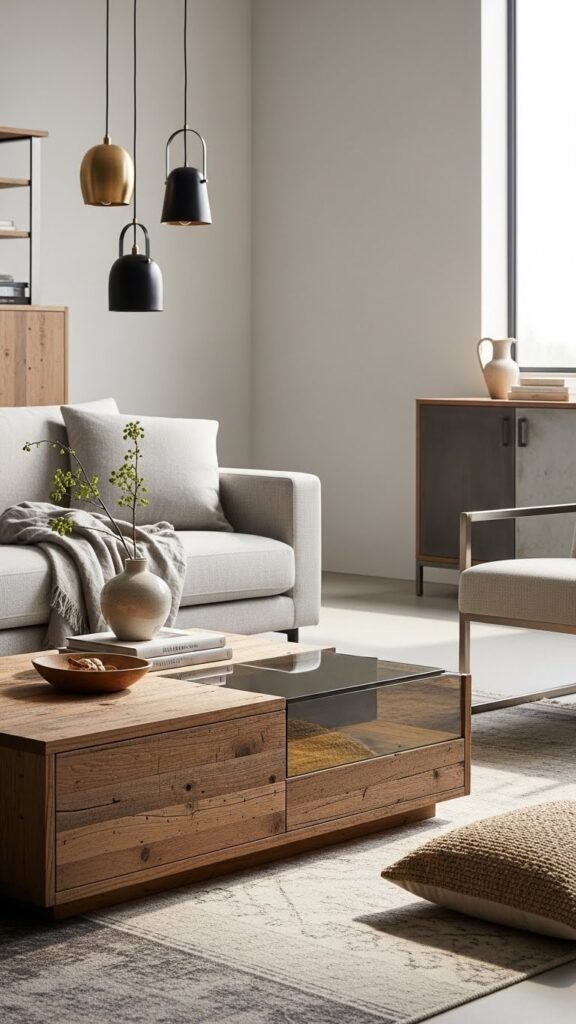
When you mix materials—wood, metal, glass, and upholstery—you give a neutral room the contrast it quietly needs, balancing warmth and polish without disrupting the palette. Pair reclaimed wood tables with sleek glass, introduce mixed metals in lighting and hardware, and choose upholstered seating with clean lines. You’ll create tactile layers that read calm yet intentional, freeing the space without visual clutter.
Introduce Sculptural Ceramics and Organic Accents
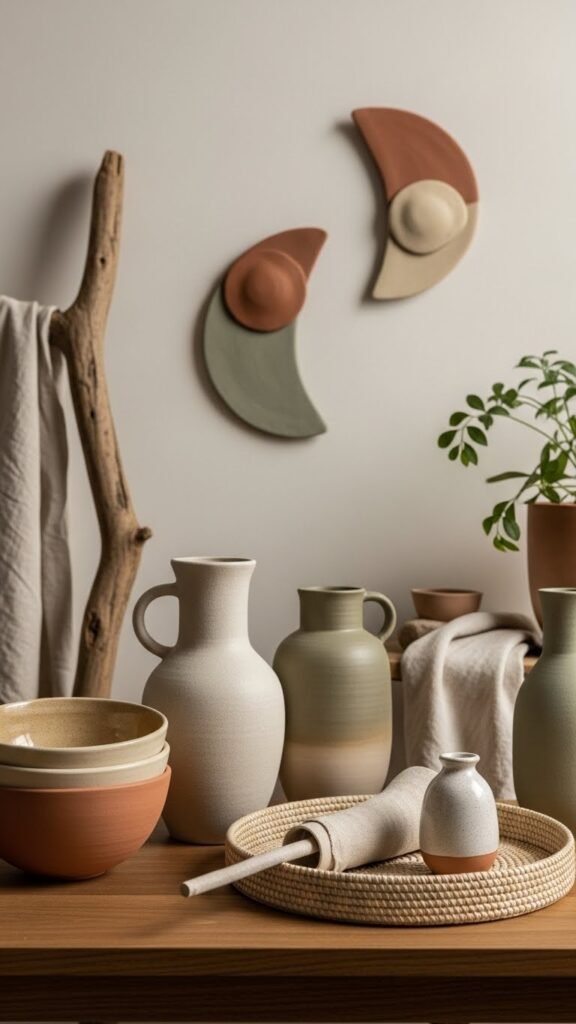
Mixing materials set the stage—now bring in sculptural ceramics and organic accents to give the room quiet personality and tactile interest. You’ll choose hand‑built vases, natural bowls, and unglazed pieces to punctuate surfaces without shouting. Add asymmetrical wall ceramics for movement and scale. Let organic textures—driftwood, woven trays, linen stems—anchor the palette and keep your space feeling liberated, calm, intentional.
Layer Rugs With Varying Pile Heights
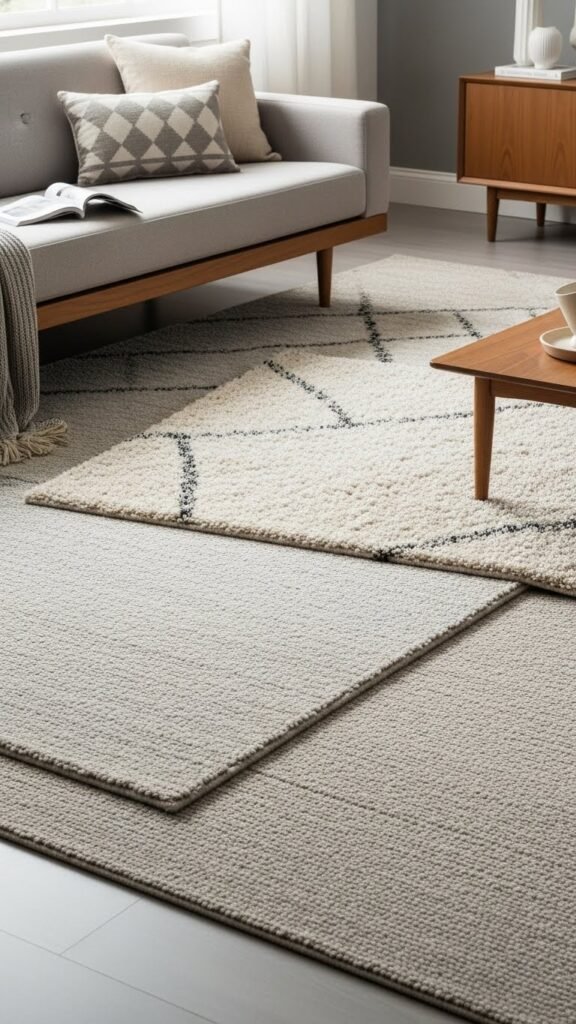
Because layered rugs add depth without overwhelming the room, start by pairing a low-pile, neutral base rug with a smaller, higher-pile accent to create contrast and anchor seating areas. You’ll balance texture and scale through careful shag overlap and subtle pattern juxtaposition, ensuring movement without clutter. Place edges intentionally, let furniture sit partly on both layers, and keep tones restrained.
Choose Classic, Timeless Furniture Silhouettes
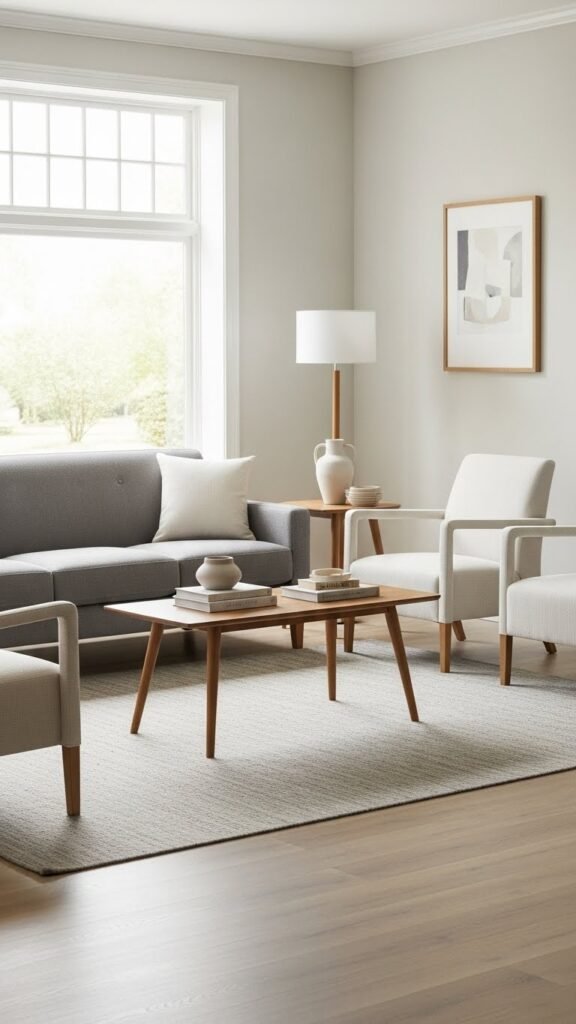
Start with furniture that wears well over time: opt for clean, familiar silhouettes — a tailored sofa, tapered-leg coffee table, streamlined armchairs — so your room feels composed rather than trendy.
Choose pieces with clean lines and subtle curved silhouettes to balance strength and softness.
You’ll create a neutral space that feels liberated, practical, and endlessly adaptable without chasing fleeting fashions.
Invest in One or Two Higher‑Quality Anchor Pieces
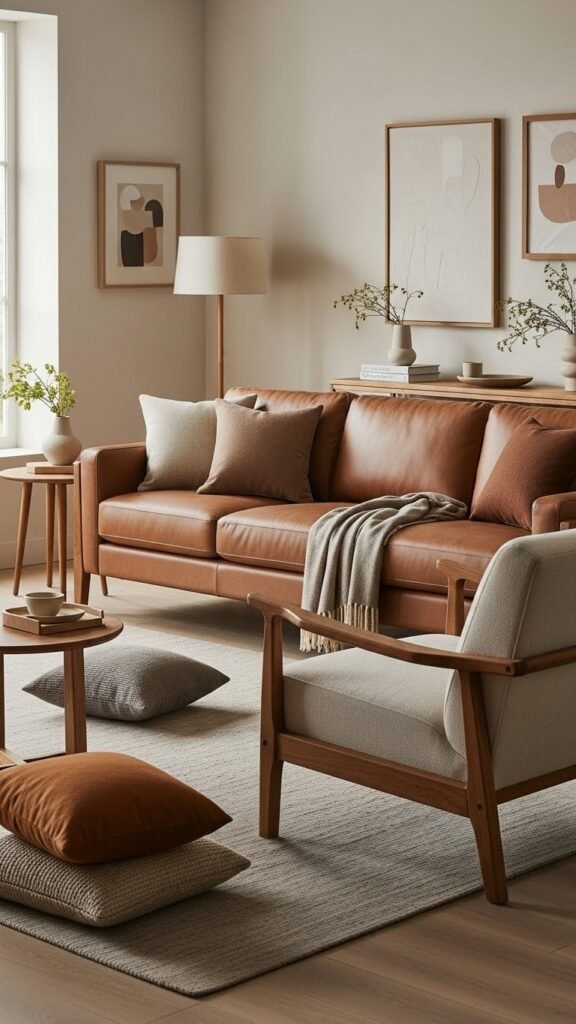
Invest in one or two higher‑quality anchor pieces that set the tone for the whole room: a well‑constructed sofa or a signature armchair will carry the weight of your design and justify simpler, less expensive surrounding items.
Choose durable upholstery and solid frames with artisan joinery so your pieces age confidently. You’ll enjoy freedom to edit accessories while the anchors remain resolute and refined.
Mix Scale With Oversized Art and Slender Side Tables
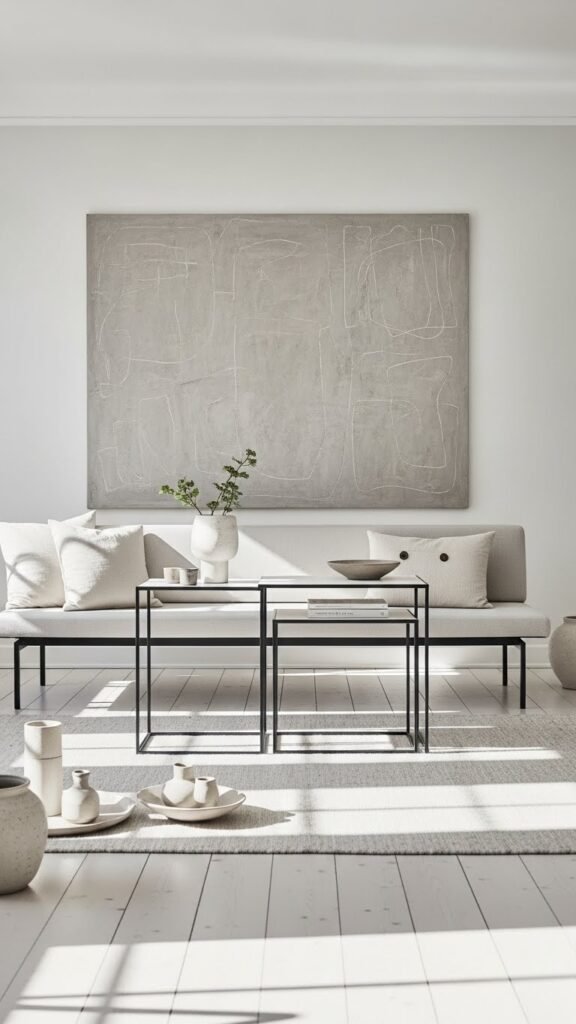
Anchor your neutral scheme by pairing oversized art with slender side tables to create contrast and visual rhythm; the large artwork commands attention and sets a focal point, while the narrow tables keep sightlines open and reinforce the room’s airiness. You’ll exploit scale contrast and employ linear pairing to balance bold presence with sleek restraint, so your space feels liberating, grounded, and effortlessly composed.
Include Iconic Shapes for Visual Anchors
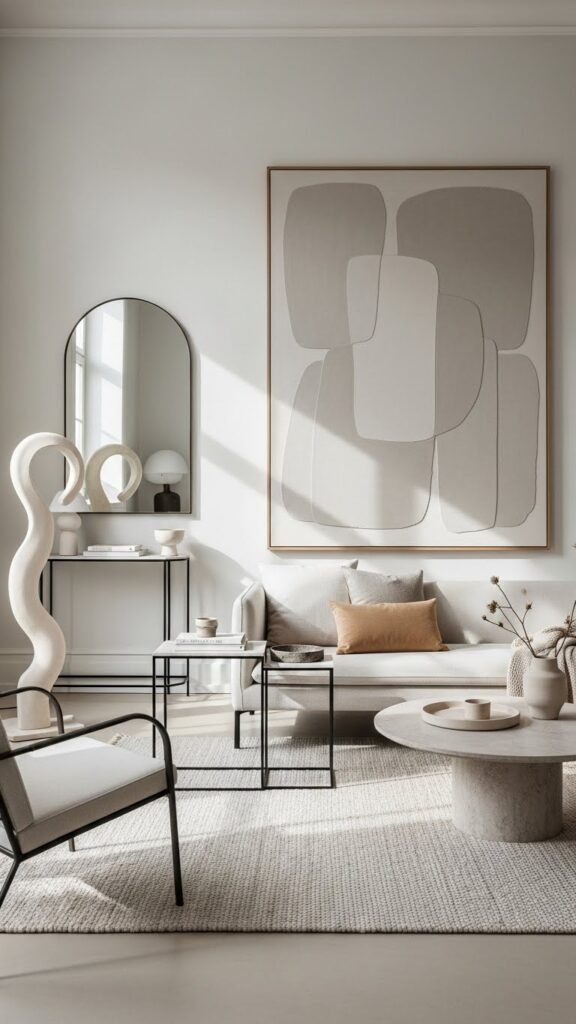
Think of iconic shapes—an arched mirror, a round coffee table, or a sculptural lamp—as visual anchors that give your neutral room instant personality without adding color.
You’ll balance organic curves with crisp geometric anchors to create movement and calm. Choose one statement shape, repeat subtler echoes, and let form guide flow; this lets your space feel liberated, intentional, and quietly unforgettable.
Add Contrast Through Dark vs. Light Neutrals and Materials
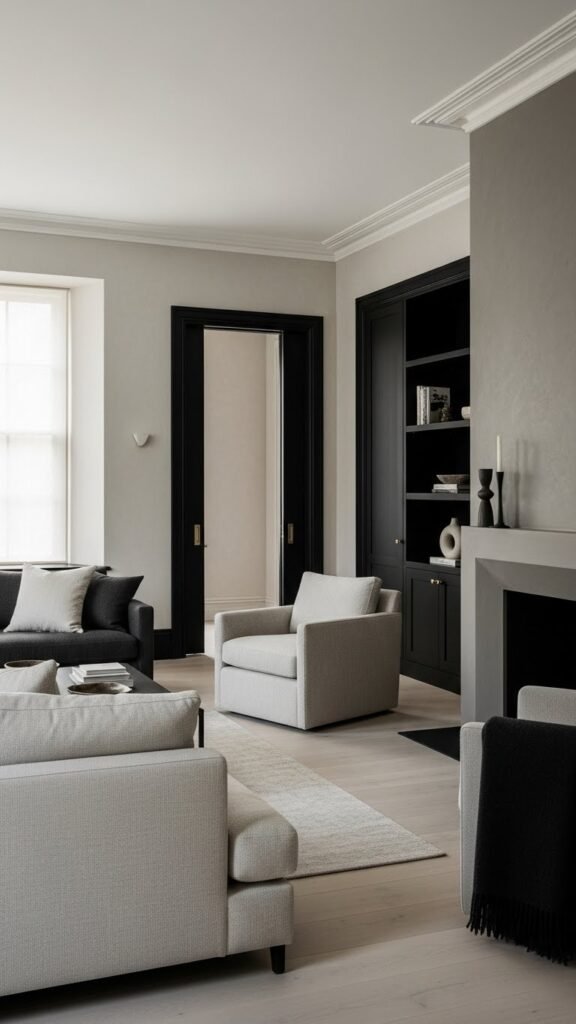
If you want a neutral room that feels layered, introduce strong light-to-dark contrasts in materials and finishes: pale linen walls and bleached oak will read crisper when paired with charcoal upholstery, ebony-stained trim, or a deep stone fireplace.
You’ll balance high contrast textiles and embrace matte gloss interplay to create bold depth, letting restraint feel free and intentional without relying on color.
Introduce Small, Deliberate Color Accents Sparingly
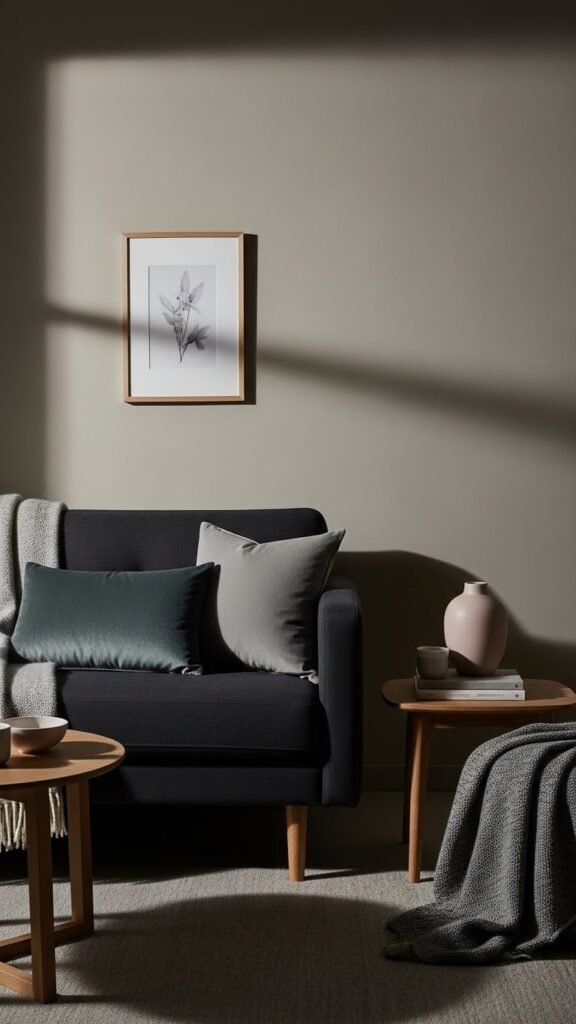
After you’ve established strong light-to-dark contrasts, introduce small, deliberate color accents to punctuate the composition without overpowering it. Choose accessories in muted jeweltones or subtle blushes—think a single velvet pillow, a ceramic vase, or a framed print. You’ll keep the palette calm while expressing personality; those restrained pops feel intentional, liberating, and timeless without demanding the room’s attention.
Use Greenery and Large Plants as Living Focal Points
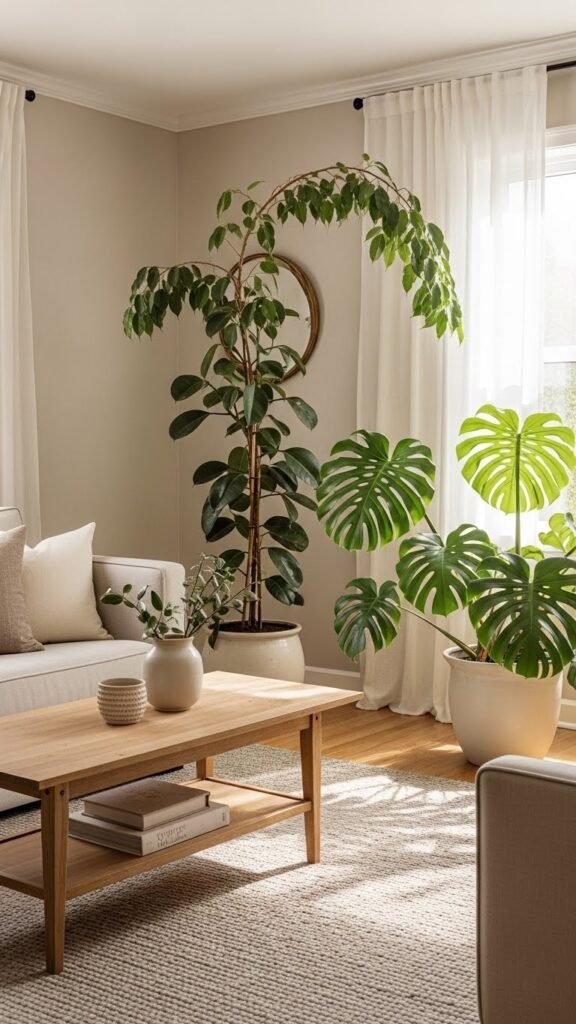
Bringing large plants into a neutral living room instantly anchors the space and adds life without breaking the calm.
You’ll choose an air purifying Ficus for clean, low-key presence or a statement Monstera to sculpt shadow and movement. Position plants as living focal points, balance scale with furniture, and let natural textures and growth patterns define freedom-minded, timeless style.
Employ Darker Trim, Frames, or Hardware for Definition
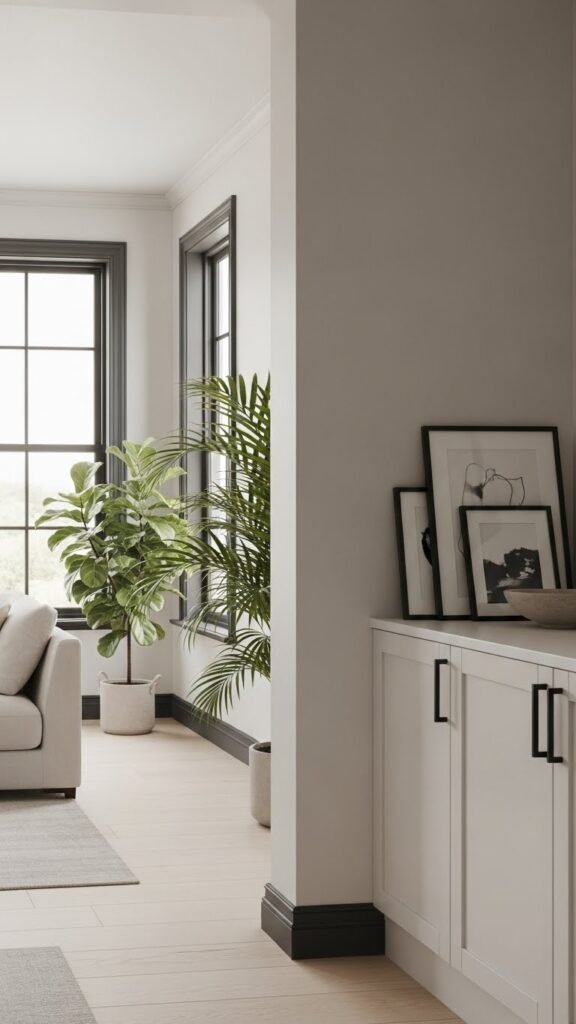
Let the greenery settle, then sharpen the room’s silhouette with darker trim, frames, or hardware to give your neutral palette clear definition. You’ll choose dark hardware and slim trim to create disciplined edges without heaviness. Opt for framed contrast—black picture frames, charcoal door casings, matte pulls—to anchor space, freeing you to move, edit, and live within a calm, sculpted backdrop.
Let the greenery settle, then sharpen the room’s silhouette with darker trim, frames, or hardware to give your neutral palette clear definition. You’ll choose dark hardware and slim trim to create disciplined edges without heaviness. Opt for framed contrast—black picture frames, charcoal door casings, matte pulls—to anchor space, freeing you to move, edit, and live within a calm, sculpted backdrop.
Select Timeless Fixture Finishes That Age Gracefully
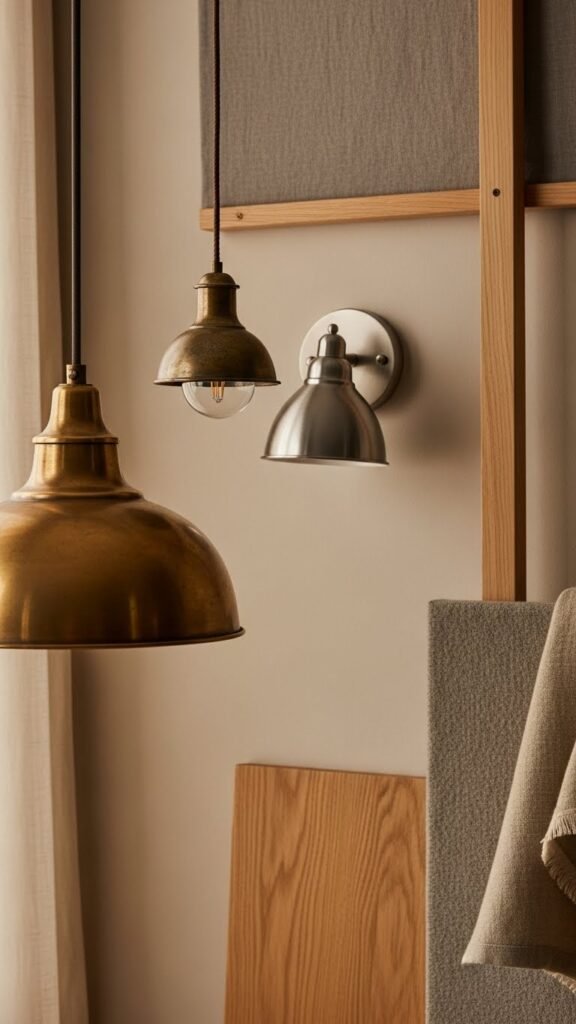
Choose finishes that feel composed and purposeful, because fixtures are jewelry for a neutral room and they should gain character, not wear out.
You’ll favor aged brass for warmth and personality, or satin nickel for cool, adaptable restraint.
Pick finishes that patina gracefully, pair with textiles and woods, and let fixtures evolve with you—timeless, deliberate choices that support a life lived freely.
Use Mirrors and Oversized Art to Amplify Space
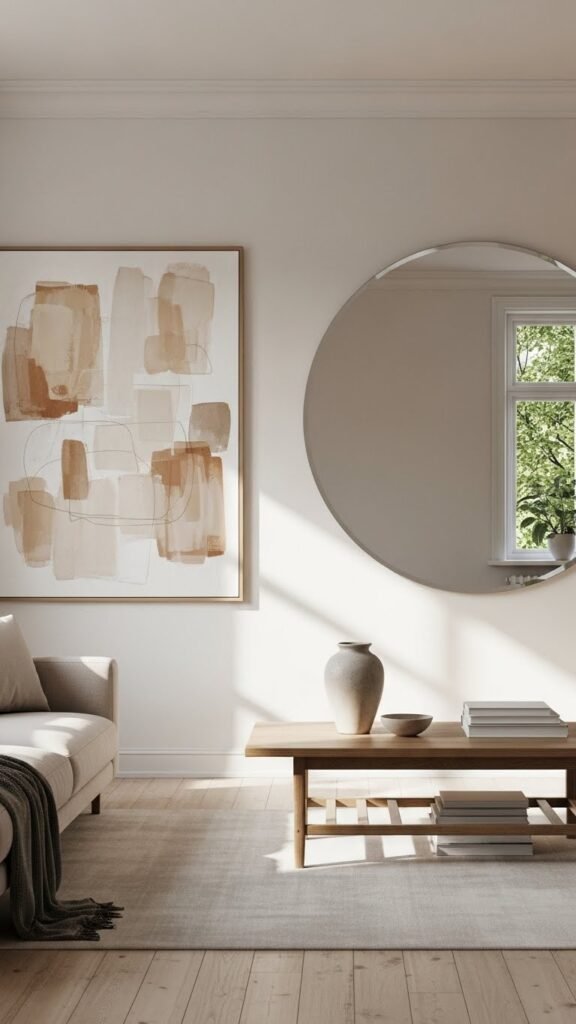
After you’ve settled on finishing touches that age with grace, amplify the room’s presence with mirrors and oversized art.
You’ll use reflective focalpoints to bounce light, expand sightlines, and assert calm.
Choose pieces that create scale illusions—one large canvas or a statement mirror—instead of clutter.
That bold restraint gives you visual freedom, depth, and a timeless, effortless atmosphere.
Edit Possessions and Style in Curated, Balanced Groupings
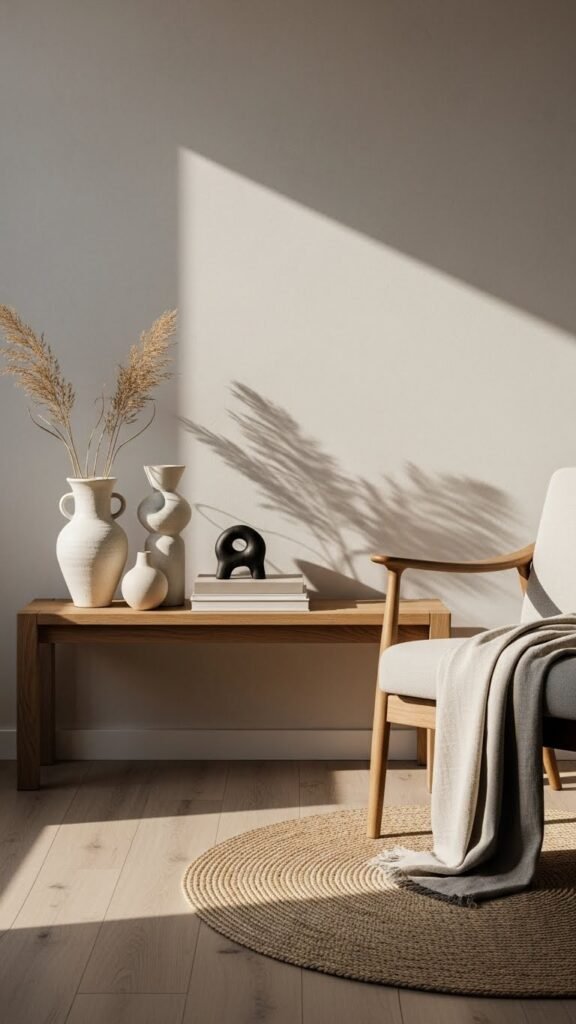
If you pare down possessions with intention, every object earns its place and the room reads as calm, confident, and curated.
You’ll edit via seasonal decluttering, keeping only what resonates each month. Arrange items in balanced groupings—odd numbers, varied heights, restrained textures—so a minimalist display feels warm, not barren. You choose freedom: fewer things, stronger impact, effortless elegance that sustains itself.
Integrate Heirloom or Vintage Pieces for Patina
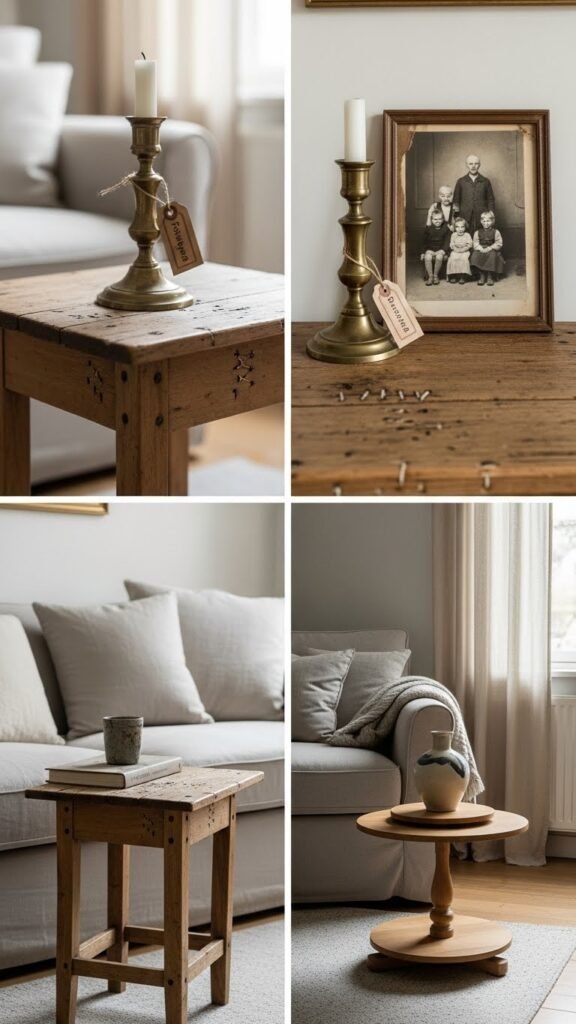
Paring down gives each remaining piece room to breathe, and that’s the perfect moment to introduce an heirloom or vintage item that brings history and patina to the composition.
You’ll use patina storytelling and provenance labels to honor origins, apply discreet repair techniques where needed, and plan a display rotation so each artifact earns attention.
This keeps your neutral room alive and liberated.