
You’ll anchor your space with warm, mid-tone neutrals—greige walls, matte oak floors, a soft taupe sectional—and then layer texture and muted accents for calm, timeless depth. Focus on linen throws, chunky-knit pillows, terracotta ceramics and pale sage rather than loud color, choose blonde woods and low-sheen surfaces that age well, and keep vignettes spare so each piece breathes. Keep going for practical, enduring ways to refine the look.
Embrace Warm Earthy Neutrals Like Terracotta and Caramel
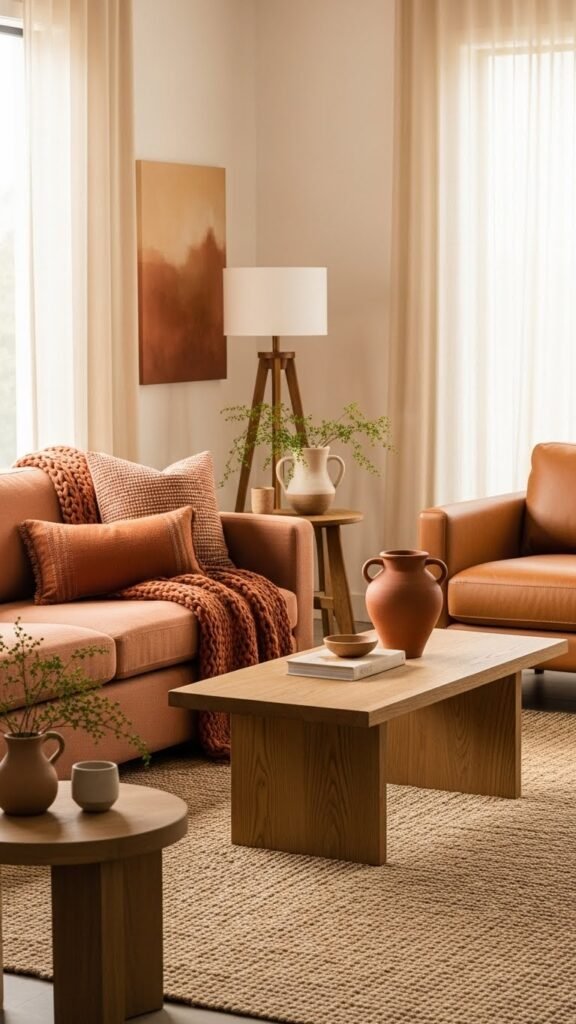
When you choose warm earthy neutrals like terracotta and caramel, you give a room instant depth and comfort that’s both modern and timeless. You’ll layer terracotta textiles for tactile warmth and introduce caramel contrasts to define shapes without shouting. Keep lines clean, materials honest, and scale generous so each piece breathes. You’ll create a liberated, grounded space that feels elegantly effortless.
Layer Muted Greens and Blue Neutrals for Soothing Depth
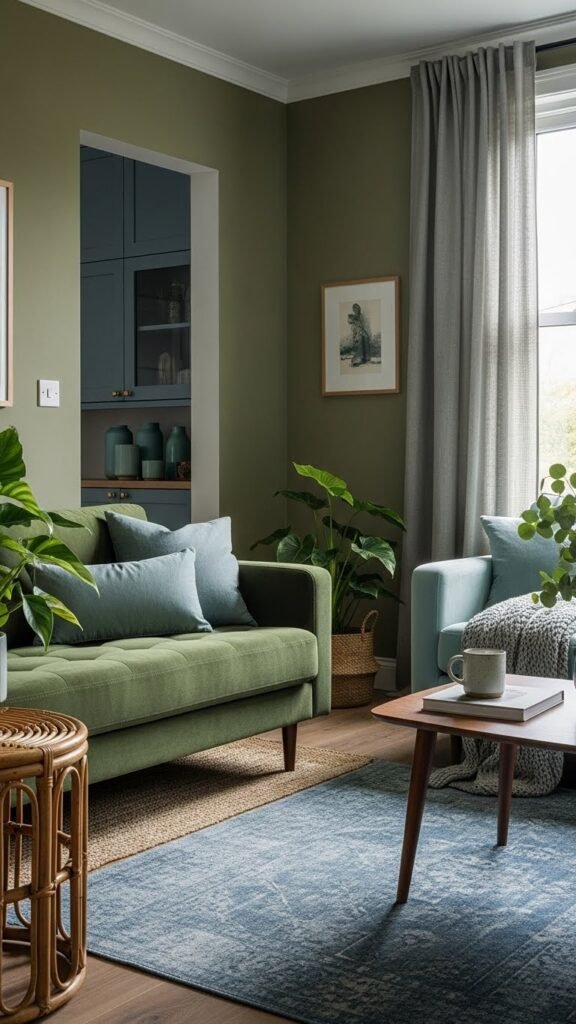
Drawing on nature’s calm, layer muted greens and blue-neutrals to build a soothing, sophisticated backdrop that feels lived-in rather than staged. You’ll mix serene algae accents, muted teal textiles, and soft navy undertones to create depth without heaviness. Choose matte finishes, natural fibers, and minimal patterns so each element breathes. The result feels free, refined, and quietly confident—yours to inhabit.
Use Tinted Neutrals Such as Oatmeal and Warm Greige
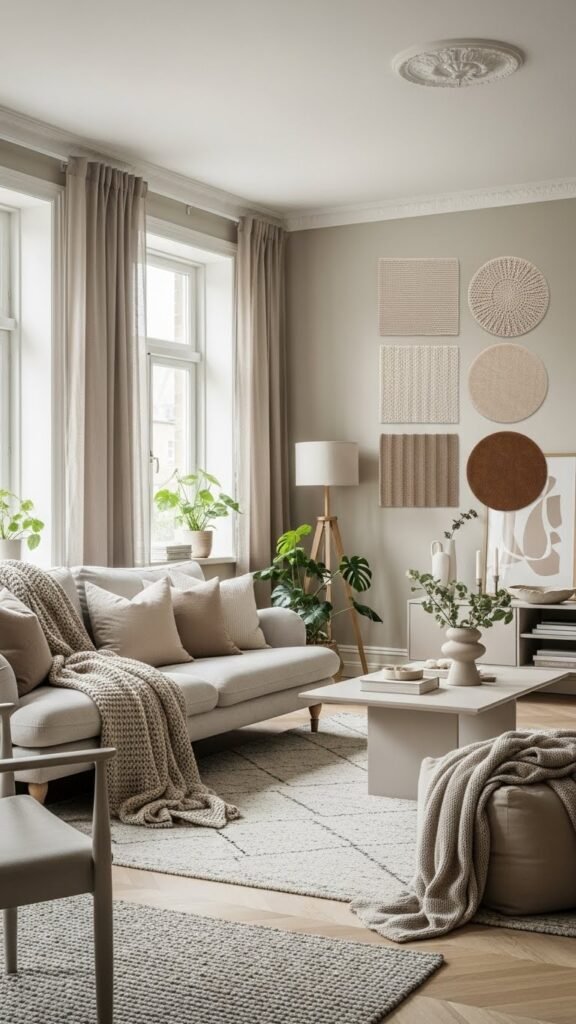
A few well-chosen tinted neutrals—think oatmeal, warm greige, and soft latte—will anchor your space with understated warmth and flexibility.
You’ll layer pieces that highlight oatmeal undertones and lean into greige warmth, creating a calm base that feels open and liberating.
Choose textiles, paint, and simple furniture in varied tints to keep the palette cohesive without feeling restrictive.
Add a Deep Moody Neutral Accent Wall or Cabinetry
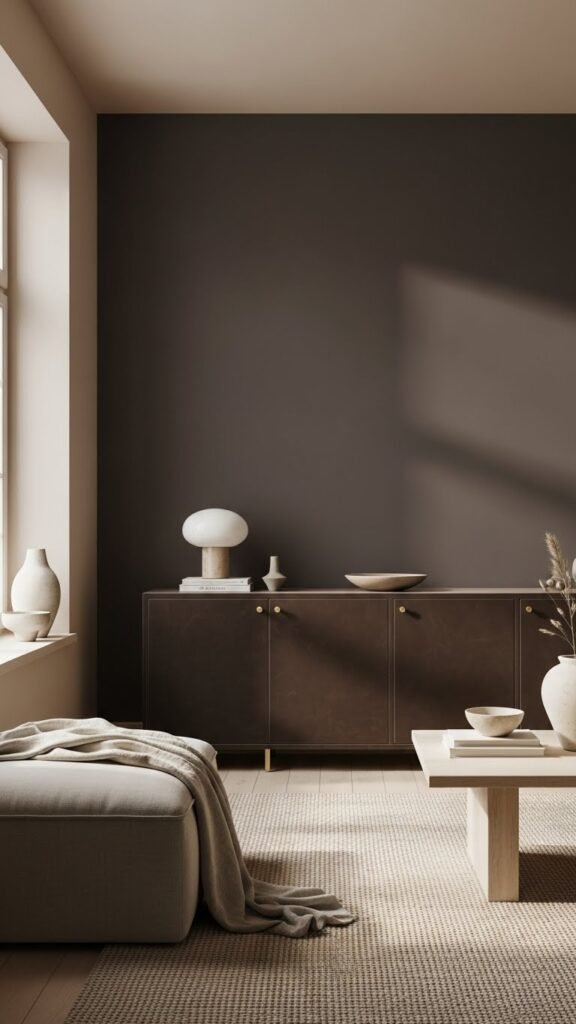
If you want to introduce drama without overpowering your calm palette, choose a deep, moody neutral—think charcoal taupe, inky greige, or espresso brown—for an accent wall or cabinetry; it will ground the room and make lighter textures pop.
Paint in a moody matte finish to reveal berry undertones and a subtle shadow gradient. Pair with velvet cabinetry for luxe contrast and liberated living.
If you want to introduce drama without overpowering your calm palette, choose a deep, moody neutral—think charcoal taupe, inky greige, or espresso brown—for an accent wall or cabinetry; it will ground the room and make lighter textures pop.
Paint in a moody matte finish to reveal berry undertones and a subtle shadow gradient. Pair with velvet cabinetry for luxe contrast and liberated living.
Choose Blonde and Stained Woods for Organic Warmth
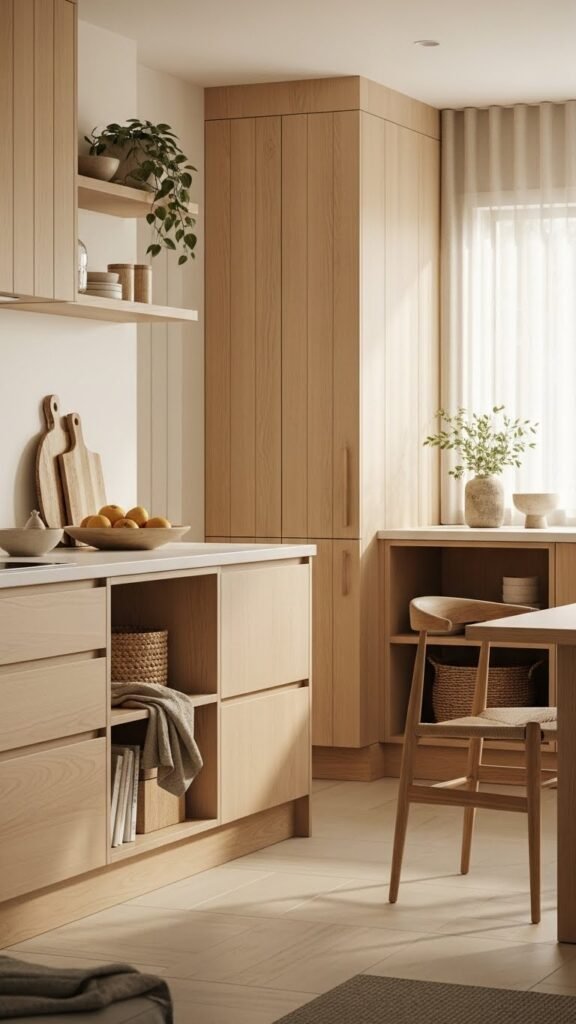
Blonde-wood finishes and softly stained timbers bring an immediate sense of organic warmth to a neutral scheme, so choose pieces with visible grain and matte oils to keep the look grounded and modern.
You’ll favor blonde cabinetry and stained shelving that feel honest and open, mixing pared-back silhouettes with practical storage so your home breathes, invites calm, and supports a liberated lifestyle.
Incorporate Woven Textiles and Natural Fibers
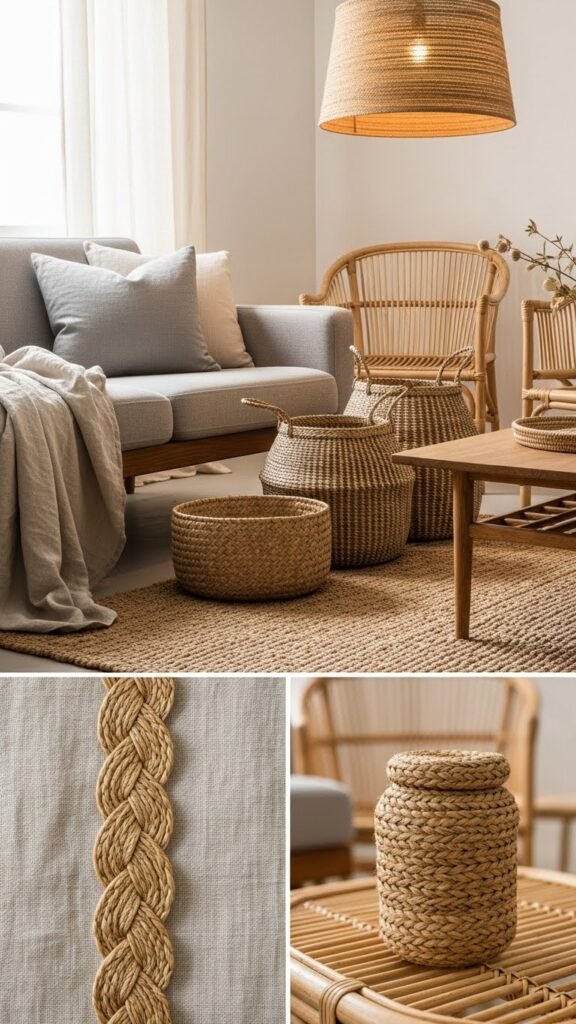
Bring in woven textiles and natural fibers to soften hard lines and add tactile depth to your neutral scheme; you’ll want pieces that read as both lived-in and deliberately chosen.
Layer linen throws, sisal rugs and handwoven baskets for warmth and effortless order. Choose jute lampshades and rattan accents to filter light and anchor rooms, giving you calm, tactile freedom without fuss.
Mix Concrete and Smooth Ceramic Accents
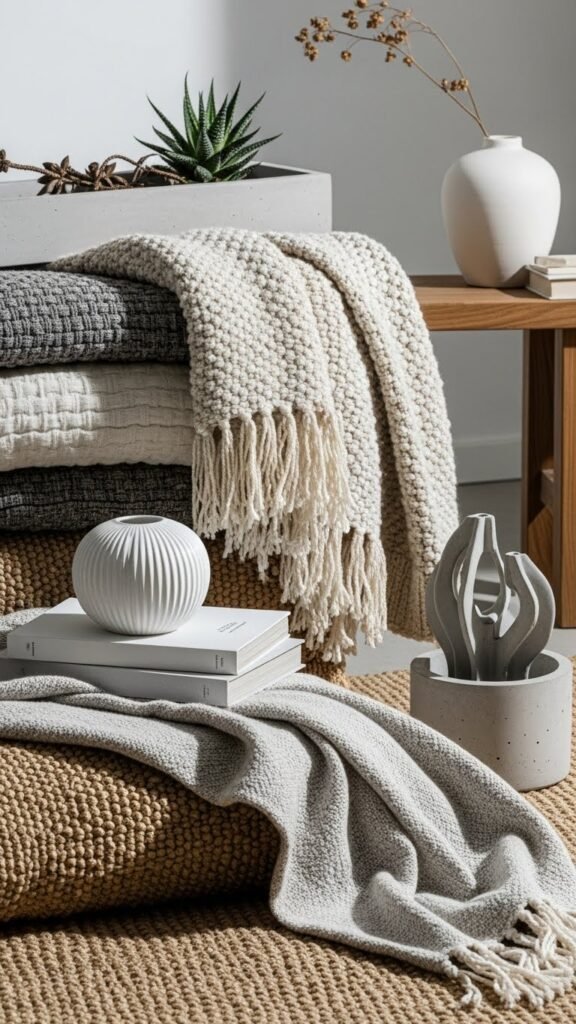
After layering woven textiles and natural fibers for warmth, you can balance that tactile softness with the cool, pared-back presence of concrete and smooth ceramics. You’ll lean into textured contrasts and the restrained industrial elegance of a concrete planter or matte ceramic vase, using few pieces to create calm, open spaces that feel deliberate and free without clutter or compromise.
Opt for Curved, Sculptural Furniture Shapes
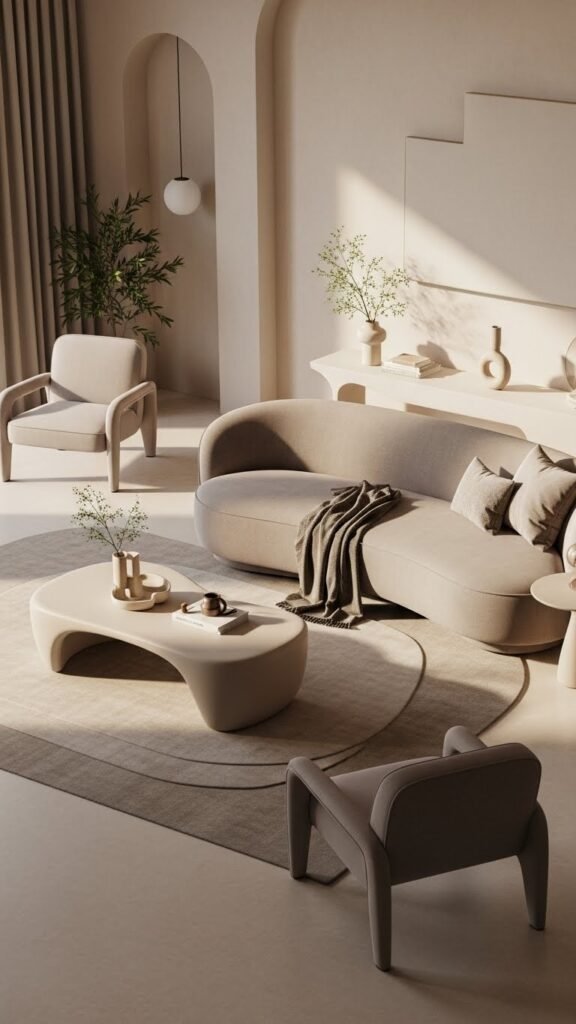
Sit into a room shaped by soft arcs and you’ll feel how curved, sculptural furniture instantly softens a neutral scheme and guides the eye through the space.
You’ll choose sinuous silhouettes and sculptural seating that free movement and invite touch. Opt for rounded sofas, armless chairs and sculpted coffee tables to create calm, confident spaces that celebrate form, flow and personal ease.
Create a Low‑Contrast Monochromatic Palette
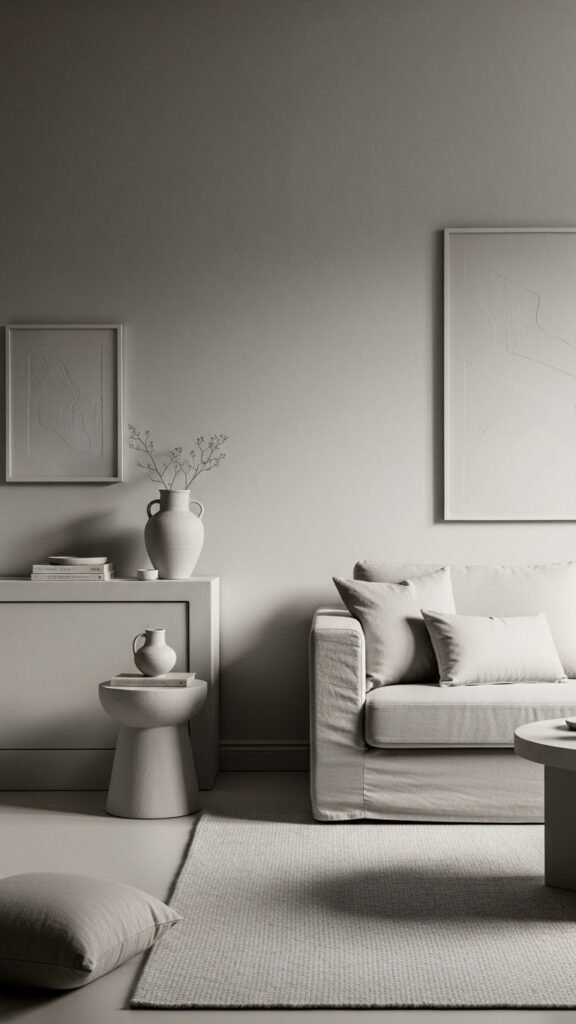
When you choose a low-contrast monochromatic palette, you let subtle shifts in tone and texture do the work of shaping a calm, cohesive room.
You’ll favor soft tonalities and subtle gradation across walls, textiles, and finishes, creating depth without visual noise.
Keep contrasts minimal, layer matte and slight sheen surfaces, and let restraint free you to curate serene, timeless spaces that feel effortless.
Combine Warm Woods With Cool Grey Textiles
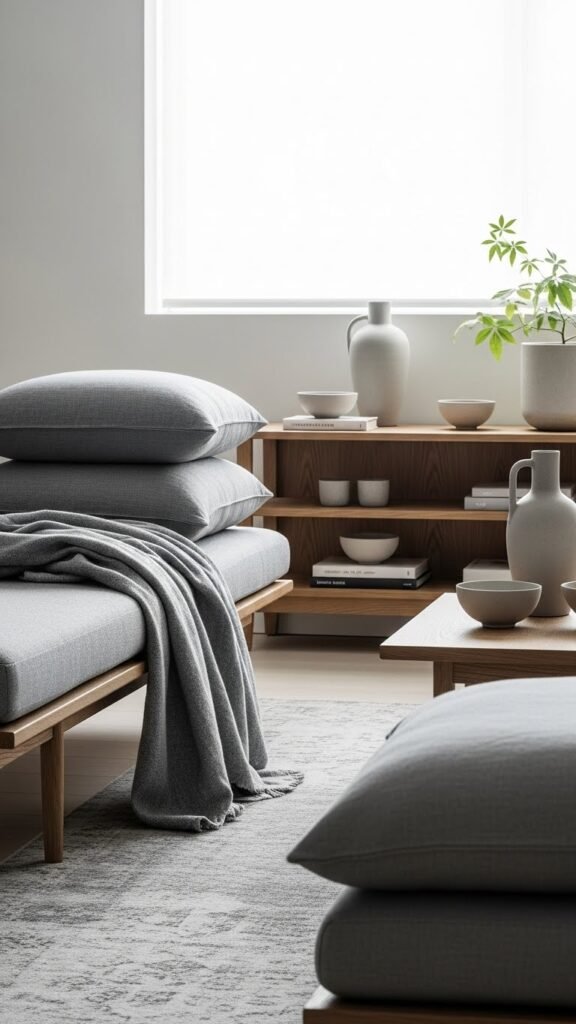
By pairing warm woods with cool grey textiles, you create a balanced, layered look that feels both inviting and modern.
Embrace Scandinavian minimalism and Japandi influences: choose simple oak furniture, textured grey linen, and matte ceramics.
You’ll enjoy a calm, freeing space where natural grain warms neutral greys, letting form and function breathe without clutter or competing colors.
Make a Statement Neutral Piece the Room Anchor
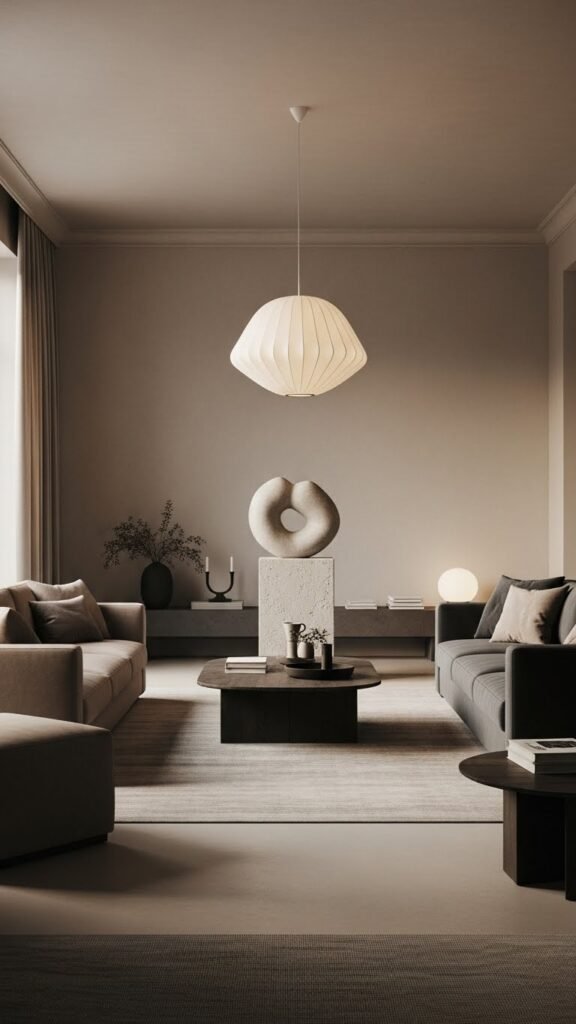
Pick a single, sculptural neutral piece that anchors the room and everything else can fall into place around it. Choose an anchor sculpture or striking statement lighting to define scale and mood. You’ll let that piece lead furniture placement, color accents, and pathways. By committing to one bold neutral focal point, you create calm authority and the freedom to edit confidently without clutter.
Layer Soft Textiles: Throws, Pillows, and Rugs
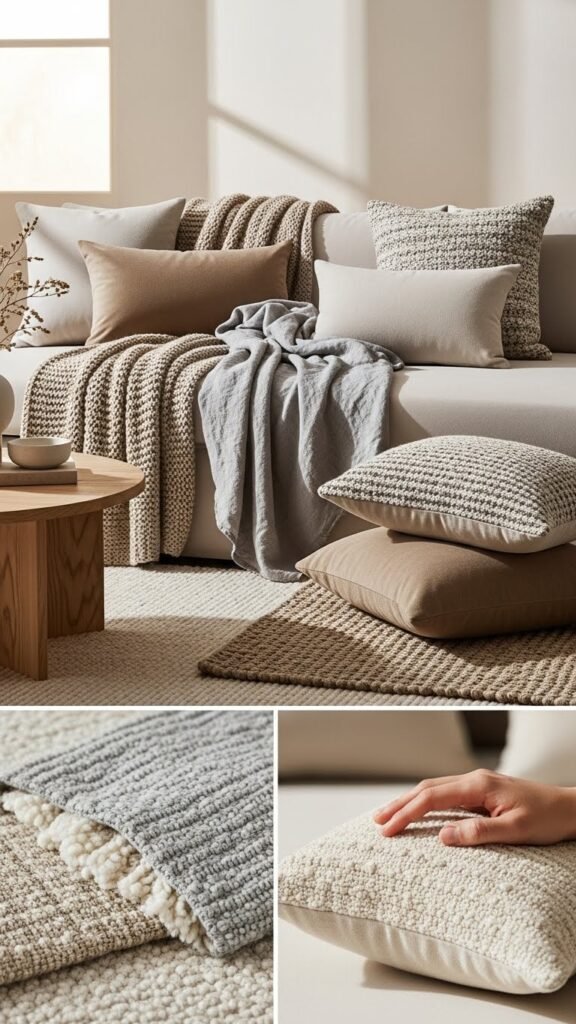
With a few carefully chosen layers of fabric, you’ll turn a neutral room from restrained to inviting without shouting for attention. Embrace plush layering with throws, pillows, and rugs that vary in pile and weave. You’ll create textural contrasts that feel free and effortless, guiding touch and sight. Keep palettes muted, shapes simple, and arrangements relaxed for timeless comfort.
Introduce Small-Scale Accent Colors Sparingly
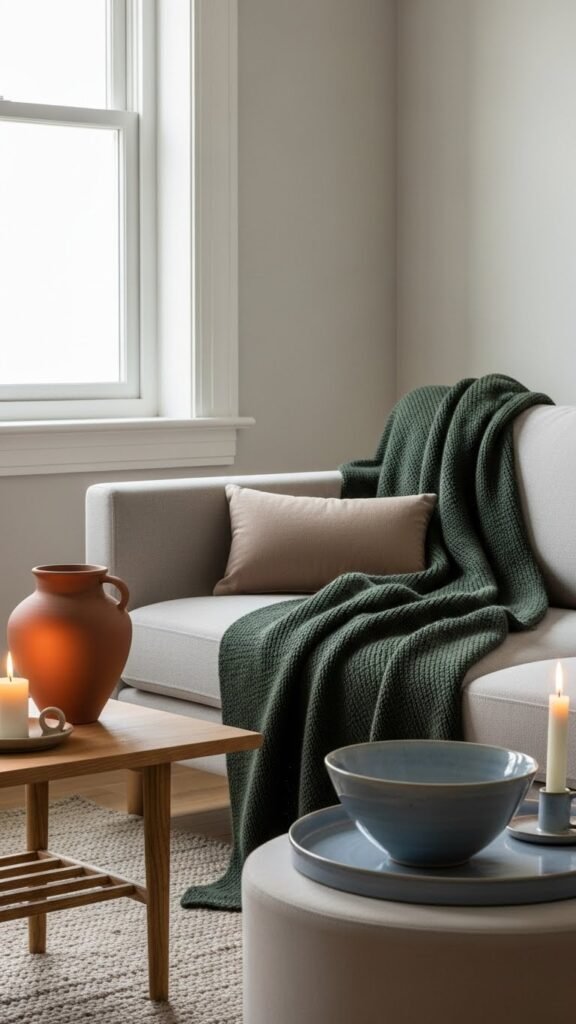
Often, a single, carefully placed accent will lift a neutral scheme without stealing the show — think a muted terracotta vase, a deep forest-green throw, or a hand-thrown ceramic bowl in soft indigo.
You’ll practice accent restraint: add one or two small pops as pop punctuation — a pillow, a candle, a tray — and keep the rest calm so your space breathes.
Bring in Plants and Dried Grasses for Natural Life
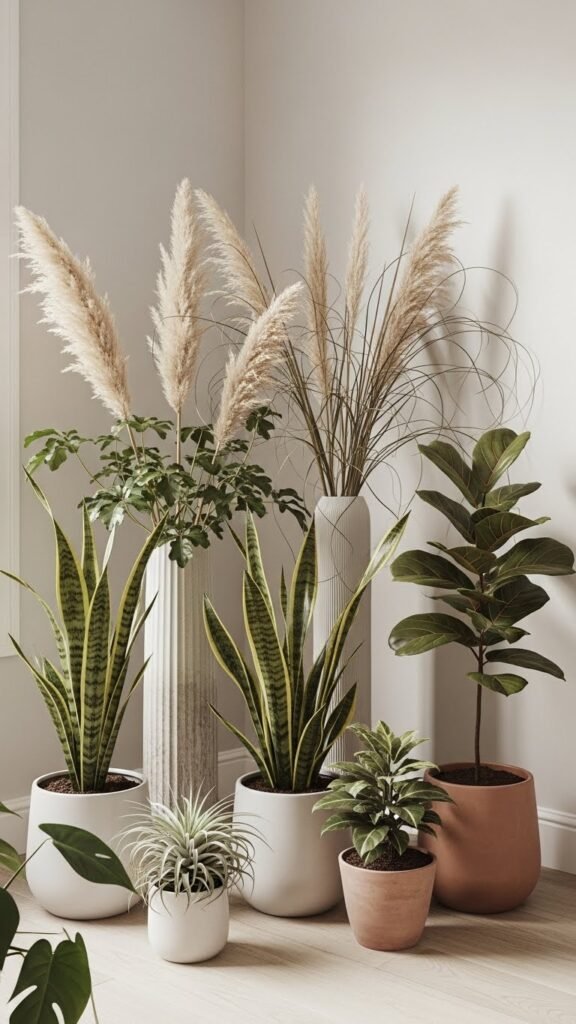
After you’ve introduced a restrained accent, bring living texture into the room by adding plants and dried grasses—elements that breathe warmth and quiet movement into a neutral palette. You’ll balance airy pots of air purifying foliage with sculptural bundles of seasonal pampas to create effortless rhythm. Choose simple containers, vary heights, and let natural forms soften corners so your space feels open, calm, and liberated.
Favor Matte and Tactile Finishes Over High Gloss
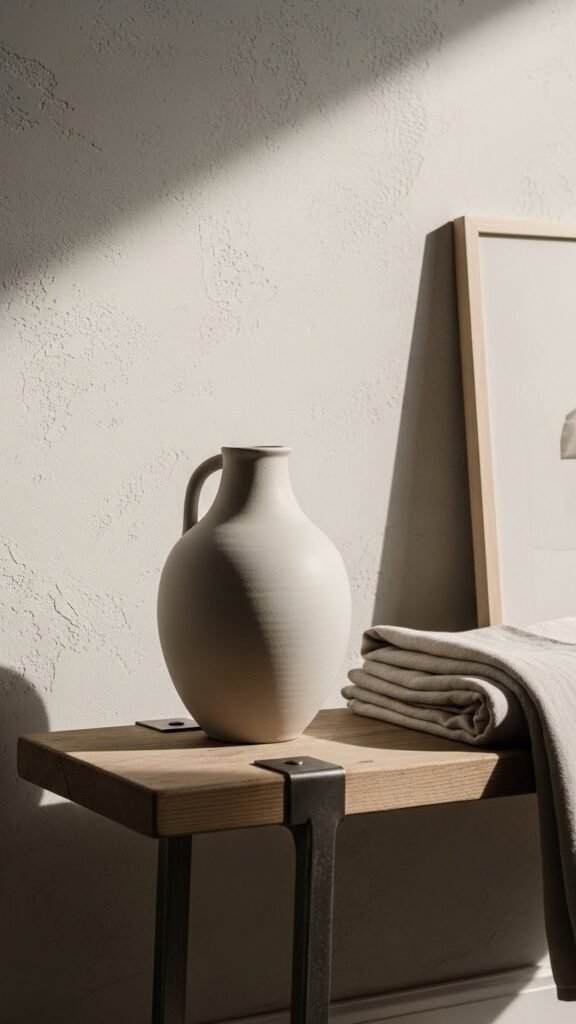
You’ll find that matte, tactile finishes quietly anchor a neutral room without shouting for attention. Choose matte ceramics, soft linen, and tactile plaster to build depth without glare. They invite touch, soften light, and let your space breathe. Opt for low-sheen trims and unpolished metals so surfaces feel honest and lived-in, supporting a calm, liberated aesthetic you control.
Select Mid‑Tone Neutrals for Flooring and Large Surfaces
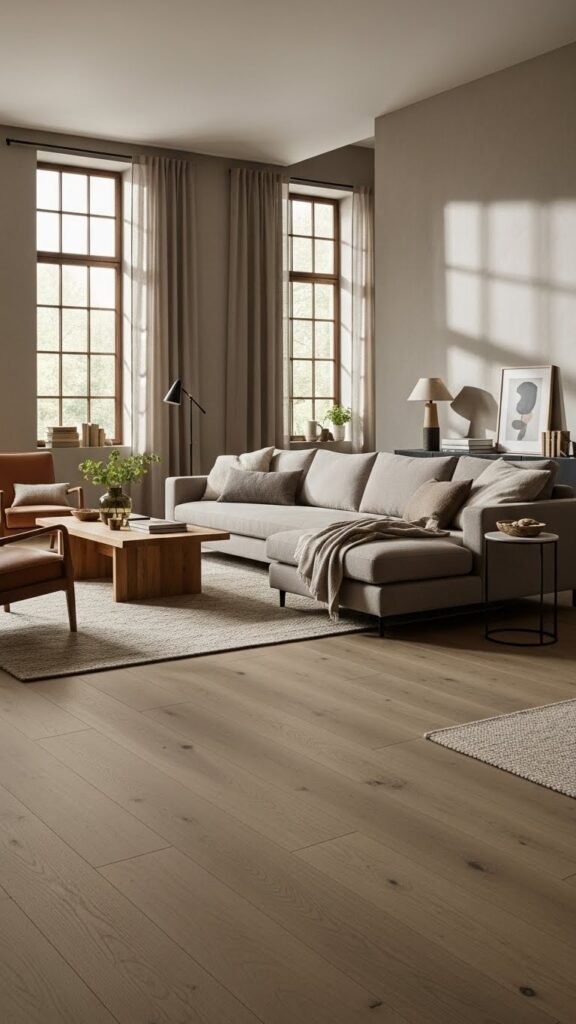
Matte, tactile finishes set the mood up close; for rooms to feel grounded from the start, pick mid‑tone neutrals for flooring and large surfaces. You’ll create calm, resilient canvases with mid tone floors and broad neutral expanses that balance light and shadow.
Choose hues that mask wear, unify furnishings, and let you rearrange freely without repainting or retiling.
Use Repairable, Naturally Aging Materials Like Leather and Stone
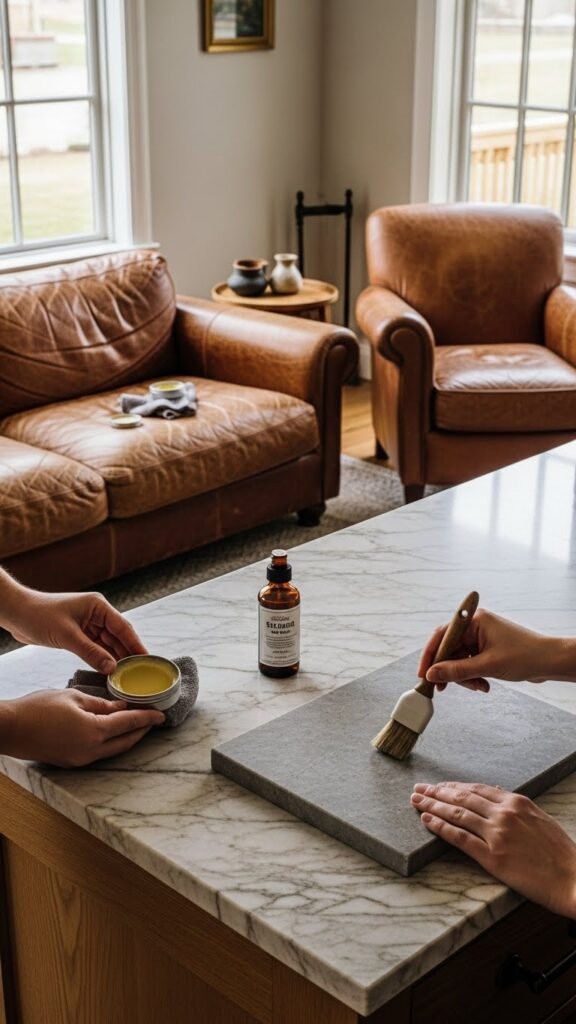
When you choose materials that age gracefully—like full‑grain leather or honed stone—you’re investing in surfaces that gain character instead of showing wear. Embrace leather for sofas and chairs, learn leather restoration basics, and pick stone countertops that respond well to stone sealing. These choices let you repair and refine rather than replace, giving your home a timeless, liberated feel that grows more personal.
Try Trendier Neutrals in Accessories Before Committing Big
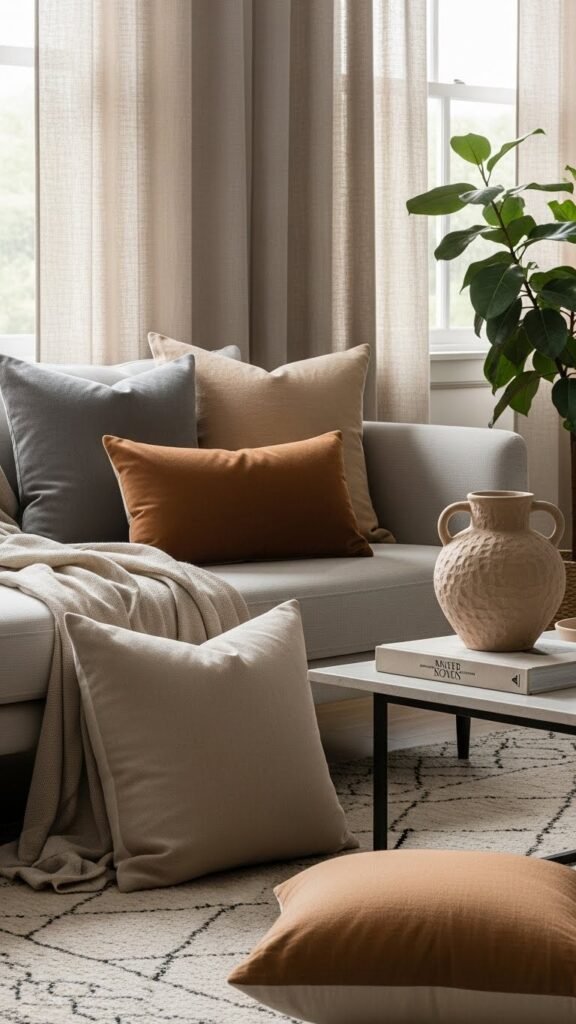
If you want to tap into current color trends without overhauling your whole room, start with accessories—throw pillows, vases, and rugs let you test newer neutrals like greige, mushroom, or clay without long-term commitment.
Do small sample swaps and accessory experiments to see what feels right.
You’ll gain confidence, keep freedom to change, and avoid costly mistakes before committing big.
Balance Warm Earth Tones With Cooler Accents
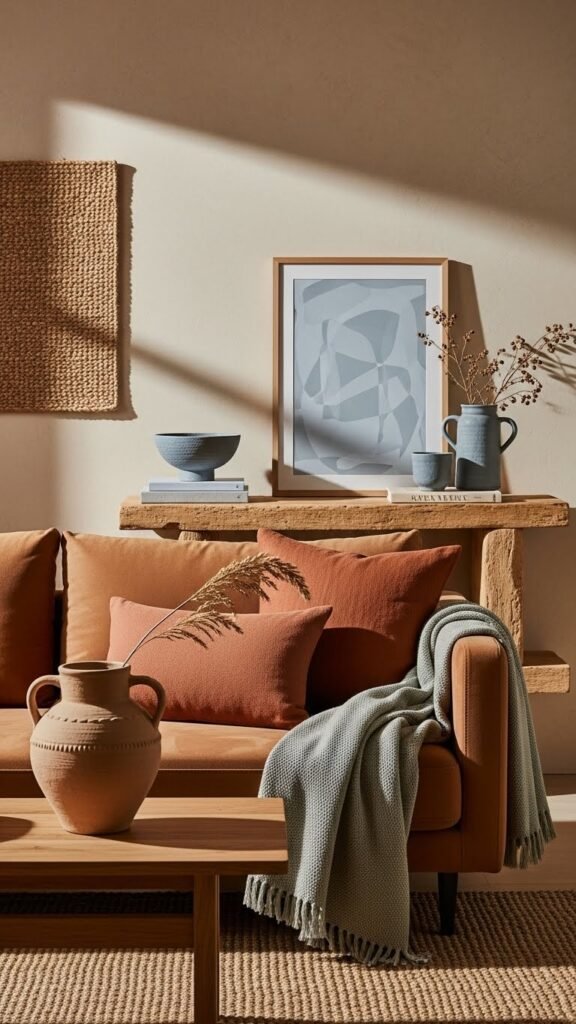
After testing trendier neutrals with pillows and vases, bring balance by pairing warm earth tones—mushroom, clay, terracotta—with cooler accents like muted sage, slate, or soft blue-gray. You’ll create intentional thermal contrast that feels grounded yet fresh.
Rotate accents for seasonal swaps, swap throws or artwork, and let the palette shift without overhauling the room, preserving freedom and calm.
Mix at Least Three Distinct Textures Per Room
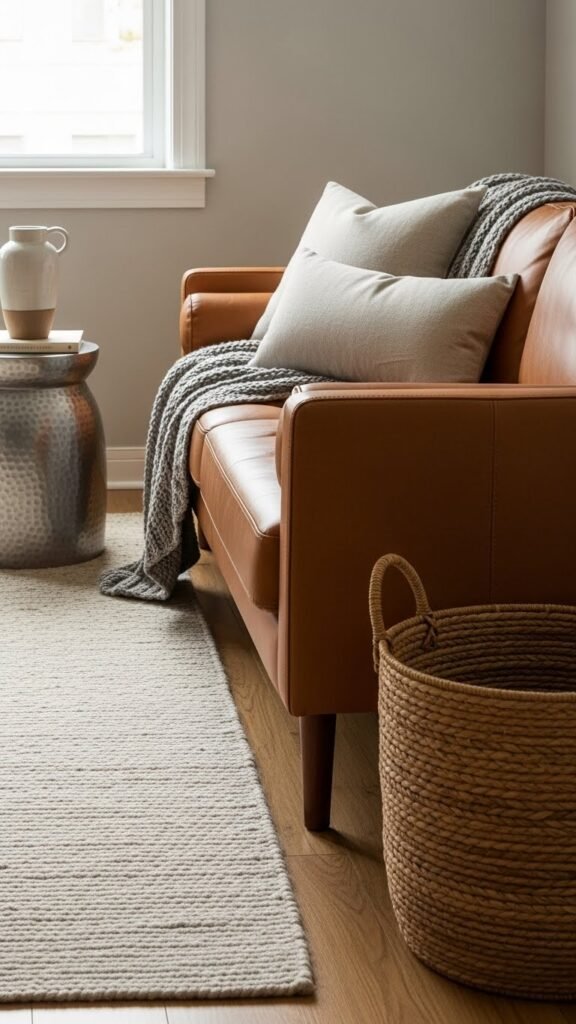
When you layer at least three distinct textures in a room—think a nubby wool rug, a smooth leather sofa, and a woven rattan basket—you create depth and tactile interest that the eye and body both notice.
You’ll mix tactile contrast and a layered sheen—linen, metal, knit—so surfaces sing together. Trust your instincts, keep palettes simple, and let texture define freedom in your space.
Choose Versatile Neutrals for Fixed Elements Like Cabinetry
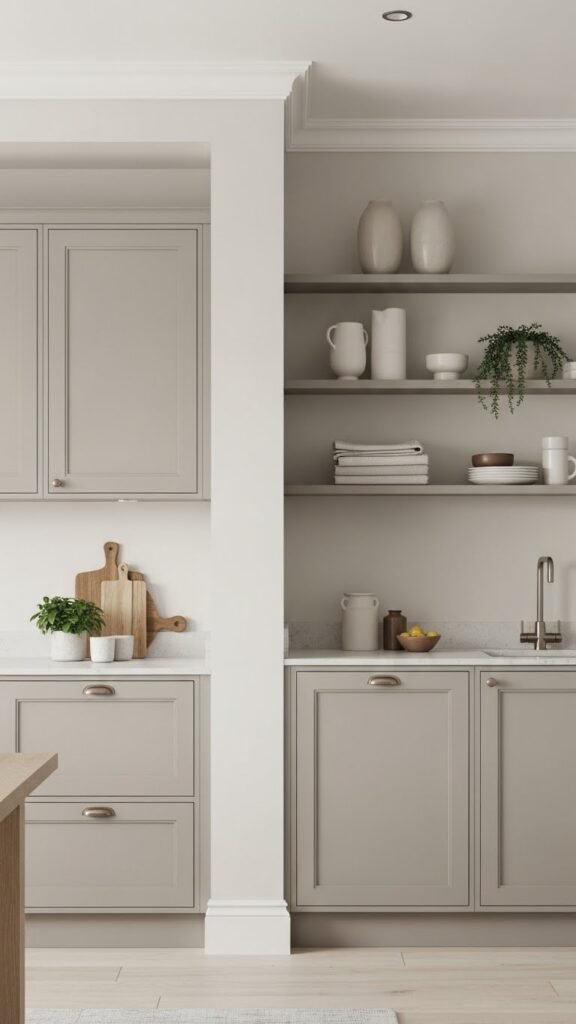
Texture sets the mood, but your fixed finishes lock it in—so pick cabinet and built-in colors that play well with everything you might layer later.
Choose a matte cabinet tone that reads neutral in varied light, pair with hidden hardware for calm lines, mix in open shelving for flexibility, and keep uniform trim to unify spaces. You’ll stay free to change accents.
Add Patina and Handcrafted Finishes for Authenticity
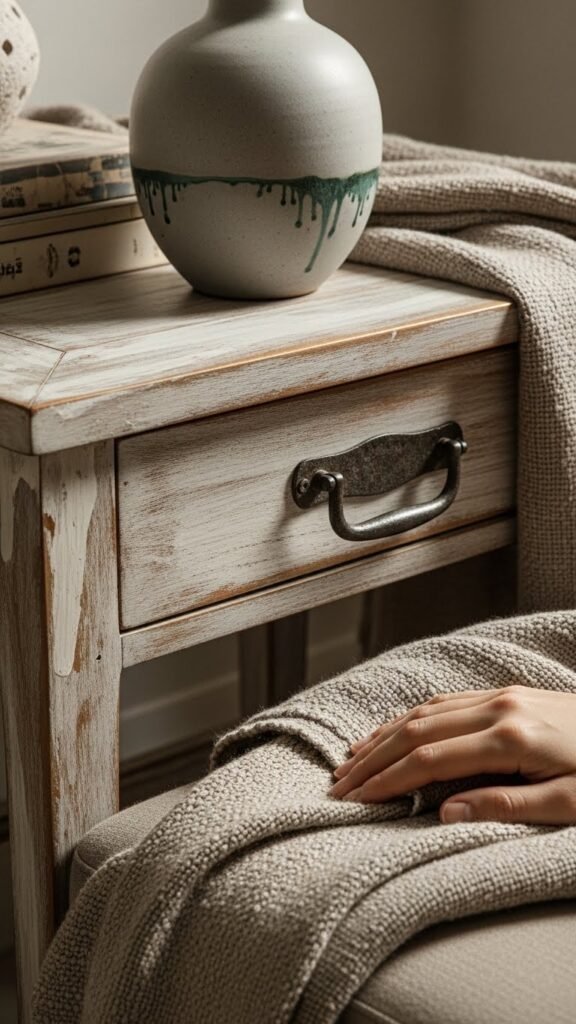
Introduce patina and handcrafted finishes to give your neutral scheme depth and personality—small signs of wear, hand-applied glazes, and artisanal brushstrokes anchor a room and make it feel lived-in rather than staged. You’ll choose hand forged hardware, subtle verdigris accents, and textured finishes that invite touch. These details feel honest, let your space evolve, and celebrate craftsmanship without dominating your calm palette.
Keep Negative Space and Minimal Clutter for Serenity
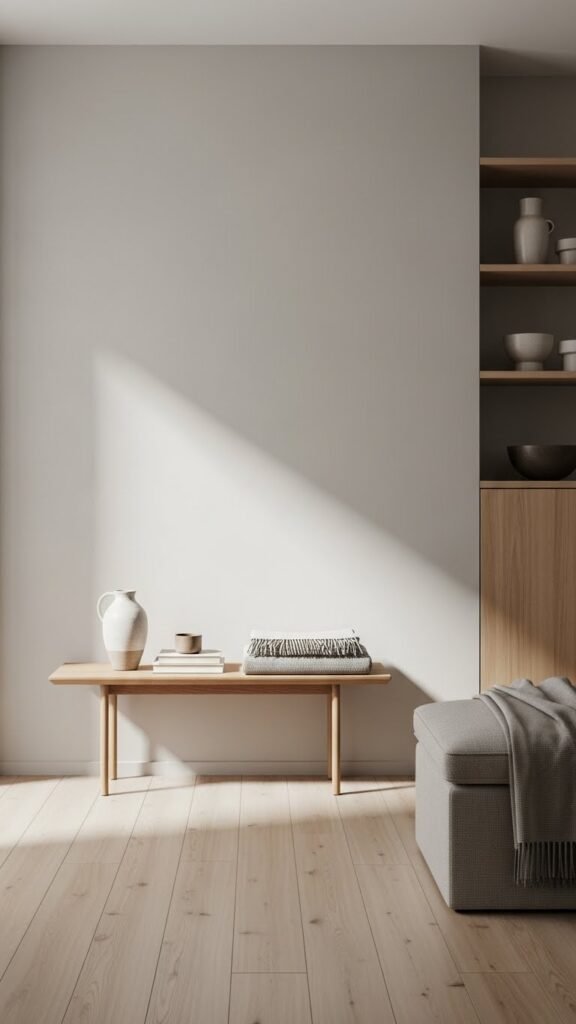
Because calm comes from what you leave out as much as what you include, keep surfaces uncluttered and let negative space breathe—this gives each piece room to be noticed and calms the eye. You’ll create breathing room by editing possessions, choosing multifunctional pieces, and using intentional storage. Resist filling every shelf; freedom lives in openness, clarity, and a few deliberate, well-loved objects.
Scale Artwork and Ceramics to Complement, Not Compete
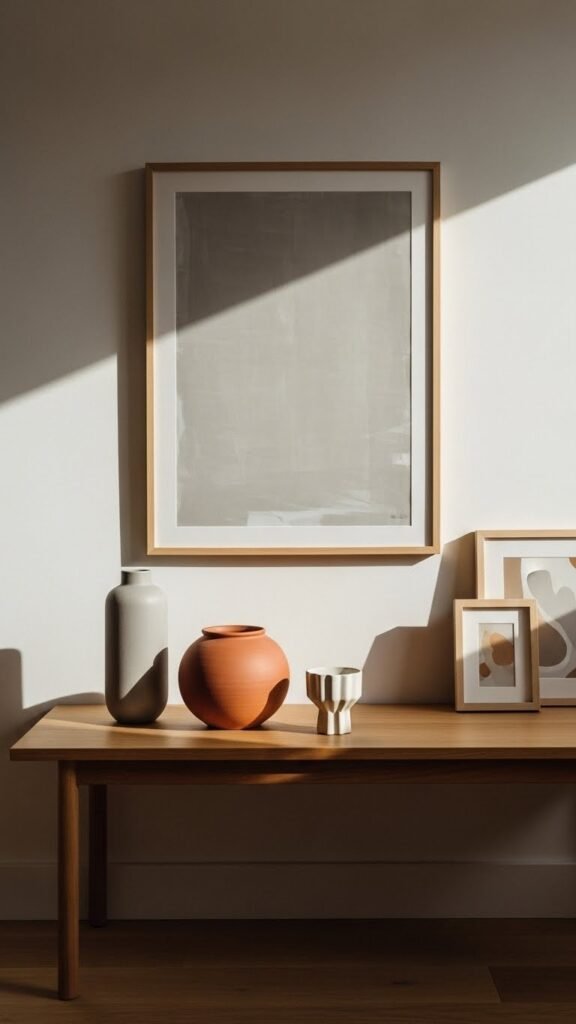
Keeping surfaces sparse makes each object matter, so scale your artwork and ceramics to support the room rather than shout over it. Choose scaled ceramics that echo proportions in the space and position pieces where they balance negative space. Consider artwork placement at eye level and groupings that read as one calm statement.
You’ll create harmony that feels effortless, intentional, and liberating.
Prioritize Comfortable, Functional Furniture and Rug Sizes
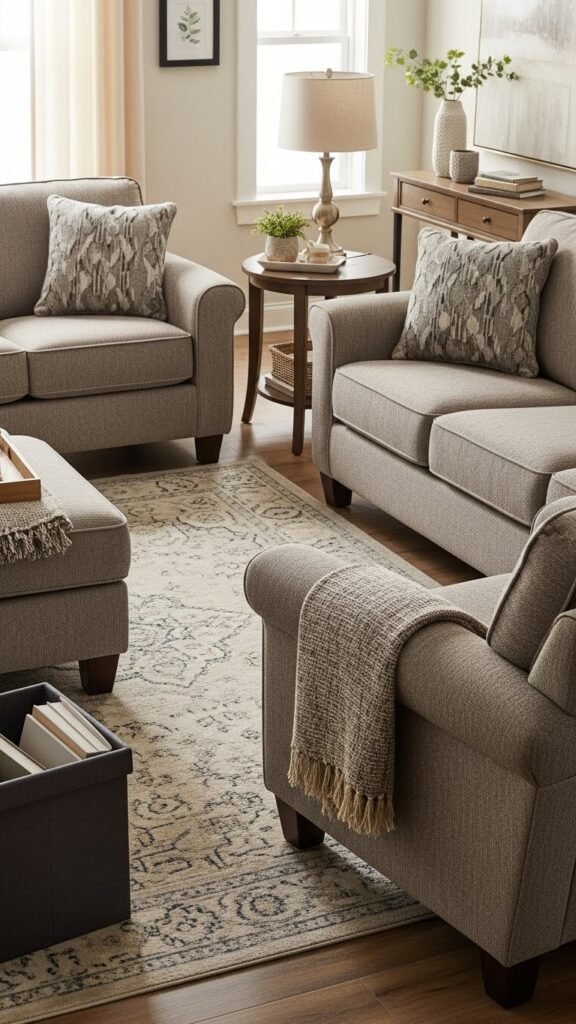
Start with comfort: choose seating that invites you to sit, linger, and actually use the room, not just look at it. Make scale priority clear—pick sofas and chairs proportionate to the space so movement feels effortless. Favor multipurpose pieces that free you.
Consider rug placement to anchor conversation zones; rugs should extend beneath front legs to unify seating and create a calm, functional layout.