
You’ll make a small bedroom feel larger by working smarter, not harder: pick a low-profile bed, lean on vertical storage, favor light neutrals, and keep surfaces tidy with multipurpose pieces. Layer light and mirrors to amplify daylight, add one intentional accent, and use breathable textures to maintain calm. These 24 ideas are practical, stylish, and easy to adopt — and a few little tweaks will change how the whole room feels.
Opt for a Low-Profile Bed to Open Sightlines
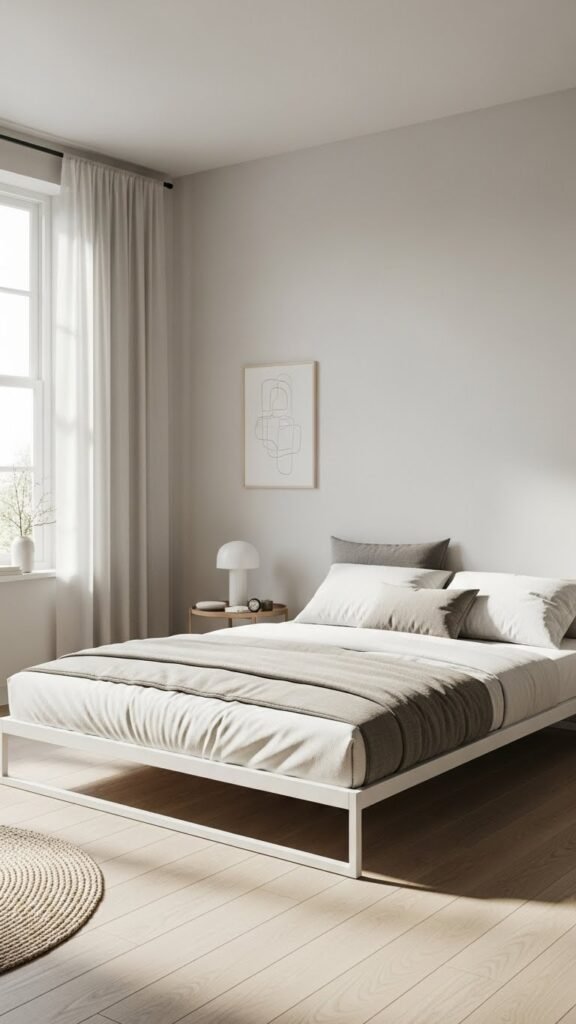
When you choose a low-profile bed, you instantly widen sightlines and make a small bedroom feel airier; the streamlined frame keeps the eye moving across the room instead of up against a tall headboard.
You’ll favor a sleek platform and a minimal headboard to preserve openness, pair low bedding and pared accents, and keep movement and light unobstructed for a liberated, calm retreat.
Choose Multipurpose Furniture to Free Floor Space
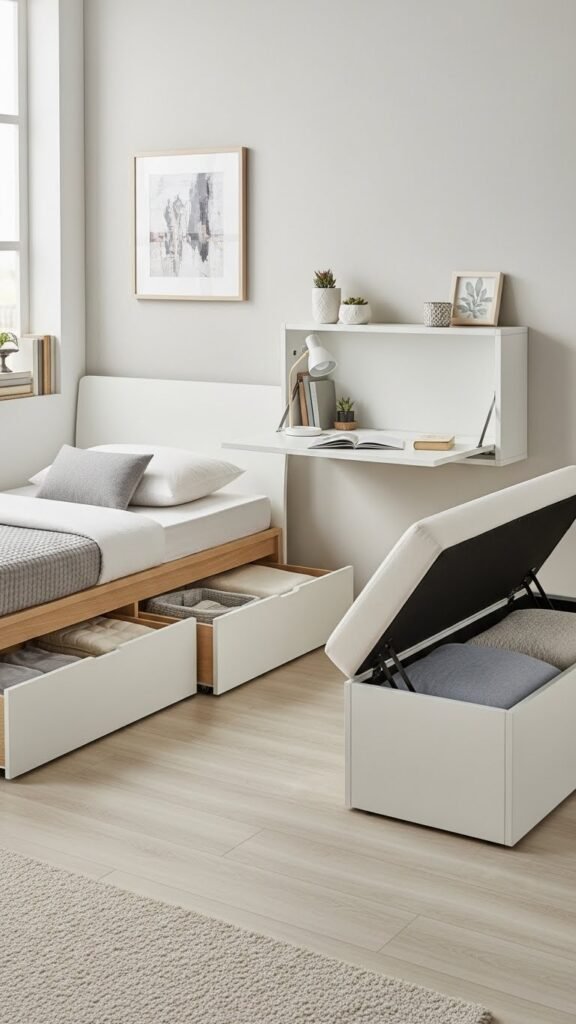
Maximize every inch by choosing furniture that does double duty: think a bed with built-in drawers, a fold-down desk that becomes a nightstand, or an ottoman that hides extra bedding.
You’ll love how folding desks and ottoman benches free floor space, streamline belongings, and keep the room airy. Pick sleek, light pieces so movement and calm feel effortless.
Place the Bed Against a Long Wall
Along a long wall, set your bed parallel to the room’s longest sightline to open circulation and make the space feel larger. You’ll harness orientation psychology to guide movement and reduce visual clutter.
Balance with nightstands or floating shelves to create focal symmetry without crowding. This layout frees pathways, clarifies purpose, and lets you move through the room with effortless freedom.
Use Light, Neutral Paint Tones
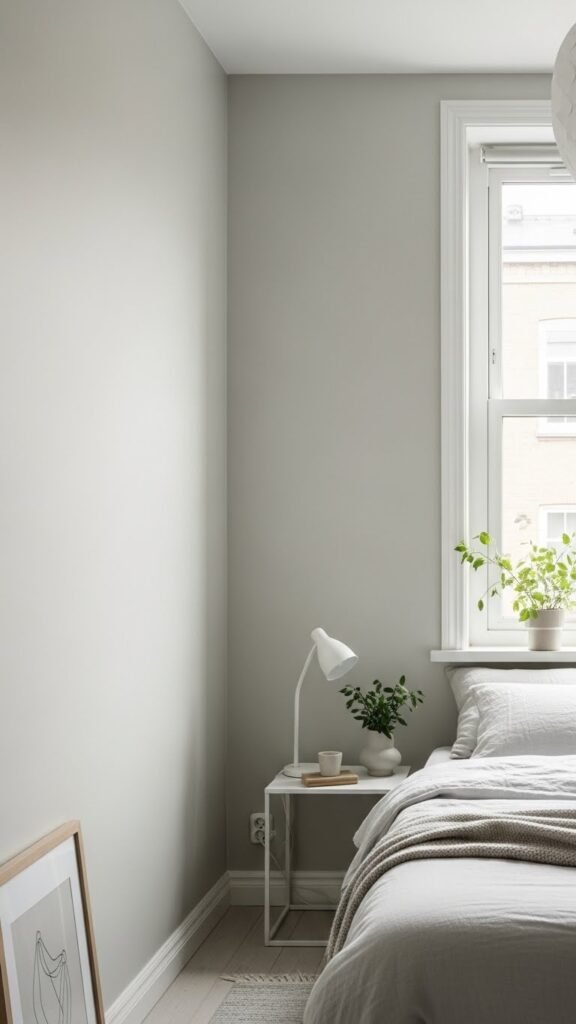
A few well-chosen, light neutral paints can instantly open up a small bedroom, making walls feel higher and corners less confined.
Choose tones that give a cool warm balance so your space breathes without feeling sterile. Use soft reflective finishes to bounce daylight and make the room adaptable. Keep trims subtle, limit contrast, and let freedom in with airy, uncluttered color choices.
Install Wall Sconces or Hanging Pendants by the Bed
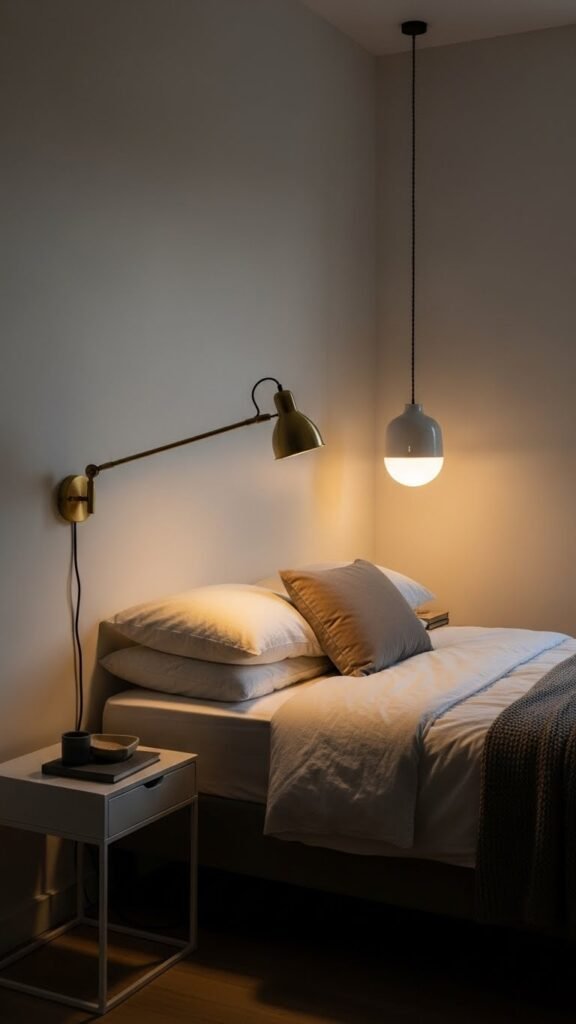
When you mount wall sconces or hang pendants beside the bed, you free up nightstand space and create a cleaner, more intentional look that also delivers targeted light for reading and ambience.
Choose a brass swing arm for adjustable task lighting or a corded ceramic pendant for warm accent glow. Both keep surfaces clear, emphasize minimalism, and let you move freely around your room.
Maintain a Consistent Flooring or Rug Color
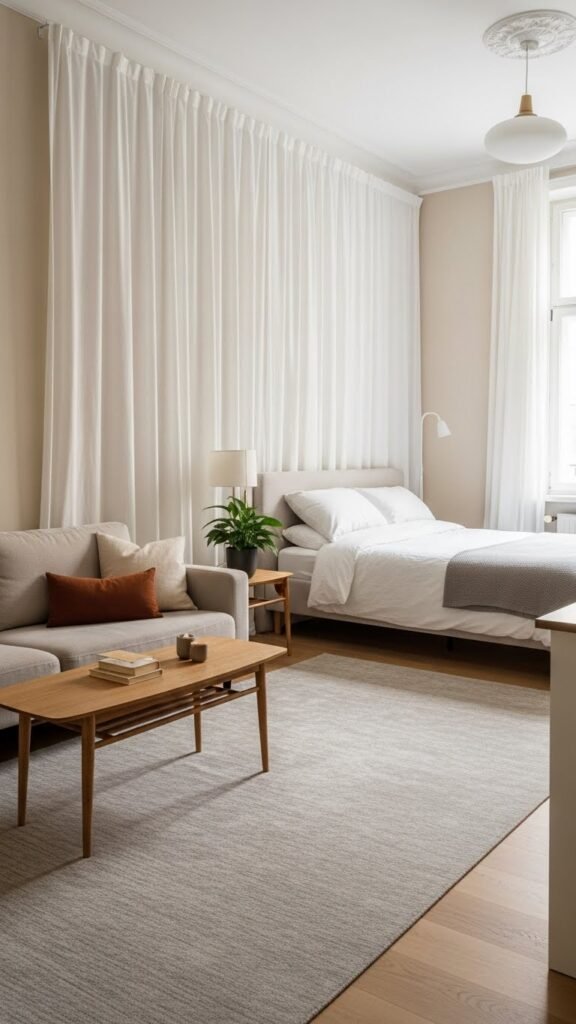
After you’ve lengthened the walls with high, wide curtains, keep the floor visually steady by using a consistent flooring or rug color throughout the main living and sleeping areas. You’ll create flow and a sense of openness by choosing matching tones that echo walls or furniture. Prioritize pattern continuity over contrast so your small space reads calm, cohesive, and free to breathe.
Select Narrow, Tall Dressers and Shelving
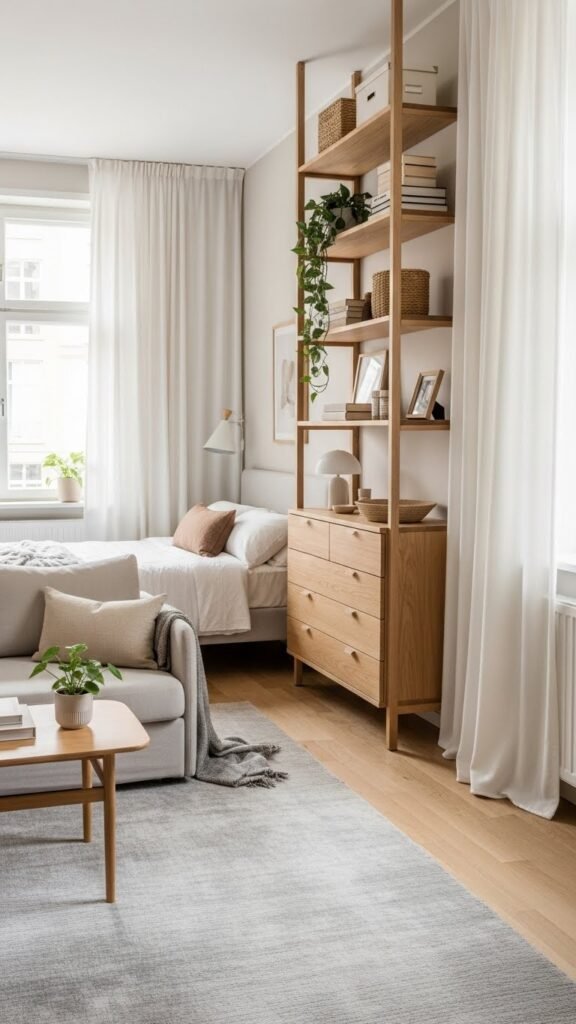
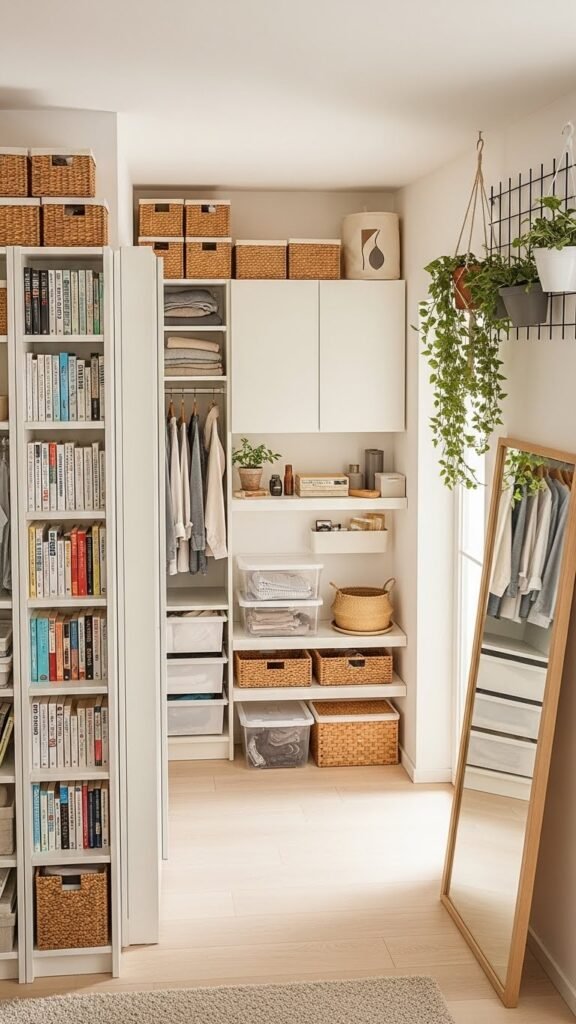
Choose narrow, tall dressers and shelving to maximize vertical storage without crowding floor space—slim profiles draw the eye up, freeing the room and keeping pathways clear. You’ll pick a narrow dresser to stash essentials and use open shelving for curated items, plants, and baskets. This keeps surfaces airy, supports a minimalist vibe, and lets you move freely while staying organized.
Use Under-Bed Drawers and Storage Containers
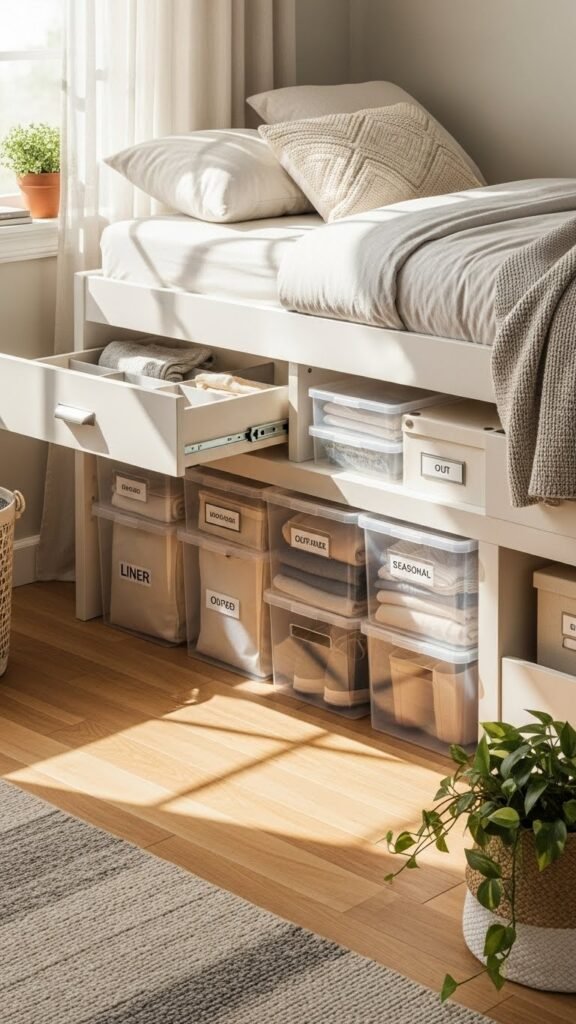
Slide in shallow drawers and stackable bins under your bed to reclaim wasted space for out-of-season clothes, extra linens, shoes, or boxes you only need occasionally.
You’ll practice under bed recycling by repurposing clear containers, label everything, and set a seasonal rotation system so swaps are effortless. This keeps surfaces clean, frees movement, and preserves a calm, liberated bedroom vibe.
Incorporate Built-In or Recessed Storage Niches
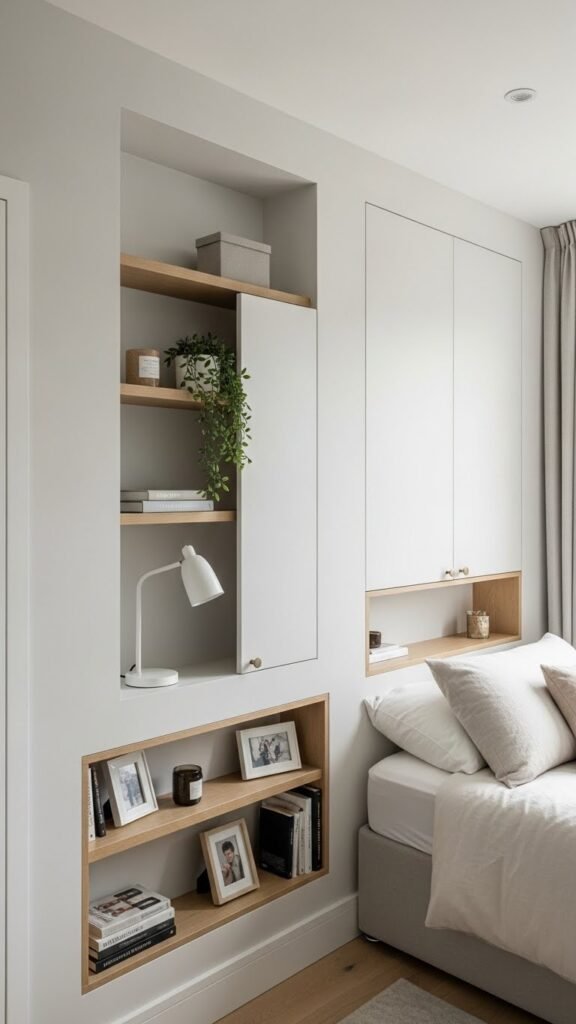
Tuck storage into your walls with built-in or recessed niches to instantly free floor space and create a cleaner silhouette in a small bedroom.
You’ll use hidden alcoves for bedside essentials, display favorite items on recessed bookshelves, and keep clutter out of sight.
These solutions feel airy, intentional, and freeing—customize depth and finish to match your style without sacrificing openness.
Pick a Single Dominant Rug to Anchor the Room
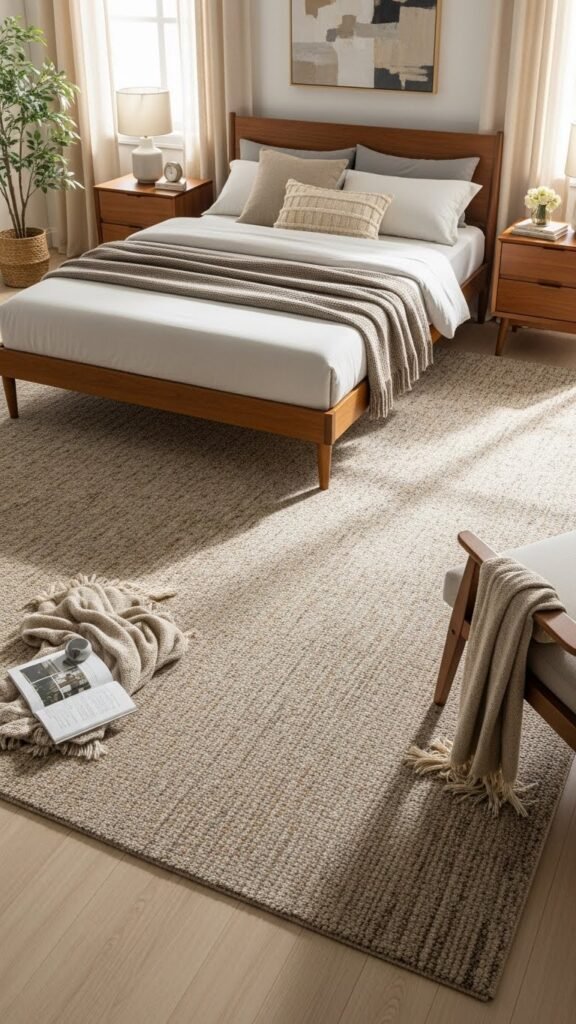
One strong rug can instantly pull the room together, so pick one dominant piece that sets the palette, scale, and mood—think proportion, texture, and color that complement your bed and furniture. Choose a rug that defines zones, aids color coordination, and balances scale. Let rug texture add warmth and freedom to move; keep other textiles restrained so the floor remains your focal anchor.
Favor Solid or Subtle Textile Patterns in Larger Scales
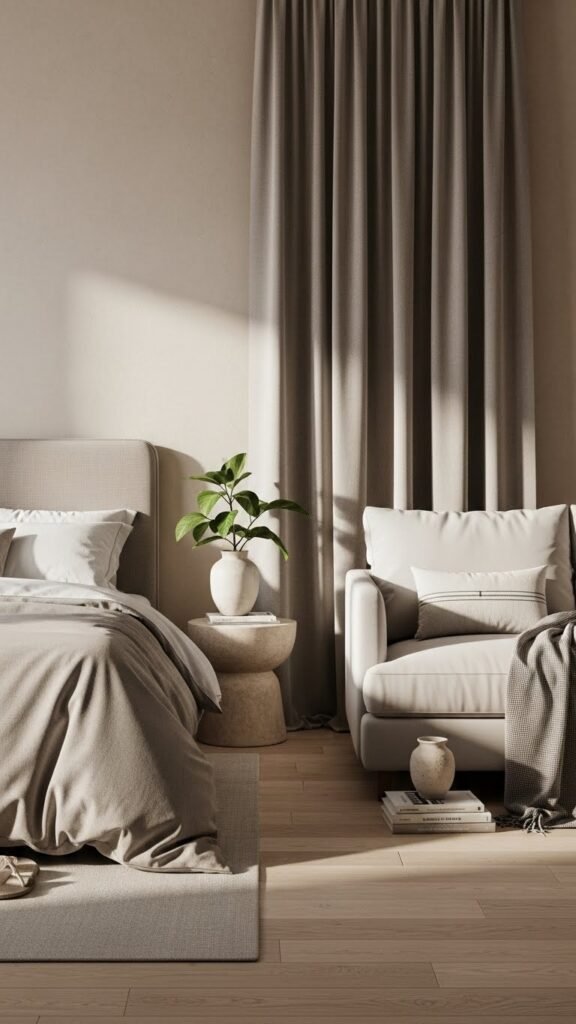
When you work at a smaller scale, favor solid fabrics or very subtle patterns for big pieces like bedding, curtains, and upholstery so the room feels calm and cohesive. Choose larger-scale solids to support textile minimalism while introducing pattern rhythm sparingly—think a single low-contrast stripe or muted weave. That keeps the space airy, lets you move freely, and highlights a few personal accents.
Layer Lightweight Bedding Instead of Bulky Duvets
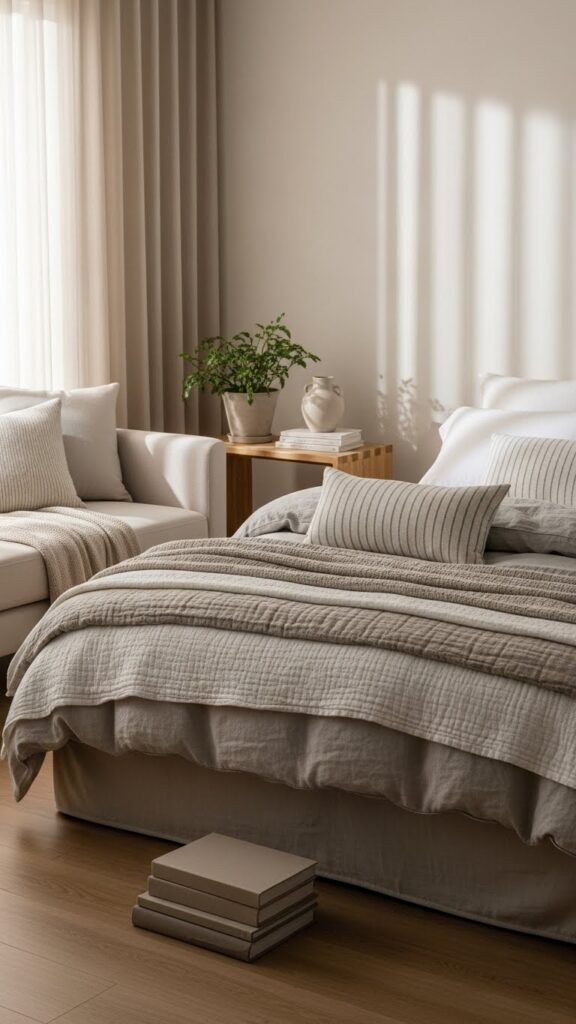
After keeping large pieces calm with solids and subtle textures, shift your focus to bedding that breathes rather than overwhelms. Choose linen textures and mix breathable layers—light quilts, cotton blankets, and a thin duvet or coverlet—to create depth without weight. You’ll enjoy a freer, airier room that’s easy to launder, flexible for seasons, and instantly feels more spacious and relaxed.
Keep Nightstands Minimal and Functional
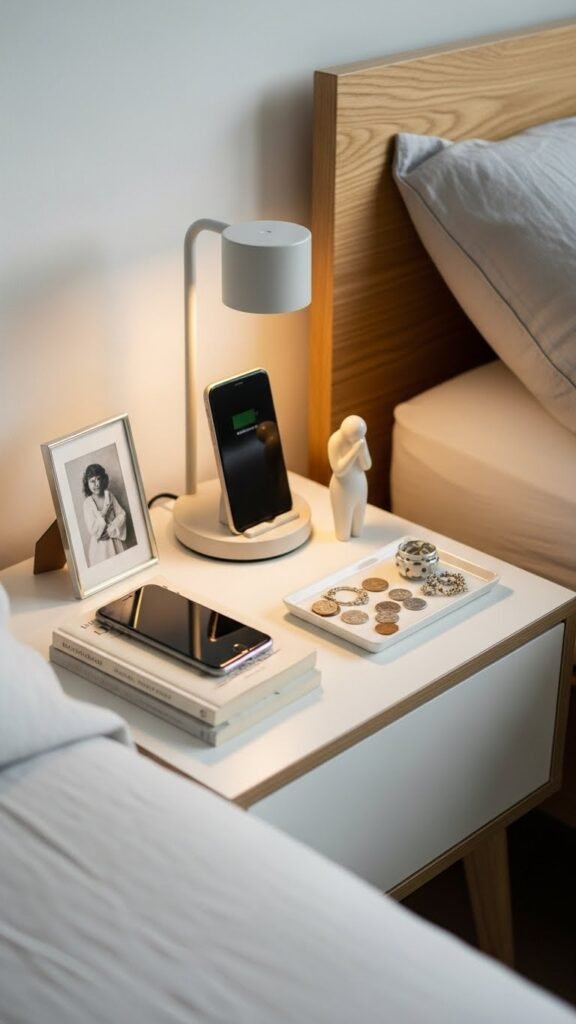
Often, you’ll find less works best: keep nightstands streamlined with just the essentials—a lamp, a spot for your phone or book, and a small tray for keys or jewelry—so surfaces stay tidy and functional.
You’ll choose minimal chargers tucked behind, slim trays for change, and one meaningful object.
Clear surfaces free movement and mind, so your bedroom feels airy and under your control.
Create Vertical Emphasis With Tall Headboards or Curtains
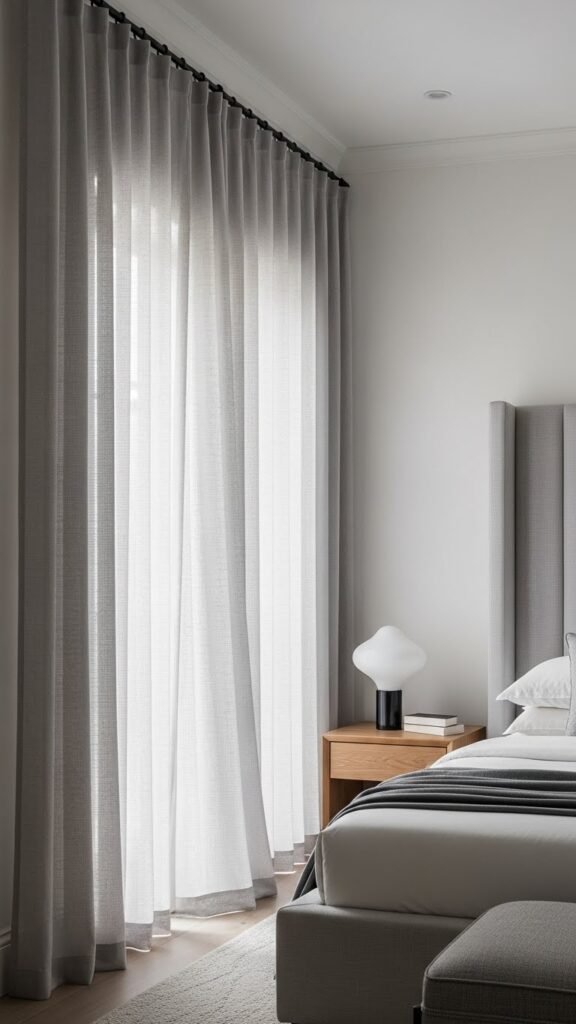
If you want to make a small bedroom feel taller, install a tall headboard or hang floor-to-ceiling curtains to draw the eye upward and add instant drama. Choose a headboard with vertical tufting to emphasize height, or select lightweight curtain panels that skim the floor for movement.
Both choices free the room visually, create a bold focal line, and keep the vibe airy and uncluttered.
Zone the Room With Furniture Arrangement or Rugs
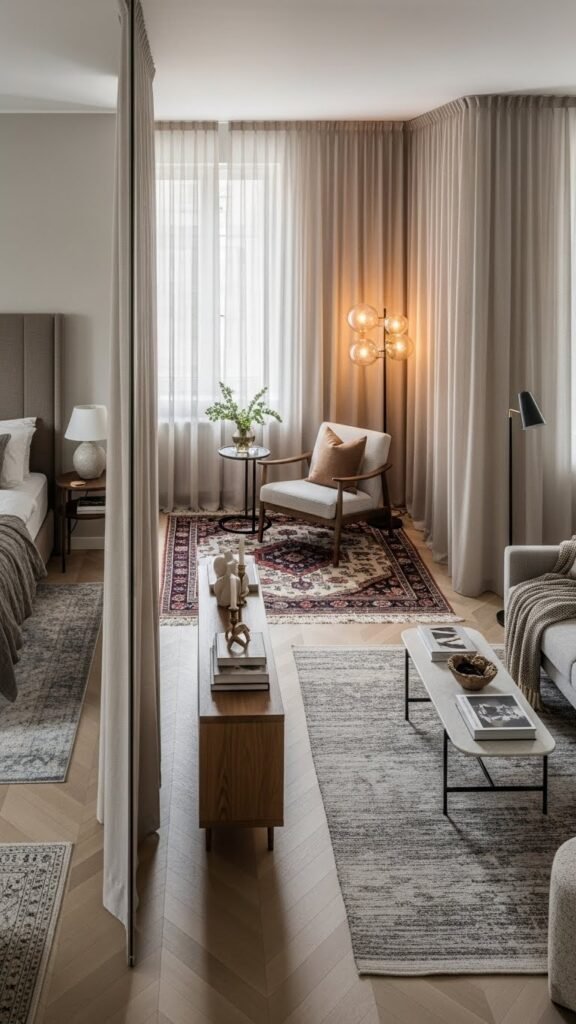
Once you’ve lifted the eye with tall headboards or floor-to-ceiling curtains, use furniture placement and rugs to define functional zones within the same small space. Anchor a reading nook with purposeful rug placement, orient seating to create clear furniture flow, and keep pathways open. Choose scaled pieces that suggest separate activities without walls, so you feel free and uncluttered.
Use Transparent or Low Dividers When Separation Is Needed
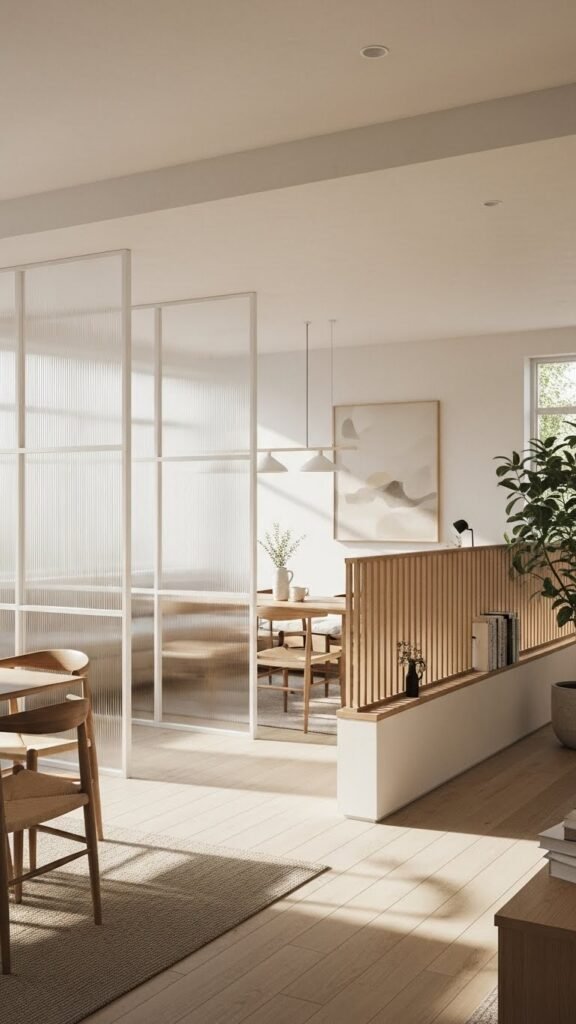
When you need a sense of separation without closing off light or sightlines, choose transparent or low dividers that keep the room airy and connected. You can use frosted glass panels to blur zones while preserving brightness, or install screens with open slats to define areas without feeling boxed in. These choices maintain flow, privacy, and a liberated, minimalist vibe.
Introduce One Statement Piece to Focus Attention
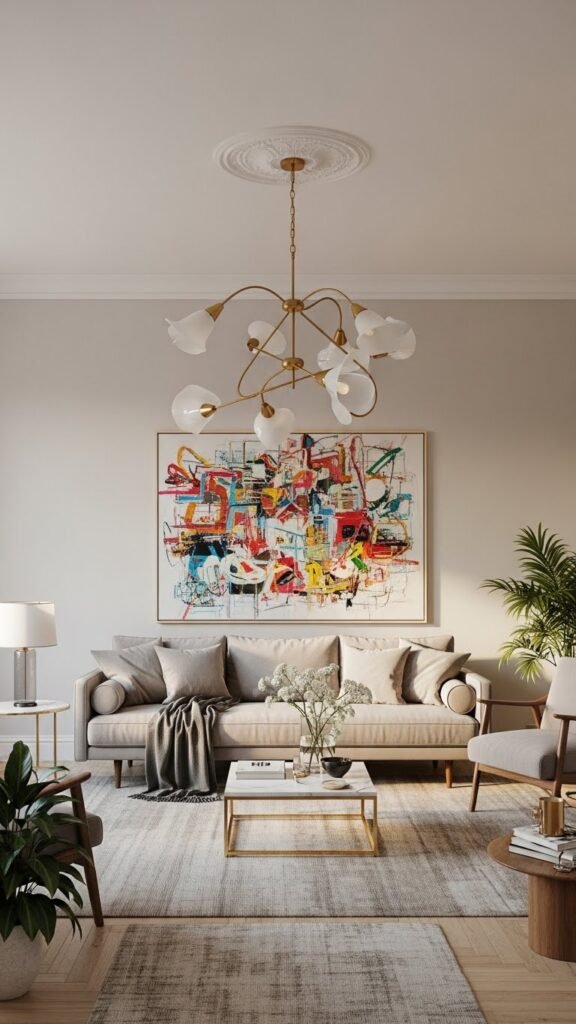
Although a single bold piece can redefine the whole room, choose it with purpose so it anchors the space rather than overwhelms it.
Pick one focal element—a statement artwork or an accent chandelier—and let everything else breathe.
You’ll create freedom to move, relax, and express style without clutter.
Keep colors and scale coordinated so that focal pride feels intentional, not chaotic.
Apply a “One-In, One-Out” Rule to Control Clutter
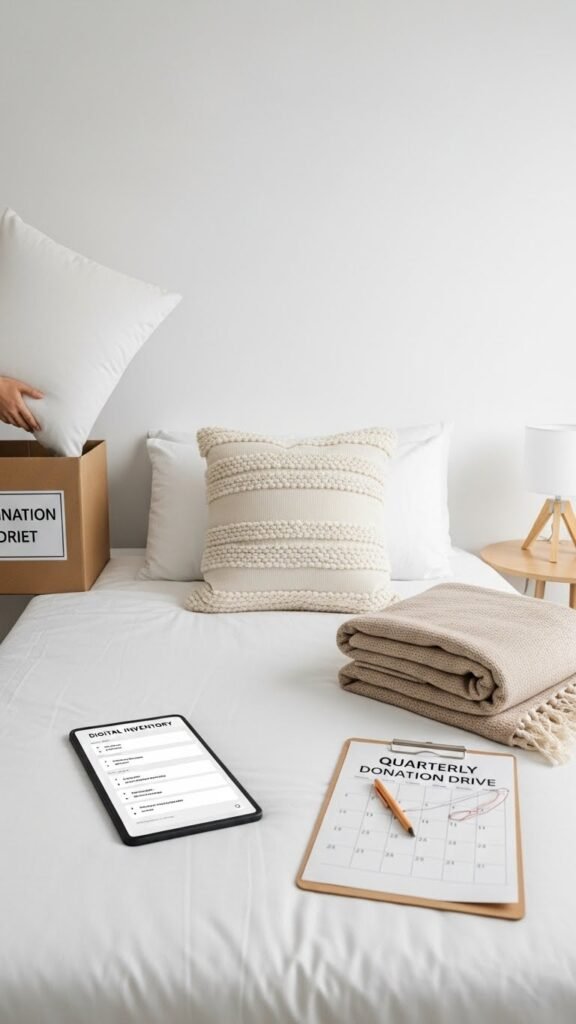
Regularly adopt a one-in, one-out rule to keep your bedroom feeling tidy and intentional: for every new item you bring in—a throw, a lamp, a decorative pillow—remove something of equal or greater visual weight or function. You’ll stay free of excess, streamline choices, and avoid clutter. Track pieces with a Digital Inventory and schedule a quarterly Donation Drive to clear space and reset your style.